
A significant agility gap has emerged between traditional retail strategies and the one-year implementation cycles favored by rapid-growth markets like Singapore and Malaysia. As digital integration reaches its peak, the commerce sector has officially transitioned from the reactive recovery phase of the early decade into a proactive, intelligence-led era known as Retail Landscape 2.0. This evolution is spearheaded by the rise of agentic commerce, where artificial intelligence no longer simply processes data but actively participates in the consumer journey as a decision-making agent. The focus of global innovation has shifted decisively toward the Asia-Pacific region, with Singapore and China serving as the primary proving grounds for these advancements. These markets are no longer just participating in global trends; they are dictating the pace of change, setting a new standard for how brands interact with modern consumers through sophisticated, mobile-first ecosystems. By leveraging high-density urban environments and a population eager for technological convenience, the region has become the undisputed engine of global retail growth, forcing Western markets to reconsider their long-term strategic timelines in favor of more immediate, iterative cycles.
The Synergy: Global Technology and Regional Innovation
Case Study: Strategic Cross-Border Collaborations
A defining characteristic of the current retail evolution is the unexpected synergy between European technology providers and Japanese retail giants expanding across the Asian continent. This trend showcases a strategic move away from traditional U.S.-centric solutions in favor of specialized software that addresses highly complex regional supply chain and payment needs. For instance, the Japanese retailer DAISO has successfully integrated Finnish AI platforms to manage demand forecasting for its massive inventory of low-cost items. With over 20,000 individual products per store, managing stock levels across a global network requires a level of precision that traditional manual systems cannot provide. By utilizing ethical and smart supply chain management tools, DAISO ensures inventory accuracy even during volatile seasonal spikes, proving that high-tech solutions can be scaled effectively within high-volume, low-margin retail environments.
The success of these cross-border partnerships highlights a cultural shift in how technology is sourced and implemented. Rather than relying on a single dominant provider, retailers are increasingly building custom ecosystems that combine the operational discipline of Japanese management with the algorithmic sophistication of European startups. This approach allows brands to maintain their core value propositions, such as affordability and diversity, while simultaneously modernizing their backend infrastructure. The collaboration between these different market philosophies has created a robust framework for managing global SKU density, ensuring that products are available exactly when and where the consumer needs them. This synergy serves as a template for other global brands looking to penetrate the diverse and rapidly changing markets of Southeast Asia, where local nuances and logistical challenges often hinder less adaptable retail models.
Operational Efficiency: Streamlining Operations through Unified Commerce
European payment and automation technologies are also playing a vital role in the expansion of Asian brands into high-cost markets like Singapore. By partnering with Dutch payment platforms and global walk-through AI providers, retailers like Chateraise have successfully launched unmanned, 24-hour stores that cater to the modern consumer’s demand for instant access. This unified commerce approach standardizes infrastructure across different franchise locations, allowing business owners to bypass local financial complexities and focus on rapid scaling. By integrating payment data directly with inventory management and customer loyalty programs, these retailers can create a single, cohesive view of the customer journey. This visibility is essential for optimizing labor costs in regions where human capital is expensive, allowing technology to handle routine transaction processing while personnel focus on high-value interactions.
The integration of advanced IoT solutions has also transformed the physical shelf from a static display into a dynamic media asset. Retailers such as Marks & Spencer have leveraged these technologies to sync pricing with e-commerce data in real-time, ensuring that customers receive consistent information regardless of how they choose to shop. By using electronic shelf labels as a foundation, stores can provide instant access to product reviews and nutritional information via QR codes, bridging the gap between the tactile experience of in-store shopping and the information-rich environment of online browsing. This conversion of the physical aisle into a digital touchpoint creates new revenue streams through in-store advertising and significantly improves conversion rates at the point of purchase. It represents a move toward a more transparent and interactive retail environment where the store itself becomes a source of real-time data and engagement for the modern shopper.
Tactical Speed: Implementation in the AI-Centric Era
Rapid Iteration: The Speed of Digital Transformation in Singapore
One of the most striking differences in the current landscape is the widening agility gap between traditional retail mindsets and the fast-forward culture of Singapore. While some markets continue to focus on prolonged risk assessment and multi-year pilot programs, Singaporean retailers often operate on a one-year agility cycle that emphasizes immediate action and rapid iteration. This involves implementing new technology across entire chains almost overnight and being prepared to pivot or withdraw if results do not meet performance expectations. This fail-fast mentality is essential for surviving in the rapidly evolving agentic AI environment, where the window of opportunity for gaining a competitive advantage is shorter than ever. Leaders in this space recognize that waiting for a perfect solution is a recipe for obsolescence, choosing instead to learn through direct market application and real-time feedback loops.
The practical application of this speed can be seen in the rapid evolution of major chains like Guardian and 7-Eleven within the region. Within a single fiscal year, these retailers have transitioned from testing basic digital tools to implementing full-scale inventory automation and app-driven promotion cycles. For example, 7-Eleven pivoted from fully unmanned urban models back to hybrid staffed models when data indicated that a blend of digital speed and human engagement yielded higher customer satisfaction. This willingness to reverse a strategic direction based on empirical evidence is a hallmark of the modern Singaporean retail strategy. It demonstrates a sophisticated understanding of the PDCA cycle, where the check and act phases are performed with the same intensity as the initial planning. This high-velocity approach ensures that the retail infrastructure remains aligned with consumer behavior, which can shift dramatically within a single season.
Agentic Integration: Prototyping the Store of Tomorrow
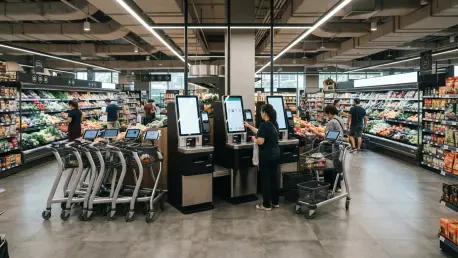
The most advanced application of the new retail paradigm can be found in specialized digital districts where agentic AI is integrated into every step of the customer journey. This model aims to eliminate universal retail frustrations, such as long checkout lines and the difficulty of locating specific items in large-format stores. Through partnerships with global tech leaders, these stores utilize smart carts and conversational AI to guide shoppers, providing a seamless experience where technology becomes an invisible but essential assistant. These systems do more than just scan items; they recognize products as they are placed in the cart, automatically updating the bill and providing personalized suggestions based on the shopper’s past behavior. This level of integration has led to significant increases in average transaction values, as the AI can suggest complementary items or offer real-time discounts relevant to the current shopping mission.
By transforming the shopping trip from a search-based task into a conversational experience, AI concierges are redefining personalized engagement. These agents can suggest complex recipes based on dietary preferences and then physically guide the customer to every necessary ingredient on the shelf via a high-resolution display on the smart cart. This removes the cognitive load from the consumer, making the shopping experience more efficient and enjoyable. The success of these prototypes in Singapore’s Punggol Digital District suggests that the future of retail lies in full-stack AI, where digital and physical assets are so tightly coupled that they function as a single unit. This integration ensures that the store is always optimized for both the consumer and the operator, creating a high-efficiency environment that maximizes sales while minimizing time spent on low-value activities like searching for products or waiting to pay.
Future Readiness: Strategic Frameworks for Modern Commerce
The Five Pillars: Building a Resilient Retail Ecosystem
As retailers prepare for the coming years, they are focusing on five key strategic pillars designed to ensure long-term resilience: scenario simulation, tech curiosity, deeper consumer insights, clear customer propositions, and robust data governance. Moving beyond simple historical forecasting, industry leaders are now preparing for multiple potential futures by using AI to simulate various economic and social scenarios. This allows them to build flexibility into their supply chains and marketing strategies, ensuring they can respond effectively to sudden market shifts. Furthermore, encouraging technological curiosity across all corporate departments has become a priority, breaking down the silos that previously separated IT from the rest of the business. When marketing and operations teams understand the capabilities of AI, they can more effectively collaborate on solutions that drive real value for the consumer.
Ensuring that data is clean, accessible, and well-governed is no longer just a technical requirement; it is a fundamental business necessity for real-time decision-making. Retailers are investing heavily in data infrastructure to ensure that the insights generated by AI are based on accurate and comprehensive information. This foundation allows brands to move past surface-level analytics and gain a deeper understanding of the motivations behind consumer behavior. By defining a clear customer proposition in an AI-saturated market, retailers can differentiate themselves through the unique value they provide, whether that is convenience, expertise, or a curated shopping experience. These pillars provide a roadmap for navigating the complexities of the modern market, ensuring that the integration of technology serves to enhance, rather than complicate, the relationship between the brand and its customers.
The Final Pivot: Adopting the No-Regret Move Mindset
In a market where technology evolves on a monthly basis, the no-regret move has become the defining tactical mindset for industry leaders. This strategy involves executing moves that provide tangible value regardless of how the future unfolds, rather than waiting for a perfect solution that may never arrive. By focusing on phygital experiences—the seamless blending of physical and digital assets—retailers can ensure they remain relevant in an increasingly competitive landscape. This proactive approach minimizes the risk of being left behind by technological shifts while maximizing the immediate ROI from digital investments. The focus is on creating a flexible infrastructure that can adapt to new AI capabilities as they emerge, ensuring that the retail environment remains as dynamic as the consumers it serves.
The transition toward Retail Landscape 2.0 represented a fundamental shift where the APAC region successfully set the global standard. Successful retailers embraced cross-border technical synergies and adopted a fail-fast approach that allowed them to implement AI as a core operational component. They recognized that waiting for a perfect solution was no longer an option in an environment where technology evolved monthly. By focusing on agentic commerce and the integration of smart assistants into the physical store, these companies managed to eliminate traditional friction points and create a more personalized journey for their customers. Moving forward, the industry prioritized data governance and technological literacy as the essential tools for maintaining a competitive edge. This evolution ensured that the era of automated commerce was not just a future possibility but an existing operational reality that transformed the global retail landscape forever.