
The rapid evolution of autonomous flight technology has moved beyond the realm of science fiction and into the daily operational strategy of the largest retail entities in the United States. While drone delivery was once viewed as a fringe curiosity reserved for technology enthusiasts, the current landscape reflects a profound shift toward integrated, high-velocity logistics. This transformation is led by a significant logistical commitment that seeks to normalize the sight of aerial delivery pods across suburban rooftops. The recent expansion of the Walmart and Zipline partnership represents a pivotal moment in this transition, signaling that the industry has successfully moved from the pilot phase into a period of aggressive national scaling. By positioning drones as a core pillar of its infrastructure, the retail sector is not merely changing how packages arrive; it is redefining the very nature of consumer proximity and the physical retail footprint.
The transition of aerial logistics into the American retail landscape is the result of years of refinement in both autonomous software and localized fulfillment strategies. Retailers have recognized that the traditional model of ground-based delivery is increasingly unsustainable in high-density urban and suburban areas where traffic congestion adds significant costs and delays. Consequently, the focus has shifted toward the sky to bypass these terrestrial constraints. The alliance between Walmart and Zipline is particularly significant because it leverages Walmart’s existing real estate—thousands of stores located within minutes of the majority of the population—as ready-made launchpads for a sophisticated fleet of autonomous aircraft. This synergy allows for a decentralized distribution model that challenges the centralized warehouse systems of purely digital competitors.
The Rise of Aerial Logistics in the American Retail Landscape
Exploring the transition of drone delivery involves looking at how aerial logistics have moved from an experimental novelty to a foundational component of modern commerce. In previous years, the technology was limited to small-scale pilots in rural areas, but it has now matured to handle the complexities of suburban environments where delivery density is high. The significance of the Walmart-Zipline partnership lies in its ability to redefine the dynamics of the last mile, which is notoriously the most expensive and logistically difficult portion of the supply chain. By utilizing high-speed autonomous drones, the partnership aims to reduce the time an item sits in transit to a matter of minutes, effectively removing the friction that typically exists between a digital purchase and a physical delivery.
Analyzing the vast reach of the current drone ecosystem reveals that it is no longer a localized phenomenon but a nationwide pursuit involving major retail stakeholders. Companies are now competing to establish the most reliable and extensive aerial networks, with autonomous flight serving as the primary catalyst for this shift. The impact on traditional logistics is profound, as the reliance on large delivery vans and human couriers begins to diminish for small-parcel orders. This transition allows for a more efficient use of labor and energy, as lightweight drones consume far less power than heavy vehicles to move the same small items. As a result, the logistics landscape is becoming more fragmented and agile, moving away from rigid delivery routes toward a dynamic, on-demand aerial response system.
The current retail environment is witnessing a consolidation of technology and physical store presence that was previously unimaginable. Retailers are retrofitting their roofs and parking lots with automated docks and charging stations, creating a seamless flow from the store shelf to the customer’s backyard. This integration is not just about speed; it is about the data-driven optimization of inventory. When a store knows it can deliver an item in ten minutes via a drone, it can manage its stock levels with much higher precision, reducing the need for massive overstock and allowing for more diverse product offerings. The aerial surge is thus a two-pronged benefit that improves both customer satisfaction and operational efficiency simultaneously.
Scaling the Future: Market Trends and Growth Projections
Accelerating Consumer Adoption and Modern Shopping Habits
The shift from drone delivery as a novelty to a routine utility is primarily driven by changing consumer expectations in the digital age. As shoppers become accustomed to near-instant results in other areas of their lives, the patience for two-day or even same-day delivery is beginning to erode. Drones have stepped in to fill this gap, moving from an occasional luxury to a routine consumer expectation for items like forgotten grocery ingredients or over-the-counter medications. This evolution in shopping habits is characterized by a move toward ultra-frequent, low-volume orders, which is the exact use case where autonomous aerial systems excel.
The impact of the instant gratification economy is also reshaping package sizing and the frequency of interaction between retailers and households. Instead of waiting to accumulate a large basket of items to justify a delivery fee, consumers are now comfortable placing multiple small orders throughout the week. This trend requires a logistical system that can handle high volumes of lightweight packages with minimal overhead. Autonomous systems are perfectly suited for this role, and they are increasingly being integrated into the broader retail media ecosystem. By capturing data on these urgent, high-frequency purchases, retailers can refine their marketing strategies, offering personalized suggestions that anticipate a customer’s next immediate need before they even realize it themselves.
Furthermore, the normalization of drone delivery is influencing the physical layout of modern homes and neighborhoods. Some developers are already considering designated drone landing zones in new housing projects, while existing homeowners are designating specific areas of their properties for aerial drops. This cultural shift indicates that the technology has gained a level of public trust that was absent during its early development. As consumers grow more comfortable with the presence of autonomous aircraft in their communities, the psychological barriers to adoption are falling away, clearing the path for drones to become as common as the traditional mail truck or delivery van.
Quantifying the Aerial Surge: Milestones and Market Forecasts
A detailed analysis of delivery velocity shows a staggering acceleration in the achievement of operational milestones. While it took a considerable amount of time to reach the first million cumulative deliveries across the industry, the move toward the second million has occurred at an exponentially faster rate. This trend indicates that the infrastructure is reaching a tipping point where the addition of each new hub leads to a disproportionate increase in total delivery capacity. The efficiency of the systems is improving so rapidly that the time required to double the total volume of deliveries is shrinking every few months, suggesting that the industry is entering a phase of hyper-growth.
Projected expansion of store-based drone hubs across suburban and urban America points to a future where a significant percentage of retail locations are air-enabled. Within the timeframe from 2026 to 2028, the number of active drone sites is expected to triple as major players like Walmart and Amazon finalize their national rollouts. This expansion is backed by massive investment trends and valuation surges within the drone technology sector, which serve as a clear signal of institutional confidence. Investors are no longer treating these companies as speculative startups but as essential infrastructure providers that will dominate the logistical landscape for decades to come.
Market forecasts also suggest that the cost per delivery will continue to fall as the density of flight operations increases. Currently, the industry is focused on scaling the number of sites, but the next phase will involve optimizing the utilization of each drone. As autonomous systems become more capable of handling multiple deliveries per flight or operating in more diverse weather conditions, the economic argument for aerial logistics will become undeniable. This shift will likely lead to a surge in secondary markets, such as specialized maintenance, battery recycling, and airspace management software, creating a robust economic ecosystem around the core delivery services.
Navigating the Flight Path: Technical and Operational Hurdles
Addressing the complexities of beyond-visual-line-of-sight operations in high-density areas remains one of the most significant technical challenges for the industry. To operate safely over populated regions, drones must be equipped with redundant sensor suites that allow them to detect and avoid both static and moving obstacles without human intervention. This requires immense onboard processing power and sophisticated machine learning algorithms that can interpret complex environmental data in real time. Ensuring that these systems remain reliable under all conditions is paramount to maintaining the safety and public trust that the industry has worked so hard to build.
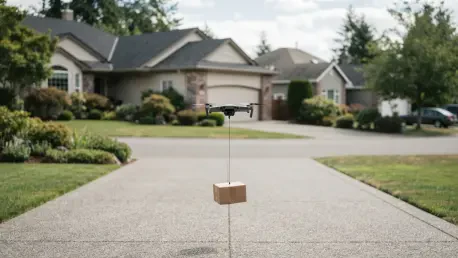
Technological solutions for noise mitigation and precision landing are also at the forefront of operational research. One of the primary complaints from the public regarding drone delivery is the potential for noise pollution in quiet residential neighborhoods. Companies like Zipline have addressed this by developing aircraft that hover at high altitudes and lower packages on a silent tether, minimizing the acoustic footprint at ground level. Precision is equally important, as drones must be able to place packages on small targets, such as a specific corner of a driveway or a balcony, even in the presence of wind or other weather-related disruptions. Overcoming these barriers is essential for the seamless integration of drones into the urban fabric.
Moreover, the industry must solve the last-mile cost barrier while ensuring that safety reliability is never compromised. While drones are cheaper to operate than vans in theory, the initial capital expenditure for the aircraft and the supporting hub infrastructure is substantial. Achieving a positive return on investment requires a high volume of deliveries and a long operational lifespan for each drone. Furthermore, any safety incident, regardless of how minor, can lead to significant regulatory setbacks and a loss of consumer confidence. Therefore, the industry is focusing heavily on rigorous testing and the development of standardized safety protocols that can be applied across different platforms and operating environments.
The Regulatory Horizon: FAA Frameworks and Safety Standards
The role of specific federal regulations, such as the established Part 135 and the highly anticipated Part 108, is central to standardizing commercial drone operations in the United States. These frameworks provide the legal basis for companies to operate drones as air carriers, setting strict requirements for pilot certification, aircraft maintenance, and operational oversight. The transition toward Part 108 is particularly critical, as it is expected to streamline the process for beyond-visual-line-of-sight flights, moving away from the current system of individual waivers toward a more predictable and scalable regulatory environment. This shift will allow the industry to plan long-term investments with a higher degree of certainty.
Balancing rapid industry innovation with federal oversight and airspace security measures is a delicate task for regulators. The Federal Aviation Administration must ensure that the national airspace remains safe for all users, including traditional manned aircraft and emergency services, while also allowing the drone industry to flourish. This has led to the development of sophisticated remote identification systems and unmanned traffic management platforms that track the location and intent of every drone in the sky. These security measures are essential for preventing mid-air collisions and ensuring that drones do not interfere with sensitive locations, such as airports or government buildings.
The impact of local and state environmental assessments also plays a significant role in the speed of national network rollouts. While federal law generally preempts local regulations regarding the use of airspace, state and local governments still have authority over land use and noise ordinances. This can lead to a patchwork of different rules that companies must navigate as they expand into new regions. Some communities have been more welcoming of drone technology than others, often citing the benefits of reduced traffic and lower emissions. However, in areas where there is significant opposition, the process of obtaining the necessary permits can be slow and contentious, highlighting the need for ongoing community engagement and education.
The Next Frontier: Disruptors and the Evolution of Quick Commerce
Anticipating the influence of next-generation aircraft provides a glimpse into the future of ultra-fast commerce. New platforms, such as Zipline’s updated hardware and Amazon’s latest MK30 drones, are being designed with increased payload capacities, longer ranges, and even quieter propulsion systems. These advancements will allow drones to handle a wider variety of products, including heavier grocery items and larger electronics, further expanding the addressable market for aerial delivery. As the technology continues to mature, the distinction between a drone and a traditional delivery vehicle will become increasingly blurred, with drones taking over a larger share of the total delivery volume.
Potential market disruptors include the potential decline of third-party ground delivery apps in favor of integrated retail ecosystems. When a retailer like Walmart can provide its own high-speed delivery service at a lower cost and with higher reliability than a third-party app, the incentive for consumers to use those apps diminishes. This trend toward vertical integration allows retailers to maintain control over the entire customer experience, from the point of purchase to the moment the package arrives. It also gives them access to valuable logistics data that can be used to further optimize their operations. The decline of the gig economy couriers in favor of autonomous systems could represent one of the most significant shifts in the labor market within the next decade.
The future of fulfillment is moving toward a tiered hierarchy that some industry experts refer to as the five-speed model. In this system, delivery speeds are categorized by hours, minutes, and even seconds, with drones occupying the most urgent tier. This allows retailers to offer a variety of fulfillment options based on the customer’s needs and willingness to pay. For example, a customer might choose a standard one-day delivery for a non-essential item but opt for a ten-minute drone delivery for an urgent household necessity. This granular approach to fulfillment ensures that logistical resources are used as efficiently as possible, with high-speed drones reserved for the most time-sensitive tasks.
A Decisive Moment for Autonomous Retail Integration
The strategic rollout of the 300-site expansion project served as a definitive signal that autonomous retail integration reached a state of commercial maturity across the United States. Stakeholders identified that the success of the Walmart-Zipline alliance depended on the seamless fusion of hardware reliability and the gradual building of consumer trust. Analysts observed that as these systems became more visible in suburban areas, the initial skepticism toward overhead flight began to dissipate, replaced by a widespread demand for the convenience of sub-thirty-minute delivery. Moving forward, the industry needed to prioritize the development of standardized acoustic signatures to ensure that increased flight density did not trigger public backlash in residential zones. This required a shift in engineering focus from mere speed and payload to the subtle nuances of community integration and environmental harmony.
Investment strategies shifted toward domestic drone manufacturing and the recruitment of specialized maintenance personnel to support the burgeoning aerial fleet. It was understood that the long-term viability of the sector rested on the ability to manage a vast network of autonomous assets without the constant intervention of highly paid engineers. The normalization of these systems ultimately relied on the industry’s ability to maintain a near-perfect safety record while simultaneously lowering the per-delivery cost below that of traditional ground-based couriers. As the timeframe from 2026 to 2028 progressed, the focus moved toward expanding the variety of items that could be safely transported, including temperature-sensitive pharmaceuticals and fragile electronics. The establishment of this aerial infrastructure provided a sustainable blueprint for the future of commerce, ensuring that the physical store remained the center of the local community by evolving into a high-tech fulfillment hub.