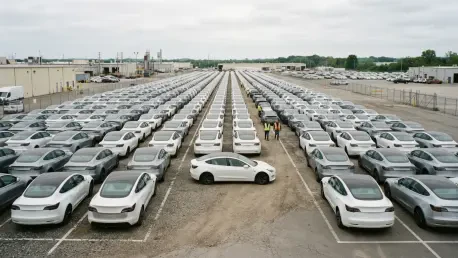

The unprecedented sight of high-tech electric sedans dominating city streets while dealership lots overflow with unsold inventory has become the defining paradox of the current Chinese automotive landscape. This environment is characterized by a stark contrast between the rapid dominance of New Energy Vehicles and a cooling retail environment that has begun to test the resilience of the world’s largest car market.
While electric and hybrid models continue to capture a larger share of the total market, actual sales volumes have begun to show signs of contraction, reflecting a significant shift in how buyers interact with the sector. This transformation explores the interplay between record-breaking penetration rates, the aggressive shift away from internal combustion engines, and the economic pressures currently affecting major manufacturers and their extensive dealership networks.
The Current State of China’s New Energy Vehicle Sector
The Chinese automotive landscape is currently navigating a period of extreme structural divergence. Recent data from the first half of November shows that retail sales for passenger New Energy Vehicles fell by 13 percent compared to the same period in 2025, even as their presence on the road feels more ubiquitous than ever. This suggests that while the transition to cleaner energy is fundamentally complete in terms of preference, the volume of new buyers is not keeping pace with previous years.
At the same time, the dominance of these vehicles over traditional internal combustion engines has reached an all-time high. New Energy Vehicles now account for over 73 percent of all retail sales and a staggering 82 percent of wholesale volume. However, this dominance is occurring within a shrinking total passenger vehicle market, which saw a 25 percent year-on-year decline in overall retail activity, indicating that the industry is fighting for a larger slice of a smaller pie.
Analyzing Market Shifts and Consumption Patterns
Emerging Trends in Consumer Behavior and Technology
A significant shift in how consumers perceive value is reshaping the industry. High fuel costs continue to drive drivers away from traditional gasoline engines, yet stagnant income expectations have created a cautious wait-and-see sentiment among the middle class. Even major promotional events, such as the Double 11 shopping festival, failed to generate the massive surge in deliveries seen in prior cycles as household financial security remains a primary concern.
Technological maturity has also played a role in slowing immediate sales. Many potential buyers are delaying purchases in anticipation of next-generation features or further price cuts in the ongoing price war between domestic brands. This hesitation suggests that simply offering an electric drivetrain is no longer enough to trigger an impulsive purchase; consumers now demand a perfect balance of cost, range, and intelligence.
Evaluating Performance Indicators and Growth Forecasts
The data indicates a growing split between retail and wholesale performance. While retail sales have faced annual declines, wholesale volumes remain surprisingly resilient, rising 3 percent year-on-year. This suggests that manufacturers are continuing to produce at high levels to meet internal targets, even if those vehicles are not yet reaching the hands of end users.
Projections for the remainder of the year suggest the market is entering a consolidation phase. Market share gains for electric models will likely be offset by the overall contraction of the passenger car market. This creates a highly competitive and price-sensitive environment where only the most efficient manufacturers can survive without sacrificing their profit margins to maintain volume.
Overcoming Structural Hurdles and Inventory Imbalances
The industry currently faces a critical challenge in the form of a widening gap between factory output and consumer deliveries. Manufacturers are accelerating shipments to dealerships to hit year-end benchmarks, which places immense financial strain on dealer networks. These businesses are often left struggling with high stock levels and limited cash flow, as the pace of sales does not match the influx of new inventory.
Solving this imbalance requires a fundamental shift from supply-driven strategies to demand-focused initiatives. Instead of pushing volume onto dealers, manufacturers must address the underlying economic hesitance of the middle class. Success in the current climate depends on the ability to stabilize the supply chain while offering more flexible financing options that lower the barrier to entry for cautious consumers.
The Influence of Subsidies and Regulatory Compliance
Navigating the Impact of Trade-in Policies
Government intervention remains a primary driver of the domestic market. Current trade-in subsidies and local incentives are essential for keeping the sector afloat by encouraging the replacement of older, high-emission vehicles. These programs have effectively bridged the gap between consumer hesitation and the need for market movement, providing a necessary floor for sales figures.
However, the looming expiration of these financial supports at the end of December creates a significant pull-forward effect. Sales are becoming concentrated in the final weeks of the year as buyers rush to secure incentives. This creates a risk of a demand vacuum in the early months of next year, as the pool of ready buyers may be exhausted by the end-of-year rush.
Standards and Security in a Changing Landscape
As electric vehicles become the primary mode of transport, regulatory bodies are tightening standards around battery safety and data privacy. Compliance with these evolving rules is no longer optional for survival in the domestic market. The government is increasingly focused on ensuring that the rapid transition to electric mobility does not compromise consumer safety or national energy security.
Furthermore, the expansion of charging infrastructure remains a top priority to support the high penetration rates. Regulatory pressure is mounting on manufacturers to not only build the vehicles but also ensure they contribute to a stable and secure energy grid. This includes new protocols for smart charging and the standardization of battery recycling processes to ensure long-term sustainability.
Future Prospects and Potential Market Disruptors
The trajectory of the market will likely be determined by upcoming industry events such as the Guangzhou Auto Show and the debut of solid-state battery technologies. Innovation in autonomous driving and smart-cockpit features remains a key differentiator for brands looking to break the current sales slump. Brands that can offer a seamless integration of software and hardware will likely capture the attention of the next wave of buyers.
Additionally, the potential for further government stimulus packages could provide the necessary spark to transition from replacement-driven growth to new-user acquisition. If local governments introduce fresh subsidies for first-time buyers in rural areas, the market could see a significant expansion. The focus is shifting toward niche segments and the replacement of specialized vehicle fleets to maintain momentum.
Summary of Findings and Strategic Recommendations
The analysis of the current market revealed that the contraction was not caused by a lack of interest, but rather by a misalignment between production and economic reality. Stakeholders identified that managing dealership health had to become a priority to prevent a wider liquidity crisis. It was determined that manufacturers needed to realign their wholesale targets with actual retail demand to ensure a sustainable ecosystem for the coming year.
Sustainable growth depended on the industry’s ability to stabilize consumer confidence through transparent pricing and enhanced data security standards. Market participants discovered that the most effective path forward involved capitalizing on the final wave of trade-in subsidies while preparing for a more competitive, technology-driven landscape. Ultimately, the high penetration rates confirmed the end of the combustion era, yet future success required a deeper focus on the purchasing power of the modern consumer.