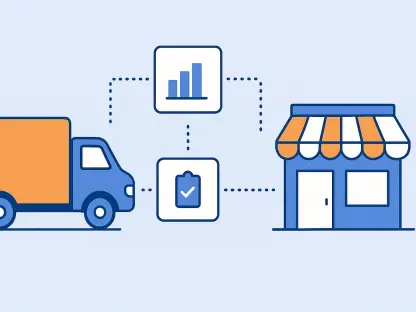

The traditional boundaries of the global commerce sector have effectively dissolved as retailers operate within a landscape defined by nonlinear shocks and permanent volatility rather than predictable seasonal cycles. This environment, frequently described as the NAVI world, reflects a reality that is Nonlinear, Accelerated, Volatile, and Interconnected. In this era, the concept of a stable baseline has vanished, replaced by a continuous stream of disruptions ranging from sudden technological breakthroughs to unexpected geopolitical shifts. Retailers no longer have the luxury of preparing for a return to normalcy because the fluctuations themselves have become the new standard of operation. Success in this context requires more than just agility; it demands a fundamental shift in how organizations perceive time, risk, and consumer behavior.
Navigating this complexity requires a rigorous adherence to the Dual Mandate, which forces leadership to balance immediate operational resilience with aggressive, long-term reinvention. It is no longer sufficient to merely protect the current fiscal year while ignoring the structural shifts that could make a brand obsolete within 24 months. Conversely, focusing solely on future innovation without stabilizing the current cost base often leads to a depletion of the capital necessary to fund those very transformations. This delicate equilibrium ensures that a company remains solvent today while building the infrastructure to remain relevant in a market that is constantly being redefined by external pressures.
The current strategic roadmap for the global retail industry emphasizes three primary pillars: the deep integration of artificial intelligence, the physical transformation of the brick-and-mortar store, and the expansion into diversified business models. As retailers transition through 2026 and look toward 2028, these pillars serve as the foundation for a new operating model. This analysis explores how these elements interact to create a more responsive and durable commercial ecosystem. By moving away from reactive crisis management and toward proactive platform orchestration, the industry is setting the stage for a decade of commerce that is as much about data and logistics as it is about the products on the shelf.
The Dual Mandate: Resilience and Technological Integration
Market Dynamics: The Shift toward Value-Driven Strategies
The current market environment is characterized by a profound sense of caution among senior leadership, with roughly 67% of retail CEOs identifying geopolitical instability as the most significant threat to their operations. This high level of perceived risk has led to a widespread adoption of surgical cost discipline, with 82% of leaders prioritizing the optimization of their internal operating models. Unlike previous eras of austerity that relied on broad, horizontal budget cuts, the modern approach is highly data-driven and targeted. Retailers are using granular analytics to identify exactly where capital is underperforming, allowing them to reinvest those savings into high-growth areas that offer better protection against inflationary pressures.
The shift from a strategy of “scaled growth” to one of “value-driven performance” marks a departure from the traditional expansionist mindset. For years, success was measured by the sheer number of store openings or the total volume of inventory moved. However, as the market becomes increasingly polarized, with 59% of leaders seeing a clear divide between discount-heavy and premium sectors, the focus has shifted toward high-margin revenue streams. This evolution has spurred the rapid growth of private label brands, which allow retailers to capture a larger share of the value chain. Additionally, the rise of retail media networks has enabled companies to monetize their digital traffic, transforming their websites and apps into profitable advertising platforms for third-party brands.
Sustainability has also undergone a strategic transformation, evolving from a corporate social responsibility initiative into a vital cost-saving measure. In an era where resource scarcity and energy costs are unpredictable, circular business models have become a tool for resilience. By implementing systems for product refurbishment, resale, and recycling, retailers are reducing their dependence on raw material supply chains while simultaneously meeting the demands of a more conscious consumer base. This integration of circularity into the core business model demonstrates how environmental goals and financial stability can align to create a more robust corporate structure that is less vulnerable to external shocks.
Real-World Applications: The Resilient Operating Model
The implementation of surgical cost optimization has forced organizations to rethink the very nature of their labor and logistics frameworks. Instead of reducing headcount as a first resort, many retailers are now redesigning their workflows to eliminate redundant processes that were built into legacy systems. This optimization often involves the use of automation to handle routine administrative tasks, freeing up human capital to focus on high-value interactions such as customer service and strategic planning. By protecting their margins through internal efficiency rather than just price increases, these companies are maintaining their competitiveness in a price-sensitive market without sacrificing the quality of their brand experience.
Resolving legacy debt has become a prerequisite for any meaningful technological advancement in the current retail climate. Many established retailers have struggled for years with fragmented data architectures, where customer information, inventory levels, and supply chain logistics were stored in separate, incompatible silos. To overcome this, the industry has seen a massive movement toward unified data platforms. Collaborations with major tech providers are now focused on cleaning these data sets and creating a “single source of truth.” This unified architecture allows for the deployment of advanced analytics and machine learning tools that can predict demand with unprecedented accuracy, thereby reducing the overhead costs associated with excess inventory and markdowns.
The fundamental shift from “just-in-time” to “just-in-case” supply chain models represents one of the most significant changes in retail operations over the last several years. The vulnerabilities exposed by global logistics disruptions have necessitated a more redundant and visible supply chain. Retailers are now utilizing radio-frequency identification (RFID) technology and digital product passports to achieve end-to-end visibility of every item in their inventory. This real-time tracking allows for much faster responses to local demand spikes and provides the transparency that modern regulators and consumers expect. By building these layers of visibility and redundancy, retailers are ensuring that they can maintain service levels even when global shipping routes are compromised.
Industry Perspectives: The Changing Retail Landscape
Expert Insight: The Foundation of Trust
Industry veterans and market analysts are increasingly vocal about the fact that trust is the most valuable currency in a data-saturated retail environment. As retailers collect more personal information to fuel their AI engines and personalization strategies, the risk of a breach or a loss of consumer confidence grows exponentially. Trust is no longer just about delivering a product on time; it is built on a foundation of security, transparency, and a fair exchange of value. Customers are becoming more aware of the value of their data and are only willing to share it if they receive a tangible benefit, such as highly relevant product recommendations or exclusive access to loyalty rewards.
Transparency in how data is used has become a primary differentiator for brands looking to build long-term relationships with their audience. Leading experts suggest that retailers who are open about their sourcing, labor practices, and data handling are far more likely to retain customers in a market where loyalty is otherwise declining. This transparency extends to the algorithmic level, where shoppers want to understand why they are seeing specific prices or product suggestions. Brands that can prove they are using technology to enhance the customer experience—rather than just to manipulate purchasing behavior—will find themselves in a much stronger position as consumer scrutiny continues to intensify.
The concept of value exchange is also evolving to include emotional and ethical alignment. Experts point out that modern consumers do not just buy what a brand makes; they buy what a brand believes in. However, this alignment must be authentic and backed by verifiable actions, as today’s shoppers are quick to identify superficial “greenwashing” or insincere social stances. Trust, therefore, is the lubricant that allows for the smooth operation of high-tech commerce; without it, even the most sophisticated AI systems will fail to gain the necessary traction to drive growth.
The AI Paradigm Shift: From Tool to Infrastructure
There is a growing consensus among technology leaders that artificial intelligence must be viewed as enterprise-level infrastructure rather than a peripheral digital tool. In the recent past, AI was often relegated to isolated pilots or simple chatbots, but the current trend shows a movement toward total integration. Approximately 80% of retail leaders have committed to significant AI investments through the period from 2026 to 2028, signaling a realization that AI is the engine that will run the entire business. This shift requires a change in mindset from “adding AI to the business” to “building the business on top of AI.”
The impact of this paradigm shift is most visible in the back-office functions that consumers never see but which are critical for profitability. AI is now being used to orchestrate complex procurement decisions, manage real-time energy usage in physical stores, and optimize the delivery routes of last-mile logistics fleets. By treating AI as a foundational layer, retailers can achieve a level of operational synchronization that was previously impossible. This integration allows for a more fluid movement of goods and information, enabling the company to sense and respond to market changes in minutes rather than weeks.
Furthermore, the democratization of AI within the retail organization is empowering employees at all levels to make better decisions. Front-line managers are using AI-driven dashboards to adjust staffing levels based on predicted foot traffic, while buyers are using generative models to design new products based on emerging social trends. This widespread adoption ensures that the benefits of the technology are not trapped in the IT department but are distributed across the entire value chain. As AI becomes as ubiquitous as the internet itself, the competitive advantage will shift from those who have the technology to those who know how to best integrate it into their organizational culture.
Redefining Success: Beyond Sales per Square Foot
As the retail model undergoes a structural transformation, the traditional metrics used to measure performance are becoming increasingly obsolete. For decades, the industry relied on “sales per square foot” and “inventory turnover” as the primary indicators of health. However, in a world where a physical store might serve as a showroom, a micro-fulfillment center, and a brand advertisement all at once, these narrow KPIs fail to capture the true value of the asset. Modern professionals are moving toward more holistic metrics that account for the long-term health of the brand and its impact on the world around it.
Customer Lifetime Value (CLV) has emerged as a central metric for evaluating the success of personalized marketing and loyalty programs. Instead of focusing on the profit from a single transaction, retailers are now looking at the total predicted revenue a customer will generate over their entire relationship with the brand. This shift encourages investments in service and quality that may not pay off immediately but build a more stable revenue base over time. By prioritizing CLV, companies can avoid the trap of short-term discounting that often erodes brand equity and profit margins in the long run.
Societal Value Scores and environmental impact metrics are also being integrated into the corporate scorecard. As investors and consumers alike demand more accountability, retailers are beginning to report on their carbon footprint, waste reduction targets, and the social impact of their supply chains with the same rigor as their financial statements. These metrics provide a more complete picture of a company’s resilience, as they highlight the potential risks associated with regulatory changes or shifts in consumer sentiment regarding sustainability. Redefining success in this way ensures that the organization is not just profitable today, but is also contributing to a viable and stable market for the future.
The Future: Agentic Commerce and Platform Orchestration
Agentic Commerce: When Algorithms become Consumers
One of the most disruptive trends emerging in the global retail sector is the rise of agentic commerce, where AI agents act as intermediaries between the brand and the consumer. In this scenario, shoppers delegate many of their routine purchasing decisions to automated systems that are programmed with their personal preferences, budgetary constraints, and replenishment needs. These agents are capable of scanning thousands of options, comparing prices, and verifying sustainability credentials in milliseconds. As this technology becomes more prevalent, the traditional focus on brand awareness and emotional marketing will have to share the stage with data optimization and machine-readable product information.
For retailers, the implications of agentic commerce are profound, as they must now convince an algorithm rather than a human of the value of their products. This shift favors brands that can provide high-quality, structured data that AI agents can easily parse and trust. Reliability and fulfillment consistency become paramount; if a retailer fails to deliver a product on time, the AI agent will simply remove them from the list of approved vendors for future transactions. This environment creates a “winner-takes-all” dynamic where the most efficient and transparent operators gain a massive advantage over those that rely purely on legacy brand recognition.
Furthermore, agentic commerce will lead to a more efficient and less impulsive market. AI agents do not get distracted by flashy displays or succumb to the “fear of missing out” that drives so many human purchases. Instead, they make cold, calculated decisions based on the criteria set by the user. This will force retailers to compete on actual value and service rather than just marketing spend. While this may put pressure on margins in some sectors, it also offers a unique opportunity for brands that can offer specialized, high-performance products that meet the specific needs of a highly targeted audience.
The Rebirth: Physical Stores as Multipurpose Assets
The physical store is currently undergoing a radical rebirth, moving away from its traditional role as a simple point of sale to become a multipurpose asset in a broader retail ecosystem. Approximately 84% of industry leaders agree that their physical networks must be transformed to provide value that cannot be replicated online. This transformation involves reimagining the store as a hub for experience, community, and service. High-end flagship stores are increasingly being designed as brand immersion centers where customers can interact with the product and the brand’s story without the immediate pressure to purchase, fostering a deeper emotional connection.
Simultaneously, the “back of the house” is being converted into micro-fulfillment centers to support the growing demand for rapid e-commerce delivery. By utilizing their existing real estate for local inventory storage, retailers can significantly reduce the cost and environmental impact of the last mile. This dual-purpose model allows a store to serve walk-in customers during the day while functioning as a logistics node at night. This maximize the utility of the expensive urban real estate that many retailers already own, turning a potential liability into a flexible and high-performing competitive asset.
Physical locations are also becoming vital service hubs, offering everything from product repairs and rentals to personalized consultations and healthcare services. This move into the “service economy” helps retailers diversify their income and increases the frequency of store visits. By providing a reason for customers to visit that goes beyond just buying an item, retailers are building a community around their brand. This multi-layered approach to the physical footprint ensures that the store remains a relevant and profitable part of the omnichannel journey, even as the majority of actual transactions move toward digital platforms.
Diversification: The Rise of Retailer Ecosystems
As the traditional boundaries of commerce continue to blur, approximately 70% of retail leaders are looking outside their core business to find new sources of growth. This trend toward “platform orchestration” involves retailers expanding their capabilities to become service providers for other businesses. We are seeing major retailers transition into logistics providers, data consultants, and media agencies. By leveraging their existing infrastructure and expertise, these companies are creating new revenue streams that are often more profitable and less volatile than traditional product sales.
This diversification allows a retailer to extract value from every part of their operation. For example, a company with a sophisticated supply chain can offer third-party logistics services to smaller brands that do not have the resources to build their own network. Similarly, the massive amounts of first-party consumer data that retailers collect can be anonymized and sold as market intelligence to manufacturers and research firms. This transformation into a B2B service provider effectively turns the retailer’s operating costs into a revenue-generating platform, creating a more diversified and resilient corporate portfolio.
However, this shift into new industries is not without its challenges, as it requires a significant cultural and organizational change. Retailers must now compete with established tech giants and logistics firms, necessitating a level of technical excellence and service quality that goes far beyond the traditional retail skillset. Managing a non-linear, demand-responsive ecosystem requires a workforce that is comfortable with data science, software engineering, and complex systems management. Those who can successfully navigate this transition will find themselves at the center of a new global commerce network, where they control not just the products, but the very infrastructure of trade.
Implications: Managing the Shift
The move toward an ecosystem-based model introduces a new set of risks that must be managed with extreme care. As retailers become more interconnected with third-party providers and technology platforms, their vulnerability to systemic failures increases. A disruption in a single cloud provider or a cyberattack on a shared data network can have cascading effects across the entire platform. Consequently, building digital resilience and robust cybersecurity measures has become a top priority for leadership. Organizations are investing heavily in redundant systems and advanced threat detection to ensure that their platform remains operational regardless of external digital shocks.
The human element of this transition also requires a strategic focus on upskilling and talent acquisition. The shift toward AI-driven orchestration and platform services means that the skills required in a retail organization are changing rapidly. There is a high demand for professionals who can bridge the gap between traditional retail operations and advanced technological implementation. Retailers are increasingly competing with the technology sector for top talent, which is driving up labor costs and forcing companies to rethink their employer value proposition. Creating a culture that values continuous learning and adaptation is essential for maintaining a workforce that can thrive in a non-linear environment.
Finally, the regulatory landscape is becoming more complex as retailers venture into new territories like media and data consulting. Governments are increasingly looking at the power of large retail platforms and are introducing new rules regarding data privacy, competition, and algorithmic transparency. Retailers must stay ahead of these regulatory trends to avoid costly fines and reputational damage. By adopting a proactive approach to compliance and ethical technology use, companies can build a more sustainable platform that is prepared for the legal challenges of the future. This strategic foresight is what separates the leaders of the new commerce era from those who are simply reacting to the changes as they occur.
Conclusion and Strategic Outlook
The transition toward an adaptive leadership model proved to be the defining characteristic of the most successful retail enterprises as they navigated the complexities of the mid-2020s. Organizations realized that yesterday’s challenges served as the primary catalyst for the structural changes that occurred throughout the industry. Retailers adopted a stance where operational discipline was not merely a survival tactic but the foundational energy for total reinvention. By dismantling legacy systems and embracing a unified data architecture, these companies gained the agility required to operate in a market where volatility became a permanent fixture. The dual mandate of maintaining current performance while building for the future was successfully integrated into the corporate DNA of those who thrived.
The move from reactive crisis management to proactive platform orchestration enabled retailers to redefine their value proposition in a crowded and polarized market. Trust was established as the fundamental currency, ensuring that consumers felt secure in an environment increasingly dominated by AI and agentic commerce. The physical store was not abandoned but was instead reimagined as a multipurpose asset that supported the entire omnichannel journey. This strategic diversification into logistics, media, and data services provided the high-margin revenue necessary to offset the pressures of a fluctuating global economy. The industry effectively moved beyond the simple sale of goods to become a critical infrastructure provider for the modern world.
As the retail sector continues to evolve, the focus must remain on the continuous refinement of these technological and structural capabilities. The next decade of global commerce will be defined by those who can most effectively harmonize the power of human intuition with the speed and precision of advanced intelligence. Leaders are now tasked with viewing every disruption as an opportunity to further optimize their ecosystems and deepen their relationship with the consumer. The commitment to a transparent, resilient, and value-driven model will remain the most effective path forward. The successful reinvention of the global retail landscape has set a new standard for how industries can transform pressure into progress, ensuring that commerce remains a dynamic and vital force in a rapidly changing world.