
Digital Evolution: The Dawn of Agentic Commerce and the Readiness Gap
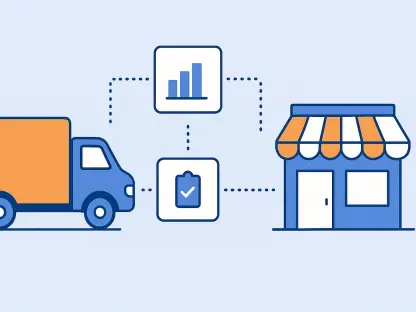
The digital shopping landscape is currently witnessing a fundamental shift as artificial intelligence evolves from simple conversational chatbots into autonomous software entities capable of independent action. This new era, characterized by agentic commerce, involves sophisticated AI systems that can independently browse the web, evaluate specific product details, and execute financial transactions for human users. However, a significant gap has emerged between the capabilities of these agents and the existing infrastructure of the stores they visit. Recent research into approximately 3 million American e-commerce businesses reveals a startling reality where the vast majority of storefronts are currently ill-equipped to handle non-human shoppers. This analysis explores the technical hurdles retailers face and the strategic shifts required to survive in an increasingly algorithm-driven marketplace where the traditional customer journey is being entirely rewritten.
Historical Context: From Human Browsing to Algorithmic Procurement
For decades, the e-commerce sector was designed exclusively for human eyes, prioritizing visual aesthetics and emotional engagement over raw data accessibility. The foundational concepts of web design were built to convert a person clicking a mouse through high-resolution imagery and persuasive marketing copy. However, the rise of large language models and autonomous agents has introduced a different kind of customer that ignores branding and color palettes. These agents require structured data, clear technical files, and accessible transaction rails to perform their tasks effectively. This shift marks the third major evolution in digital retail, moving from the desktop era to the mobile-first era, and finally to the current agent-first paradigm of 2026. Understanding this historical pivot is essential for retailers to recognize why websites that perform well today might become invisible to the next generation of procurement tools that value precision over presentation.
Market Analysis: Assessing the Technical Maturity of Digital Storefronts
The Hierarchy of Readiness: Four Tiers of Agentic Compatibility
A comprehensive analysis of U.S. digital merchants has established a clear hierarchy of readiness based on technical infrastructure. At the top of this pyramid are the “Superagents,” representing 36% of the market. These storefronts have achieved a high level of optimization, allowing AI agents to navigate from product discovery to final payment without friction. In contrast, “Special Agents” possess the necessary checkout systems but fail in discoverability, meaning an agent can process a payment but might struggle to find the right product in the first place. These statistics underscore a fragmented landscape where even successful retailers may have broken paths that prevent autonomous commerce from taking place, leading to lost revenue in an automated economy.
Functional Disconnects: The Breakdown of Discovery versus Transaction
One of the most critical challenges identified in recent studies is the disconnect between being readable and being actionable. “Field Agents,” which account for a portion of the market, are easily scanned by AI crawlers but lack the backend infrastructure to allow an agent to complete a purchase. These retailers have essentially built a window-shopping experience for AI, where the agent can see the inventory but cannot interact with the shopping cart. This specific challenge often stems from rigid security protocols or complex user interfaces that were originally designed to block bots, unintentionally preventing legitimate AI shopping agents from serving their human owners. Consequently, retailers are finding that their existing anti-fraud measures are becoming barriers to legitimate automated sales.
Technical Obstacles: Overlooked Barriers and Misconceptions in Accessibility
Beyond the major tiers of readiness, there are nuanced complexities that many retailers overlook, particularly regarding stores that score lowest on readiness scales. A common misconception is that simply having a functional website makes a store accessible to AI. In reality, many stores use hidden product catalogs or login-gated content that effectively blinds an automated agent. Furthermore, differences in how data is structured can lead to misunderstandings; an AI agent may fail to interpret size variations if the data is not presented in a standardized, machine-readable format. Addressing these misconceptions is vital for retailers who mistakenly believe their legacy search optimization strategy is sufficient for the agentic era, as traditional keywords are far less valuable than schema-rich product descriptions.
Future Projections: Emerging Trends Shaping the Next Era of Shopping
The future of retail is moving toward a new distribution layer where major commerce platforms take on the heavy lifting of automating transaction rails. A trend is emerging where the technical burden shifts: while platforms handle the checkout logic, individual merchants must take ownership of discoverability. Projections suggest that between 2026 and 2028, the industry will see the emergence of agent-optimized marketing, where the goal is to be the primary recommendation for an AI agent rather than ranking high on a traditional search page. Regulatory changes regarding data privacy will also likely evolve to distinguish between malicious scrapers and authorized shopping agents, creating a more regulated ecosystem for machine-to-machine commerce that emphasizes transparency and verified digital identities.
Strategic Recommendations: Actionable Steps for the AI-Driven Retailer
To prepare for this transition, businesses must adopt a proactive strategy that moves beyond traditional web design. First, retailers should utilize diagnostic tools to identify specific bottlenecks in their checkout flow that might stop an AI agent. Second, ensuring that product metadata—such as dimensions, materials, and real-time stock levels—is meticulously structured is no longer optional. Third, merchants should review their security settings to ensure that good bots are not being blocked alongside bad ones. By opening up transaction rails and prioritizing data transparency, brands can ensure they are not left behind as consumers increasingly delegate their shopping tasks to intelligent software. This transition requires a mindset shift from creating visual experiences to building robust data interfaces.
Retrospective Insights: Embracing the Future of Autonomous Commerce
The shift toward agentic commerce represented a fundamental turning point for the American retail sector. While only a portion of U.S. online stores were prepared for the transition, the risk of technical obsolescence became a reality for those who failed to modernize their backend systems. The core themes of discoverability and transaction capability defined the winners of the previous market cycle, as brands realized that machine-readability was the new standard for accessibility. As AI agents became the primary gatekeepers between brands and consumers, the stores that succeeded were those that prioritized seamless integration over traditional aesthetics. This evolution proved that the long-term viability of digital commerce depended on the ability to foster trust between autonomous software and retail infrastructure, creating a landscape where data precision was the ultimate competitive advantage.