
The sheer velocity of shifting consumer preferences in today’s hyper-connected marketplace has rendered the once-reliable spreadsheets and historical averages of the past almost entirely obsolete. Modern retail success no longer depends on looking back at what happened in previous seasons, but rather on deciphering what will happen tomorrow through the lens of proactive intelligence. The industry is currently moving away from static historical data toward dynamic, real-world modeling that accounts for thousands of variables simultaneously. This shift represents a fundamental change in how organizations approach the core architecture of demand forecasting.
Forecasting serves as the primary engine for inventory management, supply chain logistics, and overall financial stability. When a prediction is accurate, it minimizes the capital tied up in excess stock and ensures that products are available exactly when and where the consumer wants them. Technological influence from cloud computing and specialized AI vendors has empowered retailers to move beyond legacy systems. These platforms allow for the processing of massive datasets that were previously unmanageable, giving stakeholders the ability to react to market shifts with surgical precision.
Navigating the Evolution: Trends and Market Projections
Emerging Technologies and the Transformation of Consumer Behavior
Machine learning has fundamentally altered the way retailers handle volatility, particularly regarding viral social media trends and localized events that traditional linear models simply cannot capture. Unlike standard statistical methods that assume the future will mirror the past, algorithmic models are designed to identify non-linear patterns. This allows a business to anticipate a surge in demand for a specific item after a single influential post or a sudden change in regional weather, preventing the lost revenue associated with empty shelves.
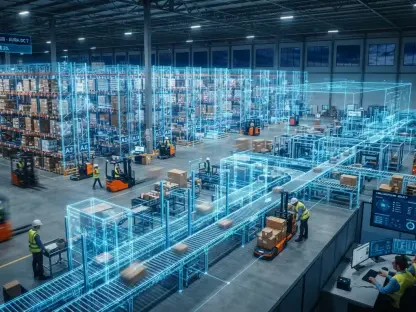
Multi-dimensional data integration has become the standard for live demand models. Modern systems now ingest external drivers such as real-time weather patterns, public holidays, and competitor pricing fluctuations. This holistic view is particularly effective for managing the long tail of retail inventory, where slow-moving products often suffer from inconsistent data. By understanding product interdependency, these models also predict how a promotion on one category might lead to the cannibalization of another, allowing for more strategic pricing decisions.
Market Growth, Performance Indicators, and the Future Outlook
Quantifying the impact of these technologies reveals a significant improvement in accuracy rates and a substantial reduction in the bullwhip effect across supply chains. From 2026 to 2028, the retail sector is expected to see a dramatic rise in AI adoption as the return on investment becomes impossible to ignore. Organizations are seeing a direct correlation between algorithmic precision and a reduction in both out-of-stocks and overstocks, which significantly boosts the bottom line and improves customer loyalty.
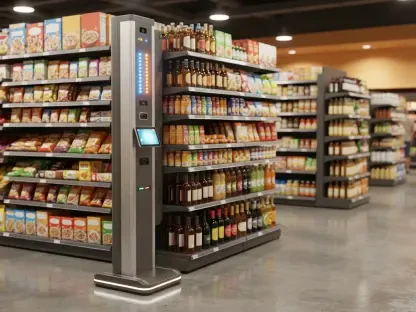
Operational efficiency metrics have shifted to prioritize automated replenishment and inventory turnover. The integration of predictive intelligence allows for maximizing shelf-space utility, as models can dictate store-specific assortments based on local demand rather than broad national averages. Forward-looking projections indicate that the retail AI market will grow exponentially through 2030, driven by the need for leaner, more responsive operations that can survive in a low-margin environment.
Overcoming the Friction: Strategic Challenges and Implementation Barriers
The transition to algorithmic forecasting is often hindered by the data integrity gap, as models are only as effective as the information they consume. Addressing the dilemma of low-quality data streams requires a rigorous commitment to cleansing and standardizing information across all sales channels. Without high-quality input, the most sophisticated machine learning model will produce flawed results, potentially leading to costly logistical errors.
Building trust between human planners and automated systems remains a hurdle, often referred to as the black box problem. Strategies for success now include glass box AI initiatives, which prioritize model explainability so that human users understand the reasoning behind a specific forecast. This synergy of human oversight and automation is critical during black swan events where historical patterns are irrelevant and human intuition must override the algorithm to navigate unprecedented disruptions.
The Regulatory Framework and Ethical Data Stewardship
Navigating the complex landscape of data privacy and consumer protection laws like GDPR and CCPA is a primary concern for retailers using consumer behavior data. As demand modeling becomes more granular, the necessity of protecting individual privacy while maintaining model accuracy has forced a shift toward more sophisticated anonymization techniques. Compliance is no longer just a legal requirement but a cornerstone of brand trust in an era where consumers are increasingly aware of their data rights.
Regulatory pressure is also mounting for transparency in the supply chain, where accurate forecasting plays a vital role in meeting ethical sourcing standards. By predicting demand more accurately, retailers can better manage their relationships with suppliers and ensure that labor and materials are used efficiently. Furthermore, protecting proprietary algorithms and sensitive commercial data within these ecosystems has necessitated the implementation of advanced security protocols to prevent industrial espionage or data breaches.
The Horizon of Retail Innovation: Sustainability and Strategic Growth
Precision ordering has emerged as a primary driver of sustainability, as accurate forecasts directly reduce the amount of perishable waste sent to landfills. This reduction in surplus inventory also lowers the carbon footprint associated with the production and transport of unsold goods. As retailers face increasing pressure from both regulators and consumers to operate sustainably, the role of machine learning in optimizing resources has become a key part of corporate responsibility strategies.
The rise of autonomous commerce suggests a future where supply chains are fully self-adjusting based on real-time insights. In this environment, hyper-localization allows for niche optimization, where store-specific assortments are tailored to the unique demographic and behavioral profiles of local neighborhoods. This move toward specialized, localized models ensures that retail remains relevant and efficient in an increasingly fragmented market.
Securing a Competitive Edge through Predictive Excellence
The transition from experimental machine learning to fundamental operational requirement was completed during this period of intense digital transformation. Businesses that prioritized the development of robust data pipelines and the integration of explainable AI tools successfully navigated the complexities of the modern marketplace. The industry shifted its focus toward upskilling the workforce, ensuring that human planners could act as strategic architects rather than manual data entry clerks.
The implementation of these advanced systems proved that algorithmic agility was the primary factor in defining retail resilience. Stakeholders who invested in high-fidelity data streams and ethical stewardship frameworks found themselves better positioned to manage the fluctuations of global trade. Ultimately, the adoption of machine learning provided a necessary buffer against volatility, securing long-term financial health and operational stability for those who embraced predictive excellence.
Character count check: 5293 characters.