
Zainab Hussain stands at the forefront of the digital commerce revolution, bringing years of expertise as an e-commerce strategist and operations management specialist. Her work has consistently bridged the gap between complex logistical infrastructure and the seamless front-end experience that modern shoppers now demand as a baseline. In this discussion, we explore how the traditional, reactive model of retail is being dismantled in favor of an intelligent, predictive ecosystem where artificial intelligence serves as the foundational architect of the modern warehouse.
The conversation covers the evolution of warehouse engineering, where AI has transitioned from a simple analytical tool to a sophisticated assistant capable of generating entire facility layouts. We examine the rise of digital twins that allow for risk-free experimentation with thousands of product lines and the psychological shift in how businesses view automation—not as a replacement for human talent, but as a vital partner in meeting the “one-strike” delivery expectations of today’s consumers.
How has the shift toward AI-driven warehouse design changed the way businesses approach their initial capital investments and facility planning?
In the past, designing a distribution center was a painstakingly manual process that often relied on static projections, which could lead to massive overspending or, worse, a facility that was obsolete by the time it opened. Today, we are seeing AI function as a true engineering assistant that generates warehouse layouts based on very specific storage and throughput constraints. This allows our teams to model dozens of different scenarios and optimize the infrastructure before we even break ground, significantly reducing unnecessary capital investment. It is a much more surgical approach to engineering where we can prototype solutions and generate technical documentation at a speed that was previously unimaginable. By using these automated tools to analyze performance from the start, businesses can ensure that every square inch of their facility is working toward maximum efficiency.
What does it mean for a system to simulate human mistakes, and why is this “imperfection” so critical for testing modern fulfillment centers?
It sounds counterintuitive to teach a machine how to fail, but it is actually one of the most brilliant developments in warehouse testing we have seen. Our software teams are now using AI to simulate warehouse operators during the testing phase, which includes performing tasks like order picking and interacting with management systems. We purposefully allow the AI to make mistakes that replicate real-world operating conditions, because if a system only works when everything is perfect, it will inevitably collapse during a busy shift. By modeling these human-like errors, we can build more robust systems that know how to recover when a barcode doesn’t scan or an item is misplaced. This creates a safety net of intelligence that ensures the technology is prepared for the messy, unpredictable nature of actual human labor.
How do digital twins allow retailers to navigate the chaos of peak seasons or massive product expansions without breaking their existing workflows?
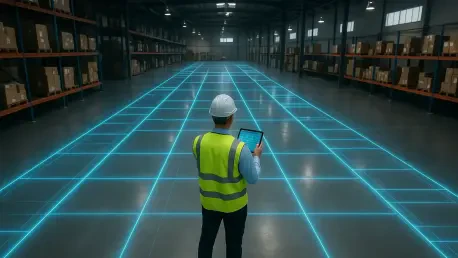
Digital twins are essentially virtual replicas of a live warehouse environment, and they have become the ultimate sandbox for retailers who need to scale quickly. We are seeing businesses use these twins to model what happens when they suddenly introduce thousands of new products or experience a massive spike in order volumes during peak retail periods. You can reconfigure a warehouse layout or change a picking route in the virtual world to see exactly how it affects storage capacity and throughput without ever touching the physical floor. This level of visibility means that a grocery chain or a manufacturer can make highly informed decisions based on data rather than gut instinct. It takes the guesswork out of expansion, allowing for a level of operational agility that keeps the day-to-day business running smoothly even while massive changes are being implemented.
With the Australian e-commerce logistics market projected to exceed $18 billion this year, how are supply chains evolving to meet the “one-strike” rule of modern consumers?
The stakes have never been higher for retailers, especially given that 41% of shoppers will abandon a brand after just one poor delivery experience. We are no longer in an era where consumers are willing to wait a week for a package; they want real-time stock availability and same-day delivery as the standard. To survive in an $18 billion market, warehouses have transformed from simple storage sheds into intelligent operations that can process an order from storage to dispatch in just a matter of minutes. This speed is only possible because we are using AI to constantly analyze data and predict demand before the customer even clicks “buy.” When you can move products through a complex supply chain with that kind of precision, you turn the logistics process into a competitive advantage rather than a bottleneck.
We often hear about robots taking over the workforce, but how is AI actually functioning as an “assistant” to the engineers and operators on the ground?
There is a common fear that automation is designed to replace people, but what we are actually observing is a massive augmentation of human expertise. The AI is there to provide better information, allowing an engineer to focus on validating outcomes and solving high-level problems rather than getting bogged down in manual data entry or basic layout drafting. On the warehouse floor, autonomous robots are working alongside people, with AI optimizing the traffic flow and equipment utilization to make the job less physically taxing and more productive. It’s about giving our teams the tools to make faster, more informed decisions in an environment that is becoming increasingly complex. The most successful businesses are those that realize the greatest value comes from combining this machine intelligence with the operational knowledge of their human staff.
What is your forecast for the integration of flexible automation and AI as we move through the rest of this year?
I expect we will see a significant surge in the adoption of flexible, scalable automation, such as fleets of autonomous robots that can grow right along with a business’s needs. We are moving away from rigid, fixed infrastructure and toward modular systems where AI continuously optimizes routing and storage locations in real-time to maximize every bit of productivity. As supply chains become more intricate, the businesses that thrive will be those that use AI not just as a tool, but as the brain of their entire operation. This year will be defined by the shift from simply “using” technology to fully integrating it into the fabric of the warehouse, ensuring that the movement of products from supplier to customer is as seamless as the digital interface the consumer uses to buy them.