
On a bustling Saturday afternoon, a single severed fiber line or a minor router failure can instantly paralyze a multi-million dollar retail operation that relies exclusively on a distant cloud connection. This vulnerability has become the primary catalyst for the widespread adoption of edge computing across the global retail landscape in 2026, as brands prioritize operational resilience over traditional centralized models. By moving processing power from remote data centers directly into the physical store environment, retailers are creating a distributed architecture that functions independently of external network health. This shift ensures that critical systems, ranging from point-of-sale terminals to real-time inventory tracking, remain lightning-fast and fully operational even during regional internet outages. In the current market, where customer expectations for speed are at an all-time high, the delay of a few seconds caused by a cloud round-trip is no longer just a technical nuisance; it is a significant threat to conversion rates and brand loyalty.
Edge computing effectively acts as a local brain for the retail environment, processing vast amounts of data generated by sensors, cameras, and mobile devices on-site. Instead of sending high-definition video feeds or massive transaction logs to a cloud server hundreds of miles away, an edge node located in the store’s back office performs the initial analysis and executes immediate actions. This localized approach drastically reduces latency, which is essential for modern applications like computer vision-based loss prevention and instant personalized recommendations. Furthermore, by keeping sensitive customer data within the physical walls of the store until it is summarized or encrypted for the cloud, retailers are significantly improving their data privacy posture and meeting increasingly stringent regulatory requirements. The integration of this technology marks a fundamental departure from the reactive digital strategies of the past, moving instead toward a proactive, resilient, and highly efficient operational standard.
1. Indicators Your Store Requires Edge Computing
Identifying the need for decentralized processing often begins with observing the friction points that emerge during peak shopping hours when digital systems are under the greatest stress. If a retail location experiences noticeable pay-point delays that frustrate shoppers and lead to abandoned carts, the underlying cause is frequently the latency inherent in cloud-dependent transaction processing. In 2026, consumers have zero tolerance for “spinning wheels” on a checkout screen, and even a two-second delay in validating loyalty points or processing a mobile payment can be enough to drive a customer toward a competitor. When system performance fluctuates based on the strength of the internet connection, it indicates that the store’s digital infrastructure is too fragile for modern demands and requires a local compute layer to provide a consistent, high-speed experience regardless of external network conditions.
Operational reliability is another critical indicator, particularly for high-volume retailers where even a brief internet blackout can result in catastrophic system crashes or dropped transactions. If a store lacks a robust local fallback mechanism, it remains at the mercy of internet service providers and regional infrastructure health, which is a risk profile that many boards of directors find unacceptable. Furthermore, discrepancies between on-site stock counts and the inventory displayed on digital platforms often signal a synchronization lag that only edge computing can solve. When a customer sees an item is available for pickup online but finds an empty shelf upon arrival, the resulting loss of trust is difficult to repair. This gap between the physical reality of the store and its digital twin suggests that the current cloud-first synchronization model is failing to keep pace with the real-time speed of physical commerce.
The physical security and customer experience departments also provide clear signals that an edge-based upgrade is necessary for maintaining competitive advantages. Rising rates of shrinkage and inventory loss often occur because existing surveillance safeguards react too slowly, providing footage only for post-event investigation rather than real-time intervention. If security teams cannot receive instant alerts for suspicious behavior because the video analytics are being processed in a remote cloud environment, the technology is essentially failing its primary purpose. Similarly, if the in-person custom experience feels sluggish compared to the highly optimized digital shopping journey, it highlights a technological imbalance. Today’s shoppers expect the same level of tailored service in a physical aisle that they receive on a mobile app, and delivering that requires the instant data retrieval capabilities that only localized edge processing can provide at scale.
2. Primary Use Cases for Edge Technology
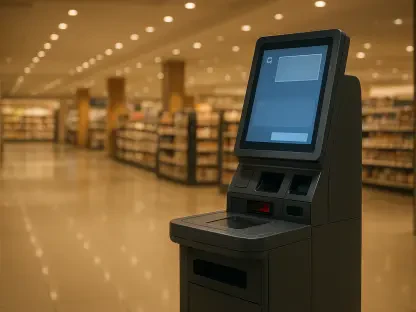
One of the most immediate benefits of edge computing in the current retail environment is the realization of rapid, uninterrupted checkout experiences that remain functional through any external network disruption. By moving transaction processing, discount validation, and loyalty point calculations to an on-site edge node, retailers can guarantee sub-second response times for every customer interaction. This localized validation process means that even if the primary fiber connection to the store is lost, the point-of-sale systems can continue to authorize payments and apply complex promotional logic using locally cached data. Once the connection is restored, the edge node seamlessly synchronizes the transaction history with the central cloud record, ensuring that there is no data loss and that the customer experience remains perfectly smooth and professional throughout the entire event.
Live stock management has also undergone a massive transformation through edge integration, providing retailers with an accurate, real-time “available-to-promise” data stream for in-store pickup and omnichannel fulfillment. In 2026, the complexity of managing inventory across hundreds of locations requires a local source of truth that can process thousands of sensor inputs—from RFID readers on the shelves to weight sensors in the stockroom—without overwhelming the wide-area network. By processing this data at the edge, the store can maintain an exact count of every SKU, enabling highly reliable buy-online-pickup-in-store (BOPIS) workflows that never result in an out-of-stock notification after the order is placed. This level of precision not only increases operational efficiency but also maximizes the revenue potential of every square foot of retail space by ensuring that inventory is always where it needs to be.
Visual loss prevention and real-time behavioral analytics represent the most sophisticated application of edge computing in the modern retail landscape. Instead of uploading massive volumes of raw video footage to the cloud, which is both bandwidth-intensive and a privacy concern, edge-enabled cameras run machine learning inference models directly on the hardware. These systems can instantly detect anomalies, such as a customer placing an item in their pocket or a spill in a high-traffic aisle, and alert store associates within seconds. This proactive approach significantly reduces shrinkage and improves safety while ensuring that only metadata—not raw video—is sent to the central office. Additionally, on-site personalization engines use this local processing power to recognize returning loyalty members via opt-in mobile triggers, allowing associates to provide instant, tailored service and recommendations that are informed by the customer’s entire cross-channel history.
3. The Five-Layer Retail Edge Architecture
Building a successful edge computing environment in 2026 requires a structured, five-layer architecture that seamlessly connects physical store assets with central enterprise management systems. The foundation of this hierarchy consists of peripheral hardware and data sources, which include everything from modern POS terminals and handheld scanners to smart cameras and Internet of Things (IoT) sensors. These devices are the primary generators of data within the store, capturing every customer movement, transaction, and inventory shift. In a well-designed edge ecosystem, these peripherals are not merely passive collectors but are often “intelligent” themselves, performing basic filtering or data normalization before passing information up to the next layer of the architecture, thereby reducing the overall noise within the local network and optimizing the use of on-site resources.
The second layer involves on-site connectivity and local processing units, which serve as the tactical “mission control” for each individual retail location. These units typically consist of ruggedized local servers or hyper-converged infrastructure gateways that run the store’s most critical applications, such as the local inventory ledger and the payment authorization engine. By aggregating data from the peripheral layer, these processing units can make instantaneous decisions without needing to consult a remote cloud server. This layer is supported by the third component: a coordination and oversight platform that is usually cloud-hosted but manages the entire fleet of edge devices across thousands of stores. This management plane allows IT teams to push software updates, deploy new machine learning models, and monitor the health of every edge node from a single centralized dashboard, ensuring consistency across the entire retail estate.
Security and data integrity form the fourth and fifth layers of the architecture, providing the necessary protection and long-term analytical capabilities required for a modern enterprise. The fourth layer focuses on protection and access protocols, implementing strict encryption for data at rest and in transit, as well as multi-factor authentication for any personnel accessing the local hardware. This layer ensures that the decentralized nature of edge computing does not become a security liability. Finally, the fifth layer is the centralized data repository and analytics engine, which resides in the cloud and acts as the ultimate system of record. While the edge handles the real-time “now,” the cloud layer focuses on the “forever,” aggregating summarized data from all stores to drive long-term trend analysis, financial reporting, and global supply chain optimization, creating a perfectly balanced hybrid ecosystem.
4. Phased Implementation Strategy
Transitioning to an edge-centric model is a complex undertaking that requires a disciplined, phased approach to ensure that investments align with actual business outcomes. The first phase involves identifying high-value scenarios for initial funding, focusing specifically on use cases where the cost of latency or the impact of outages is highest. For most retailers in 2026, this means prioritizing the checkout process and inventory accuracy, as these have the most direct impact on the bottom line. During this stage, stakeholders must also map out the movement of information and define the primary records of truth. This requires a deep understanding of which data must stay local for speed and privacy, such as raw video feeds or active transaction states, and which data must be synchronized with the cloud for enterprise-wide visibility and long-term storage.
Once the strategic foundation is established, the second phase shifts toward a controlled trial run in a handful of representative locations. This “pilot” phase is essential for testing the hardware under real-world conditions, such as varying levels of foot traffic and different network environments, to gather empirical performance metrics. It is during this time that IT teams can identify any unforeseen integration challenges between the local edge nodes and existing legacy systems. Following a successful pilot, the organization must establish ongoing maintenance and monitoring systems, which include automated patching and remote health checks. In 2026, manual maintenance for thousands of distributed nodes is impossible; therefore, the implementation of self-healing software and automated deployment pipelines is a non-negotiable requirement for moving into the final stage of a full-scale rollout.
The final expansion phase involves a structured rollout across the entire retail network, governed by strict oversight and safety measures to prevent any disruption to daily operations. Using a governance framework, the organization can scale the edge architecture while keeping the system secure and compliant with regional data regulations. This stage is not just about installing hardware but also about training store associates and regional managers on how to leverage the new real-time insights provided by the edge. By slowly increasing the number of active edge-enabled stores, the IT department can ensure that the central management platform remains responsive and that the support infrastructure is capable of handling the increased load. This measured approach minimizes risk and allows the retailer to realize incremental value as each new location comes online with its enhanced digital capabilities.
5. Security and Governance Framework
Securing a distributed network of edge devices requires a shift in mindset from traditional perimeter-based security toward a zero-trust model that assumes every node is a potential target. Following the updated NIST Cybersecurity Framework for 2026, the first priority is to catalog all hardware assets and their current status, maintaining a real-time inventory of every device, its firmware version, and its physical location. This visibility is the cornerstone of any security strategy, as it allows the organization to quickly identify and isolate any hardware that is running outdated software or showing signs of tampering. In a retail environment, where devices are often accessible to the public, knowing exactly what is connected to the network and what state it is in at any given moment is critical for preventing unauthorized access and maintaining the integrity of the entire system.
The second and third pillars of the security framework focus on the protection of data and the constant monitoring of system behavior to detect potential threats before they escalate. Security protocols must include robust encryption for all data residing on local edge nodes, ensuring that even if a device is physically stolen, the information it contains remains unreadable. Furthermore, access must be strictly limited using identity-based authentication, ensuring that only authorized personnel can modify settings or access sensitive diagnostic logs. Parallel to these protection measures, the organization must deploy sophisticated monitoring tools that watch for suspicious activity or deviations from normal traffic patterns. In 2026, these monitoring systems often utilize their own localized AI to distinguish between a legitimate surge in holiday traffic and a malicious distributed denial-of-service attack, providing a vital first line of defense.
Finally, a comprehensive governance framework must include specific, pre-defined actions for responding to breaches and ensuring that systems can be rapidly restored to a trusted state. In the event that an edge node is compromised, the centralized management platform must have the ability to immediately isolate that specific node from the rest of the network, preventing any lateral movement by an attacker. Recovery protocols should be automated, allowing IT teams to remotely wipe and reset a device to its original factory state before re-deploying the latest secure software image. This level of resilience ensures that even in a worst-case scenario, the impact on the overall retail operation is localized and temporary. By building these response and recovery capabilities into the initial design, retailers can embrace the benefits of edge computing without exposing themselves to unmanageable levels of cyber risk.
6. Potential Obstacles and Solutions
Despite the clear advantages of decentralized processing, retailers often encounter significant obstacles during the transition, particularly regarding the inherent security risks of distributed hardware and the challenges of physical protection. Every edge node placed in a store represents a new entry point for potential cyber-attacks, making the implementation of zero-trust authentication protocols essential for protecting every node on the network. To address the physical security of these assets, retailers are increasingly using reinforced, locked enclosures for local servers and gateways, often placing them in restricted back-office areas or high-security cabinets. These physical barriers are frequently integrated with tamper-evident sensors that trigger an immediate alert and a local data lockdown if the enclosure is opened without authorization, effectively neutralizing the risk of physical data theft in a public environment.
Maintenance gaps and “patching debt” present another major hurdle, as keeping thousands of remote devices updated with the latest security fixes can quickly become an administrative nightmare. Without automated tools, the sheer volume of distributed hardware can lead to a situation where some nodes remain vulnerable for months, creating a weak link in the enterprise security chain. To solve this, leading retailers are adopting “infrastructure as code” principles, where software updates and security patches are pushed automatically to all edge devices from a central repository. Furthermore, information discrepancies can arise when a store’s local system loses connection with the central cloud and then tries to re-sync after an outage. Setting clear, automated rules for how systems resolve data conflicts—such as prioritizing the local transaction timestamp over the cloud arrival time—is vital for maintaining a single, accurate version of the truth across the entire organization.
7. Future Trends and Strategic Developments
As we move toward the end of 2026 and into 2027, the evolution of edge computing is being driven by the standardization of Edge AI and the deeper integration of standalone 5G networks. We are seeing a shift where machine learning models are no longer just trained in the cloud and deployed at the edge, but are actually learning and adapting entirely on-site to better forecast local shopping patterns. This localized intelligence allows individual stores to adjust their inventory strategies and labor allocations based on hyper-local events, such as a sudden change in weather or a neighborhood festival, without needing instructions from headquarters. Simultaneously, the rollout of 5G as a high-speed primary or backup connection is providing the bandwidth necessary to support even more data-intensive edge applications, such as high-fidelity augmented reality mirrors and interactive holographic displays.
The next two years from 2026 to 2028 will also see a massive push toward privacy-first processing and the rise of fully autonomous store operations. By keeping biometric data and sensitive customer behavior patterns local, retailers can comply with the world’s strictest data protection regulations while still offering a high degree of personalization. This localized approach is also the key enabler for robotic scanning and cashier-less shopping experiences, where the latency of a cloud connection would make the technology unusable. In these autonomous environments, edge nodes process hundreds of sensor inputs simultaneously to track items in a customer’s cart in real-time, ensuring a seamless “just walk out” experience. These strategic developments suggest that edge computing is not merely a temporary trend but the permanent foundation upon which the next decade of retail innovation will be built.
8. Navigating the Realities of Distributed Intelligence
When evaluating the financial impact of edge computing in 2026, it is essential to distinguish between the immediate operational savings and the long-term strategic advantages of a distributed model. Traditional cloud functionality often seems more cost-effective on paper due to its centralized maintenance, but this perspective frequently ignores the hidden costs of downtime, bandwidth fees, and lost sales due to latency. In contrast, edge computing provides a measurable increase in inventory precision and a significant reduction in checkout friction, both of which contribute directly to a higher return on investment. Retailers who transitioned to this model found that the initial capital expenditure for local hardware was quickly offset by the gains in operational efficiency and the ability to maintain sales during network disruptions that would have previously shuttered their digital storefronts.
The security considerations for distributed hardware also evolved significantly as organizations moved away from reactive patching toward proactive, automated governance. Security teams learned that managing a fleet of edge nodes required the same level of discipline as managing a fleet of mobile devices, with strict identity management and automated compliance checks becoming the standard operating procedure. This shift allowed businesses to scale their edge footprint without a linear increase in IT headcount, proving that distributed intelligence could be managed both safely and economically. Ultimately, the successful retailers of 2026 were those who recognized that the store was no longer just a place where products were sold, but a high-performance data center in its own right, requiring a sophisticated architectural approach to meet the demands of a modern, always-on consumer base.
9. Advancing Toward Resilient Retail Operations
The transition toward decentralized store intelligence proved to be the most critical operational pivot for retailers seeking to survive the volatility of the mid-decade market. By successfully implementing edge computing, organizations eliminated the single point of failure that had historically made physical stores vulnerable to the unpredictable nature of regional internet connectivity. This journey began with a clear-eyed assessment of performance bottlenecks and a commitment to investing in the local infrastructure necessary to support real-time customer experiences. Those who moved early to establish a robust, five-layer architecture were rewarded with a significant reduction in checkout abandonment and a dramatic improvement in inventory accuracy, providing a solid foundation for more advanced innovations like autonomous fulfillment and AI-driven personalization.
Looking ahead, the focus for retail leadership must shift toward the continuous optimization of these edge environments through automated maintenance and the integration of emerging 5G capabilities. The lessons learned during the initial rollout emphasized that technology alone was not enough; success required a comprehensive security and governance framework that protected both the brand and the consumer. Organizations that prioritized a zero-trust approach and established clear protocols for data synchronization set the standard for digital resilience. As the retail landscape continues to evolve, the ability to process data at the edge will remain the defining characteristic of a truly modern enterprise, ensuring that the physical store remains a vibrant, intelligent, and highly responsive hub of commerce for years to come.