
Shoppers click “buy” with zero patience for excuses while supply, labor, and logistics shift underfoot, yet many retailers still watch AI pilots sparkle in isolation and fade when work crosses teams, tools, and facilities. The central question is no longer whether AI can forecast demand or draft copy; it is whether AI can coordinate the messy, interdependent chain from plan to promise to delivery so every upstream insight becomes a downstream result that customers actually feel.
Retail’s AI Reality Check: Scope, Stakeholders, and What’s at Stake
Retail has invested heavily in experimentation, but scaled enterprise ROI has lagged because pilots rarely bridge planning and execution. Islands of intelligence—chatbots, recommendations, or forecasting models—improve local metrics while core operations remain fragmented, and handoffs leak value the moment orders hit the floor. The result is familiar: capex rises in automation, while opex savings stall amid coordination gaps.
True scope spans planning, execution, engagement, and returns. Grocery and quick-commerce chase freshness and speed; specialty and fashion manage volatile assortments; big-box and general merchandise juggle scale and service; omnichannel and DTC models tighten the link between digital signals and physical flow. Agentic AI, computer vision, AMRs and robotics, WMS/TMS/OMS integration, synthetic data, and digital twins all shape this landscape, alongside retailers, 3PLs, orchestration platforms, cloud providers, automation vendors, and data and MLOps partners. Privacy regimes such as GDPR and CCPA, emerging AI governance under the EU AI Act, and cybersecurity standards constrain rollout—but also favor designs that make control explicit. The strategic message is blunt: point solutions cap returns; end-to-end chains convert insight into outcomes.
Signals in the Noise: Trends and Trajectories Shaping ROI
From Point Tools to Process Orchestration: The Shift Driving Durable Value
The market is shifting from front-end tools toward cross-functional orchestration that binds planning to execution. Rising delivery expectations, normalized returns, and service-level transparency force operations to become responsive in real time, not in weekly cycles. Volatile demand, constrained labor, supply variability, and margin pressure are pushing retailers to blend automation with human-in-the-loop oversight.
New opportunities surface when orchestration is vendor-agnostic: real-time inventory rebalancing, adaptive slotting, dynamic promises, exception automation, and unified service recovery across warehouses, stores, and carriers. Consider peak season: AI reassigns labor, sequences picks for throughput, resequences robots and conveyors, tunes promotions as supply signals wobble, and protects delivery SLAs. This is not a tool; it is a system that keeps promises.
Evidence and Outlook: What the Numbers Say About Adoption and Payback
Adoption patterns show heavy piloting but limited scaled deployments, with capex tilting toward automation while opex savings lag due to handoff losses. Execution KPIs—fill rate, order cycle time, pick accuracy, promise-keeping, defect and return rates, and cost-to-serve—surface where ROI appears or evaporates. Forecasts point to growth in mixed-automation sites and orchestration spend as retailers chase lower end-to-end latency and tighter exception control.
Quantified levers are consistent: more throughput, less rework, fewer stockouts and overstocks, reduced manual touches, and faster recovery from disruptions. A data flywheel forms as synthetic data augments scarce labels and operational telemetry enriches models, compounding accuracy and reliability over time.
Why ROI Evaporates—and How End-to-End Chains Fix It
Fragmentation optimizes single steps while benefits dissipate across systems, teams, and facilities. Manual coordination forces humans to bridge tool gaps, introducing delay, inconsistency, and error under spikes and exceptions. Caution bias favors quick fixes that preserve structural complexity, masking true cost-to-serve and slowing change.
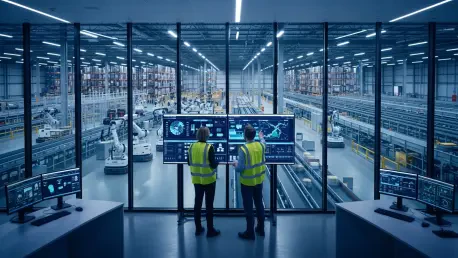
Production AI changes the frame by synchronizing sensing, deciding, and acting across workflows. Orchestration reroutes inventory, reallocates labor, shifts carrier plans, and adjusts promos during disruption, while execution fidelity ensures digital intent becomes correct physical movement—pick, pack, route, deliver, and, when needed, return. Principles that unlock value include mixed-automation compatibility, vendor-agnostic integration to avoid lock-in, and human-in-the-loop design for safe scaling and trusted exception handling. When a limited-edition item slips, AI rebalances stock, updates promises, resequences robots, and uses vision-driven QC to sustain service at the lowest viable cost. Arvato’s neutral IT platform, strengthened through capabilities from Unchained Robotics, shows how heterogeneous technologies can be integrated at speed without vendor lock-in.
Guardrails and Gateways: Compliance, Safety, and Security in Production AI
Data privacy under GDPR and CCPA demands minimization, consent, and disciplined retention across omnichannel footprints. The EU AI Act introduces risk tiers, transparency, human oversight, and documentation requirements, pushing retailers to formalize model evaluation and governance. Cybersecurity must follow zero-trust principles with supply chain security, resilience, and failover designed for automated sites where downtime cascades fast.
Workplace safety and labor standards remain central as humans and robots share spaces: interaction norms, ergonomics, training, and incident reporting protect people and productivity. Model risk management—bias checks, drift monitoring, and explainability for high-impact decisions like promises, substitutions, and returns—anchors accountability. Compliance by design embeds auditability, access controls, and exception governance into orchestration layers so scale does not outpace control.
The Road Ahead: Integrated, Adaptive, and Vendor-Neutral Retail Operations
Agentic process orchestration, simulation and digital twins, advanced vision, and edge inference are converging to cut latency where it matters. Same-day expectations, the economics of returns, supply shocks, and SKU volatility demand dynamic reconfiguration of labor, space, and flow. Consumer pull favors reliability of promises, clear transparency, and seamless recovery from issues—drivers of loyalty and lifetime value.
Growth will concentrate in store-as-node fulfillment, micro-fulfillment, reverse logistics optimization, and unified service recovery. Strategy should invest in orchestration first and automation second, designing for interoperability, observability, and rapid change. With cost discipline pressing and AI rules maturing, flexible, compliant, data-rich operations gain advantage.
From Insight to Impact: A Playbook for Unlocking AI ROI in Retail
Key takeaways are direct. The ROI gap is structural; handoffs must be redesigned through end-to-end chains. Production AI translates plans into results across mixed automation and human work. Vendor-agnostic orchestration is the engine that converts insight into action, while a data strategy that blends synthetic generation with high-fidelity telemetry compounds returns. People remain central through governance, training, and exception mastery.
Action follows a staged path. Map critical value streams from forecast to fulfill to service and redesign them for AI-led orchestration. Stand up a neutral integration layer with open interfaces and swap-ability for robots and systems. Prioritize execution KPIs—promise-keeping, accuracy, cycle time—and embed closed-loop monitoring. Build a synthetic data program, capture execution data from day one, and formalize human-in-the-loop roles, training, and escalation pathways. Pilot as a chain during seasonal peaks, launches, or returns to prove end-to-end impact before scaling.
This analysis concluded that retailers unlocked durable ROI only when AI coordinated decisions and actions across the entire chain, turning scattered wins into compound gains through vendor-neutral orchestration, rigorous governance, and a self-improving data loop.