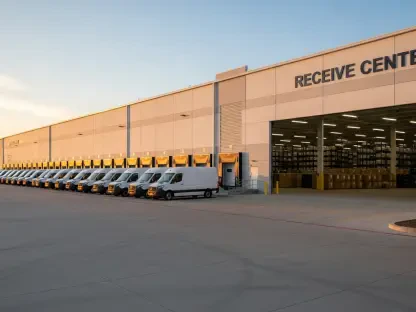

The global retail sector currently faces an unprecedented demand for logistical precision as consumer expectations for rapid delivery and inventory availability reach new heights across every major market segment. To address these evolving pressures, Target Corporation has announced the appointment of Jeff England as the new Executive Vice President and Chief Global Supply Chain and Logistics Officer. Effective May 31, England will step into this pivotal role, succeeding Gretchen McCarthy, who will remain with the organization as a strategic advisor through August to facilitate a seamless transition of responsibilities. Reporting directly to Chief Operating Officer Lisa Roath, England brings a formidable background in retail operations, most notably a nearly twenty-year tenure at Walmart, followed by executive leadership positions at QXO and Genuine Parts Company. This leadership shift highlights a strategic commitment to strengthening the backbone of the enterprise’s delivery capabilities while navigating a competitive landscape that demands constant innovation and operational excellence.
Strategic Capital and Infrastructure Investment
This executive appointment serves as a vital component of Chief Executive Officer Michael Fiddelke’s comprehensive roadmap to revitalize the company’s financial performance and modernize its existing physical infrastructure. Since assuming the leadership role in February, Fiddelke has moved decisively to restructure the senior management team in response to recent sales fluctuations and shifting consumer behaviors. To provide the necessary financial support for these operational improvements, the company is significantly increasing its capital expenditure budget for the current 2026 fiscal year by more than $1 billion, bringing the total projected investment to approximately $5 billion. These substantial funds are dedicated to a multi-faceted expansion strategy that includes opening new retail locations, executing large-scale store remodels, and accelerating the integration of advanced technologies within the supply chain. By prioritizing these investments now, the organization intends to build a more robust foundation for sustainable long-term growth and market stability.
Optimizing Efficiency Through Technical Innovation
The primary objective of this leadership transition focused on enhancing the speed to market, reliability, and precision of the entire fulfillment network. By leveraging extensive expertise in automation and engineering, the leadership team sought to optimize inventory availability while simultaneously reducing the rising costs associated with nationwide transportation. This strategic direction reflected a broader industry movement where major retailers prioritized backend efficiency and deep technological integration to refine the overall guest experience. To maintain a competitive edge, the organization shifted its focus toward developing a more resilient and agile delivery framework that utilized real-time data analytics. Moving forward, the implementation of these high-tech logistics solutions provided a clear path for stabilizing margins and ensuring that products reached consumers with greater consistency. These efforts established a precedent for future operational scaling, ensuring that the supply chain remained a primary driver of value rather than a bottleneck for growth in the coming years.