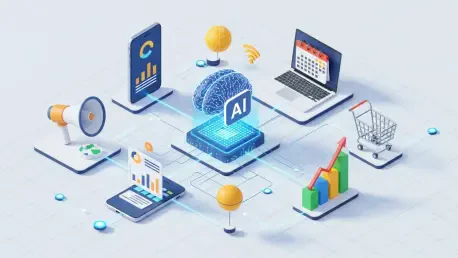

The appointment of Nick Hammitt as Chief Marketing Officer at Newell Brands signaled a major turning point in the company’s organizational structure by prioritizing technological agility over traditional brand management. Under a strategic initiative called “Quantum Leap,” the organization has shifted away from fragmented, siloed departments toward a cohesive model focused on building advanced technical capabilities across its diverse portfolio. Hammitt’s role has fundamentally evolved from a conventional creative lead into a sophisticated technical strategist, tasked with exploring how generative AI can drive growth and institutional change. This transformation marks a departure from the historical P&L-centric focus typical of consumer goods giants, moving instead toward a system where technology acts as the primary engine for marketing innovation. By treating AI as a foundational pillar rather than a peripheral tool, the company is positioning itself to navigate a landscape where consumer preferences and digital ecosystems are in a state of constant flux.
Streamlining Data Accessibility and Real-Time Insights
Before implementing advanced AI tools, Newell Brands focused on breaking down the persistent data silos that often hinder large corporations from making rapid, informed decisions. Hammitt prioritized the democratization of insights through the creation of “iHub,” a centralized, AI-enabled platform that functions as a proprietary knowledge base for the entire marketing organization. This tool allows marketers to use natural language queries to access years of historical consumer research instantly, effectively moving the company away from slow, reactive research models that previously required weeks of manual synthesis. By putting institutional knowledge directly at the fingertips of staff, the organization has significantly accelerated its internal decision-making processes, ensuring that historical context is never lost during employee transitions or departmental shifts. This accessibility transforms static data into a living asset that informs every creative brief and strategic plan with unprecedented speed and accuracy.
To stay ahead of market trends, the company integrated a sophisticated sentiment engine that monitors external perceptions in real-time across a multitude of digital platforms. This technology analyzes social media feeds, ratings, and reviews to gauge public opinion on various products, providing a granular view of consumer sentiment that traditional surveys cannot match. These insights allow the marketing team to adjust search terms, creative assets, and media spending on the fly, responding to shifting cultural conversations as they happen. This shift from static, long-term planning to dynamic, real-time adjustment ensures that the brand remains relevant by responding immediately to consumer pain points or emerging trends. By operationalizing these external signals, the company can pivot its messaging within hours to capitalize on viral moments or address potential reputation risks, creating a more responsive and human-centric brand presence in the digital marketplace.
Navigating the Dual Audience of Humans and Algorithms
A unique pillar of Hammitt’s strategy is the explicit recognition of a “second consumer”: the AI agent that increasingly acts as a gatekeeper between products and people. As more individuals utilize AI-driven assistants and search engines to make purchasing decisions, Newell has developed a dual-strategy approach that caters to both biological and digital entities. While human consumers are reached through emotional storytelling and brand affinity, AI agents require a fundamentally different style of communication that emphasizes data integrity and structured information. Hammitt treats these non-human entities as rational actors that prioritize data consistency and authority over the emotional resonance that typically drives human brand loyalty. This dual focus ensures that while the brand captures the hearts of shoppers, it also satisfies the strict logical requirements of the algorithms that curate their options.
To appeal to these digital gatekeepers, Newell Brands emphasizes messaging consistency across all digital touchpoints to avoid confusing the Large Language Models (LLMs) that process brand information. These AI engines are far more likely to recommend a brand if its product descriptions, technical specifications, and brand claims are uniform and reliable across various websites and platforms. By maintaining a cohesive digital presence, the company creates a “compounding effect” that builds authority with algorithms, signaling that its products are the most credible and high-quality answers to specific user queries. This strategy acknowledges that if a brand’s information is fragmented or contradictory, it will be penalized by AI assistants, leading to a loss of visibility. Consequently, the focus has shifted toward building a “data-first” brand identity that serves as a reliable foundation for the automated shopping ecosystem of the current year.
Implementing AI Through Grassroots Innovation
The internal adoption of AI at Newell is managed through a systematic program of “AI Navigators,” who serve as the bridge between theoretical technology and practical application. These are tech-savvy employees within specific departments, such as design or consumer insights, who act as internal ambassadors for new tools and methodologies. Rather than imposing a top-down mandate that might face cultural resistance, this approach encourages a grassroots evolution where specialists are empowered to reimagine their own workflows through an AI lens. This ensures that the technology is applied in practical, high-impact ways that resonate with the actual day-to-day needs of each department. By identifying “navigators” who already possess a high aptitude for technology, the company creates a decentralized network of experts who can troubleshoot challenges and share best practices across the global organization.
Automation has fundamentally changed how content is produced and optimized within the company by removing the bottlenecks associated with traditional creative production. By partnering with platforms like Adobe and CommerceIQ, Newell can now generate hundreds of variations of a single marketing concept for different languages, formats, and sizes in a fraction of the time it once took. Tasks that previously required weeks of manual labor, such as resizing digital banners or translating product descriptions for international markets, are now completed in days. This shift allows human employees to step away from repetitive, non-strategic work and focus on high-level problem solving and creative growth. By automating the “boring” parts of marketing, the company has freed up its most talented creative minds to focus on developing the next generation of product innovations and emotional brand narratives that AI cannot replicate.
Breaking Down Silos for Collapsible Workflows
The most significant operational shift under Hammitt is the transition toward “collapsible workflows,” which eliminates the linear delays that traditionally slowed down product launches. In the past, marketing followed a rigid, sequential path where insights, design, and media deployment happened in separate stages, often with little communication between the teams. AI has allowed Newell to collapse these silos, enabling different functions to work in parallel and share data in real-time. For example, media teams can now use live e-commerce performance data to influence design choices immediately, creating a more agile and integrated environment where every department is aligned toward the same commercial goals. This integration ensures that the final creative output is not only aesthetically pleasing but also optimized for the specific channels and audiences where it will be deployed.
This interconnected structure allows the organization to be far more nimble when commercial opportunities arise, such as a sudden spike in demand for a specific product category. By linking every stage of the marketing process, from initial product development to final consumer engagement, the company ensures that the brand promise is delivered seamlessly across all touchpoints. This modern approach demonstrates that AI is not just a tool for marginal efficiency, but a catalyst for a fundamental reimagining of how a global enterprise communicates and delivers value. Moving forward, marketing leaders should prioritize the integration of AI agents into their core operational frameworks to ensure their brands remain discoverable by both humans and machines. The transition at Newell suggests that the future of brand success lies in the ability to maintain absolute data consistency while remaining agile enough to respond to the rapid shifts of the digital economy.