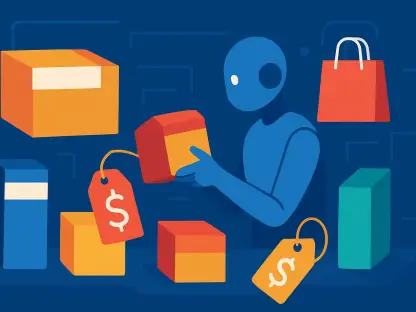

The era of the egalitarian price tag, where every shopper standing before a grocery shelf encountered the exact same cost for a gallon of milk, is rapidly being dismantled by the invisible hand of algorithmic surveillance. Today, the simple act of walking through a retail store involves a complex interaction with data-harvesting sensors and loyalty-linked software that evaluates a consumer’s worth in real time. This transition from a fixed-market value to a “willingness to pay” model signifies a fundamental shift in the American retail landscape, moving away from public transparency toward a opaque system of individualized financial assessment. As companies increasingly rely on “surveillance pricing,” the traditional concept of a fair market price is being replaced by a fluid, data-driven calculation that targets the specific financial limits of each patron. This change is not merely a technological update; it is a profound restructuring of the relationship between buyer and seller, where a shopper’s private digital history determines the final number on the receipt.
The mechanics of this new economic order rely on the construction of hyperspecific consumer profiles, which aggregate massive amounts of personal data to predict behavioral patterns. Retailers are no longer satisfied with broad demographic generalizations; instead, they utilize granular details such as a shopper’s precise geolocation history, recent web searches, and even the type of smartphone used to browse their app. For instance, if a grocery chain’s algorithm identifies that a specific customer frequently shops in affluent ZIP codes or maintains a high-frequency purchase history for premium goods, it may selectively withhold the deepest discounts from that individual. This results in a fragmented marketplace where two neighbors purchasing the same basket of goods may pay significantly different prices based on their perceived “economic elasticity.” By weaponizing personal data, retailers have effectively ended the period of the universal price tag, turning the retail environment into a personalized auction where the house always knows the bidder’s maximum limit.
Technological Integration and the Rise of Digital Labels
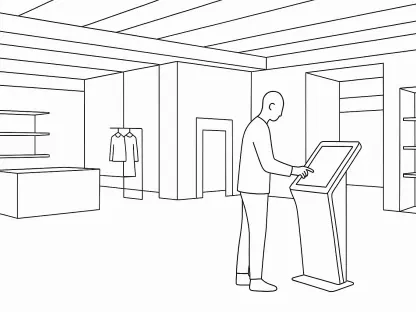
The physical environment of the modern grocery store has been re-engineered to support this algorithmic fluidity through the widespread deployment of electronic shelving labels. These digital displays, which have replaced traditional paper tags in thousands of locations, allow corporate headquarters to adjust prices across an entire national chain within seconds. This capability facilitates a “surge pricing” ecosystem that mirrors the dynamic models used by ride-sharing platforms and airlines, where costs spike during peak hours or in response to localized demand surges. While industry proponents argue that these labels improve efficiency and reduce labor costs, they also serve as the necessary infrastructure for real-time price discrimination. When a customer scans a loyalty app or uses a smart cart, the system can instantly cross-reference that identity with the electronic label at the point of sale, ensuring that the “base price” is high enough to negate the perceived value of any loyalty-linked discount.
A strategic behavioral pattern often cited by consumer privacy experts to describe this evolution is the “hook, hack, hike” framework. In the first phase, retailers “hook” consumers into joining rewards programs by offering immediate, tangible benefits such as a free item or a significant one-time discount. Once the consumer is enrolled, the “hack” phase begins, during which the company aggressively harvests data on every movement, purchase, and preference, building a dossier that reveals the consumer’s financial vulnerabilities. The final phase, the “hike,” occurs when the algorithm determines that the consumer is sufficiently reliant on the brand or locked into a specific habit. At this point, the system may begin to devalue rewards points, raise prices on frequently purchased items, or offer fewer coupons to those identified as high-loyalty/low-elasticity shoppers. This cycle demonstrates that what is marketed as a “reward” for loyalty is, in many cases, a mechanism for extracting the maximum possible profit from the most consistent customers.
Legislative Challenges and the Loyalty Loophole
The rapid expansion of surveillance pricing has triggered a wave of legislative scrutiny, as lawmakers attempt to balance technological innovation with consumer protection. Maryland recently took a significant step by enacting a state-level ban on certain forms of surveillance pricing within the grocery sector, aiming to prevent companies from using invasive personal data to set disparate prices. However, many consumer advocates remain skeptical of these early regulations due to the prevalence of what is known as the “loyalty loophole.” This legal carve-out often exempts any pricing adjustments made under the umbrella of a rewards program, allowing retailers to continue their data-driven pricing strategies as long as they are branded as “member-only benefits.” Critics argue that this loophole renders the bans largely symbolic, as the vast majority of surveillance-based pricing is already funneled through these very loyalty programs, creating a facade of regulation while the underlying practices remain unchanged.
In defense of these practices, retail industry lobbyists and trade organizations argue that data-driven “personalization” is a core benefit that modern consumers have come to expect. They contend that by analyzing individual preferences, stores can provide highly relevant discounts that actually save families money on the products they use most. From this perspective, the movement toward individualized pricing is a natural evolution of the couponing tradition, modernized for an era of instant digital communication. Industry advocates further suggest that the retail market is naturally self-regulating, asserting that any business which engages in truly predatory or discriminatory pricing would quickly alienate its customer base and lose market share to more transparent competitors. They maintain that legislative intervention is an overreach that could stifle innovation and lead to the elimination of the very discounts that help lower-income shoppers manage their weekly budgets.
Labor Perspectives and the History of Discounts
Labor representatives and consumer rights organizations offer a starkly different interpretation of the retail landscape, pointing out that customer loyalty was successfully built for over half a century without the need for invasive data mining. Organizations like the United Food and Commercial Workers union argue that the industry’s “all-or-nothing” narrative—claiming that discounts will vanish without surveillance—is a false choice designed to protect profit margins. Historically, retailers used mass-market sales and visible weekly circulars to drive foot traffic, a model that relied on transparency and competition rather than the secretive analysis of a shopper’s private life. The shift toward surveillance is viewed not as a necessity for offering value, but as an aggressive tactic to eliminate the consumer’s ability to price-shop effectively. When prices are hidden behind a digital wall or customized for each individual, the traditional power of the consumer to vote with their wallet is severely diminished.
Public sentiment increasingly aligns with this skepticism, as recent surveys indicate that a majority of Americans believe data-harvesting practices lead to higher overall costs rather than genuine savings. There is a palpable sense of unease regarding the “black box” nature of modern retail algorithms, where the logic behind a price change is never disclosed to the buyer. Many shoppers feel that the “currency of data” they provide through loyalty programs is being weaponized against them, turning their own shopping habits into a roadmap for companies to squeeze more profit out of every transaction. This growing distrust suggests that the industry’s focus on “personalization” may be backfiring, as consumers begin to recognize that the loss of the universal price tag also means the loss of price certainty and market fairness. As the gap between corporate marketing and the actual shopping experience grows, the demand for a return to transparent, uniform pricing is becoming a central theme in the broader debate over digital privacy.
Toward a New Model of Price Transparency
Seeking a more effective solution than the initial wave of regulations, states like New Jersey and Colorado are currently developing a “true ban” model based on the principle of equal terms. These proposed laws aim to close the loyalty loophole by mandating that any discount or price adjustment offered to one member of a rewards program must be available to every other member of that same program. This approach does not ban loyalty programs or discounts themselves, but it does prohibit the use of surveillance data to set different prices for different individuals within the same group. By requiring that discounts be public and uniform, these regulations seek to restore a sense of parity to the marketplace. Such a model effectively distinguishes between “targeted marketing,” where a store might suggest a product to a specific shopper, and “targeted pricing,” where the store changes the actual cost based on the shopper’s data.
The resolution of the battle over surveillance pricing will ultimately define the future of consumer autonomy in the digital age. Moving forward, the most effective path involves a combination of legislative “equal terms” mandates and a shift in industry standards toward radical transparency. Consumers are encouraged to demand clear disclosures regarding how their data influences the prices they see and to support retailers that commit to uniform pricing models. By restoring the universal price tag, either through law or market pressure, the American economy can move back toward a system where value is determined by the quality of the product rather than the depth of the buyer’s data profile. Ultimately, ensuring that the marketplace remains a transparent field for exchange is essential for maintaining public trust and protecting the fundamental right of every individual to engage in a fair and predictable transaction. This shift back toward uniformity was necessary to prevent a permanent erosion of consumer confidence and to ensure that technology serves the buyer as much as it serves the seller.