
Retailers have long navigated the complex world of store management through the heavy fog of yesterday’s data, relying on subjective mystery shoppers or delayed audits that fail to capture the urgency of the moment. The introduction of Vision by Serve First marks a definitive pivot toward a more scientific approach to brick-and-mortar operations. By repurposing standard security hardware as intelligent sensors, this platform bridges the historical gap between simple asset protection and sophisticated business intelligence, allowing store managers to respond to live conditions rather than historical reports.
The Shift: From Manual Audits to Autonomous Visual Intelligence
The transition from manual store checks to autonomous visual intelligence represents a fundamental change in how physical retail space is understood. Traditionally, operational excellence relied on human observation, which was inherently inconsistent and limited by the frequency of visits. Vision replaces these periodic snapshots with a continuous stream of objective data, transforming every camera into a high-fidelity input for a central intelligence engine.
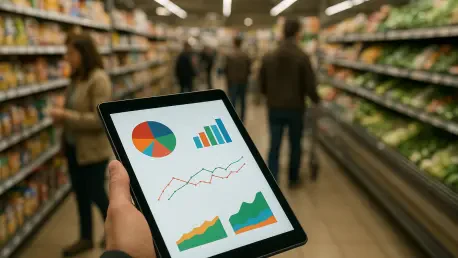
This technological evolution is significant because it provides a level of granularity previously reserved for e-commerce environments. While digital retailers have always tracked every click, physical stores have struggled to measure why a customer abandoned a cart or which aisle they skipped. By providing a live operational layer, this system allows multi-location operators to view performance across their entire estate in real-time, effectively treating a physical store like a live website.
Core Pillars of the Vision Operational Platform
Edge Processing and Privacy-First Architecture
A primary differentiator for Vision is its reliance on edge processing, a method where data is analyzed locally on the camera or a nearby server instead of being streamed to a central cloud. This architecture is vital for maintaining high speed and low latency in data reporting. Because faces are blurred at the source and no personally identifiable information is stored, the platform satisfies the most stringent regulatory requirements while providing peace of mind to the consumer.
Beyond compliance, this decentralized approach offers a pragmatic economic benefit by reducing the massive bandwidth costs associated with high-definition video streaming. In the current landscape of 2026, where data privacy is a non-negotiable consumer demand, this “privacy-by-design” methodology makes the technology viable for large-scale international deployment. It ensures that the system provides actionable business metrics without ever creating a surveillance risk for the shopper.
Multi-Metric Behavioral Tracking
The platform excels by monitoring a variety of behavioral metrics simultaneously, moving beyond simple footfall counting into the realm of complex intent analysis. It tracks dwell times and zone occupancy to identify which promotional displays effectively halt traffic and which ones are ignored. This level of detail allows for a deep understanding of customer behavior, helping managers identify “dead zones” within a store that may require lighting or layout adjustments.
Unlike basic motion sensors, this multi-metric tracking can distinguish between different types of customer-staff interactions. By analyzing how long a customer stays in a high-value zone before being greeted, the system provides an objective measure of service quality. This enables a shift from labor schedules based on historical guesses to staffing levels dictated by the actual, unfolding demand of the current hour.
Emerging Trends in Integrated Retail Ecosystems
The retail sector is currently moving away from standalone tools in favor of integrated ecosystems that combine live data with operational workflows. Vision is not merely a video tool; it is a component of a larger platform that links visual insights to audits, task management, and training. For example, if the system detects an increase in traffic, it can automatically trigger a notification for a supervisor to move a team member from the stockroom to the sales floor.
This synthesis of data and action is what differentiates the current generation of analytics from its predecessors. It eliminates the delay between identifying a problem and executing a solution. By consolidating live store data alongside customer feedback in a single interface, retailers can see the direct correlation between staffing density and customer satisfaction scores, allowing for a more holistic view of store health.
Practical Deployments and Operational Use Cases
Real-world applications of this technology have proven particularly effective in high-traffic sectors such as grocery and fashion retail. One notable implementation is proactive queue management, where the system alerts management the moment a third person joins a line. This allows for additional registers to be opened before wait times impact the customer journey. By managing queues empirically, stores have seen a measurable decrease in cart abandonment and a corresponding rise in brand loyalty.
Another significant application involves the empirical adjustment of store layouts based on customer interest. By observing heat maps generated over a week, retailers can determine which seasonal displays are driving conversion. This removes the guesswork from merchandising, ensuring that high-value floor space is always optimized. From 2026 to 2028, these deployments are expected to become the industry standard for any store looking to compete with the efficiency of online marketplaces.
Technical Barriers and Economic Considerations
Despite its advantages, the technology faces hurdles related to the sheer volume of visual data that must be processed. While edge computing mitigates many issues, the initial hardware investment for high-performance sensors across thousands of locations can be daunting. There is also the technical challenge of maintaining accuracy in environments with high visual noise or complex architectural layouts that create blind spots for standard camera placements.
To address these market obstacles, developers are focusing on reducing data processing costs through further decentralized computing and more efficient AI models. The goal is to reach a price point where high-level analytics are accessible to local independent retailers, not just flagship global brands. This democratization of data is essential for the long-term viability of the technology, ensuring that the return on investment remains clear even in lower-margin sectors.
The Future: “Always-On” Operational Intelligence
The future of retail management lies in the transition from reactive problem-solving to predictive intelligence. As AI models become more sophisticated, they will be able to forecast store needs based on a combination of live visual data, local weather patterns, and historical traffic trends. This move toward predictive analytics will allow stores to prepare for rushes hours before they happen, ensuring that resources are perfectly allocated.
Deep AI integration will eventually lead to a “self-healing” store environment where many operational decisions are automated. For instance, the system might adjust digital signage or lighting levels in real-time to guide traffic flow away from congested areas. This evolution will likely eliminate the last remnants of guesswork in the service industry, creating a seamless experience where the customer’s needs are met almost before they are voiced.
Final Assessment of Real-Time Visual Analytics
The review of real-time visual analytics demonstrated that the technology has matured into a reliable pillar of modern retail strategy. The successful balance between consumer privacy and actionable data proved that high-tech surveillance could be ethical and effective. By shifting the focus from historical snapshots to live operational metrics, platforms like Vision provided retailers with the transparency required to navigate a competitive landscape.
The overall assessment confirmed that the integration of visual intelligence into daily workflows transformed how labor was allocated and how floor plans were designed. The shift toward edge processing and predictive modeling marked a significant improvement over the siloed systems of the past. As these tools became more affordable and integrated, they set a new standard for operational excellence that prioritized the customer journey through empirical evidence.