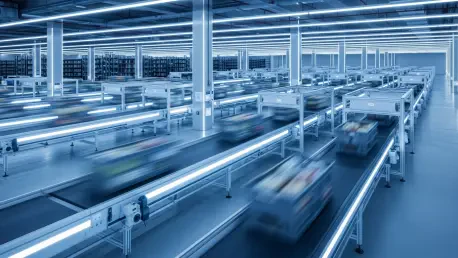

The global grocery landscape is undergoing a radical metamorphosis as retailers trade traditional manual picking for highly sophisticated, software-driven automated environments. This pivot is no longer a luxury reserved for the industry’s largest players but has become a foundational requirement for survival in a market defined by volatile consumer behavior. Collaborations such as the partnership between the Pattison Food Group and Dematic illustrate a broader industry movement toward integrating physical robotics with intelligent digital orchestration. As grocery stores transition from simple brick-and-mortar outlets to multi-modal fulfillment hubs, the reliance on human labor is being augmented by systems that can process thousands of orders with surgical precision. These automated systems represent a critical evolution in how food reaches the table, ensuring that the supply chain remains robust despite external pressures. By embracing this software-centric approach, retailers can finally bridge the gap between their legacy operations and the modern demands of a digital-first society.
Strategic Modernization for the Omnichannel Era
Modern fulfillment centers are rapidly transforming into software-defined warehouses where the intelligence of the digital layer dictates every movement of the physical machinery. This evolution is essential for managing the complexities inherent in an omnichannel marketplace, where distribution centers must simultaneously support large-scale store replenishment and individual direct-to-consumer e-commerce orders. By adopting these advanced digital architectures, retailers are ensuring that their logistics infrastructure possesses the necessary flexibility to handle sudden shifts in purchasing patterns without requiring a total physical redesign. This shift allows for a more fluid movement of inventory, where the software acts as a conductor for an orchestra of conveyors, shuttles, and picking arms. The result is a facility that is not just a storage space but a dynamic engine of commerce that can pivot its operational focus within minutes. Such adaptability proves crucial when dealing with the hyper-local demands and fluctuating inventory levels that characterize the current grocery sector.
A core component of this strategic modernization is the transition from basic mechanical hardware to sophisticated operational intelligence through the use of Warehouse Execution Software (WES). Instead of focusing solely on the speed of belts and motors, the industry is now placing a heavier emphasis on optimization algorithms and high-fidelity, real-time inventory visibility across the entire network. These digital tools allow modern facilities to navigate demand spikes and chronic labor shortages more effectively, maintaining high throughput even during broader global supply chain disruptions. The software analyzes incoming order streams to prioritize tasks dynamically, ensuring that the most urgent shipments are processed first while minimizing the energy and time spent by robotic systems. This level of granular control enables grocery providers to optimize their labor costs and reduce waste, which is particularly important when dealing with products that have a limited shelf life. As these systems become more prevalent, the distinction between a warehouse and a high-tech data center continues to blur.
Solving the Unique Logistics of Grocery Retail
Grocery fulfillment involves a set of unique challenges that set it apart from general retail, most notably the requirement to manage fresh, frozen, and ambient goods under rigorous safety standards. To meet these high-stakes demands, forward-thinking companies are turning to workflow-agnostic platforms that can switch between different picking strategies without necessitating a complete overhaul of the existing physical footprint. This flexibility is essential for handling the high volume of individual items that must be picked with both speed and accuracy to satisfy the modern shopper. Automated systems now utilize specialized cooling zones and climate-controlled transport paths to ensure that the cold chain remains unbroken from the moment a product enters the facility until it is loaded onto a delivery truck. By integrating these environmental sensors into the central management software, retailers can guarantee the quality and safety of their perishable stock at a scale that was previously impossible. This technological leap significantly reduces the risk of spoilage and enhances overall consumer trust.
Artificial Intelligence has also become a foundational element of the supply chain, evolving from a standalone novelty into a coordinated decision-making system that touches every aspect of the warehouse. Within these automated facilities, AI powers predictive forecasting and dynamic slotting, which automatically reorganizes the physical layout of the warehouse to prioritize high-demand items based on incoming data. These capabilities allow the system to respond instantly to real-time events, such as shipping delays or sudden promotional successes, creating a more responsive and reliable operation. Furthermore, machine learning models analyze historical order patterns to anticipate future needs, allowing managers to prep inventory long before a customer even places an order. This proactive approach to fulfillment minimizes bottlenecks and ensures that the robotic systems are always working at their most efficient capacity. By removing the guesswork from inventory management, AI-driven systems provide a level of operational stability that traditional manual processes simply cannot match in today’s high-velocity retail environment.
Ensuring Resilience Through Data and Unified Systems
Industry leaders are now treating automation as a baseline requirement for operational resilience rather than a mere cost-cutting tool used to reduce the headcount on the warehouse floor. While early automation efforts were focused primarily on increasing pure speed, modern projects prioritize the ability to keep goods moving smoothly even under unpredictable and volatile market conditions. The long-term success of these facilities now depends more on the intelligent software managing the flow of materials than on the specific brand or mechanical specifications of the robotics being used. This shift in perspective acknowledges that hardware is only as good as the instructions it receives, making the digital logic the true heart of the distribution network. Consequently, grocery retailers are investing heavily in cyber-resilient systems and redundant software architectures to ensure that their automated hubs remain online around the clock. This focus on reliability ensures that the food supply remains stable, even when faced with regional labor crises or sudden shifts in international trade logistics.
Moving toward automated fulfillment represented a complete rethinking of how goods traveled through the economy by replacing siloed systems with unified platforms that connected planning and logistics. By synchronizing these disparate elements, grocery retailers built much more adaptable networks that could scale in real-time to meet the evolving needs of the modern consumer with precision. The integration of edge computing and cloud-based analytics provided managers with the insights needed to refine their strategies on the fly, ensuring that resources were always allocated to the most critical areas. Successful organizations realized that the path forward required a commitment to continuous digital transformation and a willingness to abandon outdated legacy frameworks. These investments yielded significant improvements in order accuracy and customer satisfaction, proving that technology was the key to unlocking long-term growth. Ultimately, the adoption of software-driven automation paved the way for a more sustainable and efficient grocery retail model that flourished by prioritizing data integrity and operational agility across the entire fulfillment ecosystem.