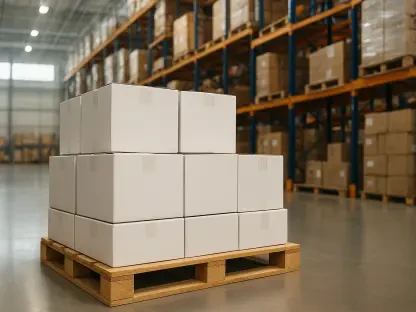

The transition from ephemeral, single-use containers to durable, intelligent assets has redefined the logistics of global trade into a sophisticated ecosystem where every crate functions as a vital data point. This evolution marks a departure from the traditional linear economy, moving toward a framework where packaging is no longer a discarded byproduct but a high-performance tool. As of 2026, the integration of material science and digital tracking has enabled a seamless flow of goods that prioritizes environmental stewardship without compromising the speed or safety of the supply chain. This review explores how these systems have become the backbone of modern retail and industrial distribution.
Core Principles of Modern Reusable Packaging
The fundamental premise of modern reusable packaging rests on the replacement of disposable materials with high-durability polymers and metals designed for hundreds of cycles. In the current 2026 landscape, this technology is defined by its ability to maintain structural integrity under extreme industrial stress while remaining fully trackable throughout its lifespan. Unlike traditional systems that viewed a box as a one-time expense, modern frameworks treat each unit as a capital asset. This shift has been necessitated by the rising costs of raw materials and the urgent need to mitigate the logistical footprint of global shipping.
Central to this technological shift is the concept of standardized modularity. Containers are now engineered to fit perfectly within automated storage and retrieval systems, ensuring that human intervention is minimized. By utilizing standardized dimensions, the industry has achieved a level of interoperability that was previously impossible. This synchronization allows different stakeholders to share a common infrastructure, reducing the number of empty trips and optimizing the volume of every truck and ship. The relevance of this technology lies in its capacity to transform a fragmented logistics sector into a unified, efficient machine.
Technical Architecture and System Components
Industrial Pooling: Network Infrastructure
The effectiveness of a reusable system is entirely dependent on the robustness of its pooling network. Pooling refers to a shared resource model where a central provider manages a massive inventory of containers that are rented or leased by various users. This architecture eliminates the need for individual companies to manage their own private fleets, which often leads to logistical imbalances and wasted storage space. Instead, the pooling provider ensures that clean, functional assets are always available where demand is highest, creating a dynamic supply chain that reacts in real-time to market fluctuations.
Furthermore, the performance of these networks is now augmented by advanced cloud-based platforms. These platforms monitor the location and condition of every asset, allowing for predictive maintenance and optimized routing. By analyzing data from 2026 to 2028, companies can forecast seasonal spikes in demand and preposition inventory accordingly. This level of network intelligence ensures that the pooling system functions as a decentralized utility, providing a reliable service that lowers the barrier to entry for smaller producers who would otherwise be priced out of sustainable packaging options.
Closed-Loop Material Recovery: Recycling
A key technical differentiator in modern systems is the implementation of a true closed-loop material recovery process. This involves a rigorous lifecycle management strategy where containers are not just recycled in the traditional sense but are remanufactured back into identical products. When a plastic crate reaches the end of its functional life, it is returned to a specialized facility where it is shredded, purified, and turned into high-grade resin. This process preserves the polymer chains, ensuring that the new container possesses the same mechanical properties as the original, thus maintaining the safety standards required for heavy-duty use.
This technical achievement is unique because it bypasses the “downcycling” problem often associated with plastic waste. In many competing systems, recycled plastic loses its strength and must be used for lower-quality items like park benches or flowerpots. However, the closed-loop engineering used today ensures that the material remains within the high-value logistics sector. This circularity significantly reduces the demand for virgin petroleum-based resins, decoupling the packaging industry from volatile oil markets and providing a more stable economic foundation for long-term operations.
Industrial Hygiene: Disinfection Protocols
Maintaining food-grade integrity across multiple lifecycles requires an engineering focus on high-volume washing and disinfection. Modern facilities utilize multi-stage automated washing tunnels that employ high-pressure jets, specific thermal ranges, and biodegradable chemical agents to remove organic residues and pathogens. These systems are designed to handle thousands of units per hour while meeting the stringent safety standards required for fresh produce and pharmaceuticals. The engineering challenge lies in achieving this level of cleanliness while minimizing water and energy consumption.
To ensure safety, real-time sensors monitor the chemical concentration and temperature of the wash water. If any parameter falls outside the safety threshold, the system automatically adjusts or halts the line to prevent contamination. This rigorous approach to hygiene is what allows reusable systems to compete with single-use alternatives, which are often perceived as more sterile. By proving that a reused container can be just as clean as a brand-new one, the industry has overcome one of the primary psychological and technical barriers to widespread adoption.
Emerging Trends and Regulatory Drivers
The most significant trend currently influencing the trajectory of reusable packaging is the rapid digitalization of the asset itself. Through the integration of RFID and Bluetooth Low Energy sensors, each container can now report its own status, including its location, the temperature of its contents, and even any physical shocks it has sustained. This data is invaluable for industries like cold-chain logistics, where a slight temperature deviation can ruin an entire shipment. This shift toward “smart packaging” has turned a passive plastic box into an active participant in the digital supply chain.
Regulatory mandates, particularly the updated Packaging and Packaging Waste Regulation in Europe, have also served as a primary catalyst. These laws have moved beyond mere suggestions, now requiring specific percentages of reusable packaging to be used in various sectors. The regulation scheduled for August 12, 2026, mandates that all packaging placed on the market must have a documented “Declaration of Conformity.” This legal pressure has forced companies to move quickly, shifting their business models from a focus on low-cost disposability to a focus on long-term asset management and documented sustainability.
Real-World Applications: Sector Integration
The retail grocery sector has become the primary laboratory for large-scale implementation of reusable systems. Fresh produce, which was once shipped in wooden crates or cardboard boxes that often collapsed under moisture, is now transported in ventilated plastic containers. These units provide superior protection, significantly reducing the amount of food wasted due to bruising or rot during transit. In contrast to cardboard, which is a one-way cost, these durable crates are used for years, providing a clear economic advantage to retailers who can spread the initial investment over thousands of uses.
Beyond the supermarket, the automotive and pharmaceutical industries have also integrated these systems into their core operations. In automotive manufacturing, standardized containers facilitate the “just-in-time” delivery of parts, fitting perfectly into robotic assembly lines. In the pharmaceutical sector, the focus is on security and temperature control. Reusable shippers equipped with high-tech insulation and tracking sensors ensure that sensitive vaccines and medications reach their destination in perfect condition. These use cases demonstrate that the technology is versatile enough to meet the varied demands of different industrial environments.
Implementation Hurdles: Systemic Challenges
Despite the clear benefits, the transition to reusable systems is not without significant hurdles. The most prominent challenge is the initial capital expenditure required to build the necessary inventory and infrastructure. Unlike single-use packaging, which is a recurring operational cost, reusable systems require a large upfront investment. For many companies, this represents a significant financial shift that requires a new way of calculating return on investment. Additionally, the logistics of the “reverse loop”—the process of collecting and returning empty containers—is complex and requires meticulous coordination.
Another technical obstacle is the lack of universal standardization across different regions and industries. While some pooling providers have established dominant formats, there is still a risk of fragmentation where different systems are incompatible with one another. This can lead to inefficiencies where containers from one pool cannot be cleaned or repaired at a facility belonging to another. Ongoing development efforts are focused on creating open standards and better data-sharing protocols to ensure that the global logistics network remains fluid and interconnected rather than siloed into proprietary islands.
Future Outlook: Technological Trajectory
Looking ahead toward the end of this decade, the trajectory of reusable packaging will likely be defined by the integration of artificial intelligence and advanced material science. AI algorithms will play a critical role in managing the massive data sets generated by smart containers, predicting where assets will be needed weeks in advance and identifying inefficiencies in the return loop. This will move the industry from a reactive model to a purely proactive one, further reducing the carbon footprint of logistics by eliminating unnecessary transport of empty crates.
In terms of materials, researchers are exploring the use of self-healing polymers and bio-based composites that offer the durability of traditional plastics but are even easier to recycle. These materials could potentially extend the lifespan of a container even further, perhaps to a thousand cycles or more. As the technology matures, we can expect to see reusable systems expand into the consumer space, with standardized packaging for home delivery services and e-commerce. This expansion will likely lead to a society where the concept of “waste” in packaging becomes an obsolete relic of the past.
Assessment and Final Synthesis
The evolution of reusable packaging systems has reached a critical tipping point where the technology is no longer an experimental niche but a foundational element of industrial infrastructure. The integration of pooling networks, digital tracking, and industrial-grade hygiene created a system that surpassed the efficiency and reliability of traditional single-use formats. By treating packaging as a durable asset, the global supply chain significantly reduced its environmental impact while simultaneously gaining unprecedented visibility into the movement of goods.
The industry effectively demonstrated that the challenges of hygiene and reverse logistics were solvable through engineering and collaboration. The shift toward a circular model was not merely a response to environmental pressure but a strategic move toward greater economic stability and operational intelligence. As these systems continued to evolve, they set a new standard for how modern society managed resources. The transition finalized the professionalization of the packaging sector, ensuring that every container contributed to a more resilient, transparent, and sustainable global economy.