
The traditional retail floor has long functioned as a black box where inventory levels are guessed rather than known, leading to billions in lost revenue across the global economy every single year. In this new landscape, Industry AI functions as a bridge, transforming the static inventory list into a dynamic flow of information that updates with every movement of a garment. When a customer carries a shirt toward the fitting room, the ecosystem recognizes the change instantly through embedded sensors. This shift ensures that replenishment is no longer a guessing game played at the end of a shift, but a continuous response to demand patterns that eliminates the traditional delay in fulfillment and keeps shelves perpetually stocked.
Instead of a manager reacting to a “sold out” alert hours too late, the autonomous system anticipates the need before the shelf ever becomes empty. This transition marks the move from reactive management to proactive intelligence, where software identifies trends as they happen and coordinates with the supply chain to prioritize critical items. By bridging the gap between digital convenience and physical immediacy, retail environments now provide the same level of transparency found in online shopping, giving physical locations a competitive edge. This evolution creates a frictionless journey for the shopper, who no longer faces the frustration of a wasted trip for an unavailable product.
The End of the “Out of Stock” Era
Solving the persistent frustration of the empty retail shelf requires more than just faster logistics; it demands a total integration of real-time data and automated fulfillment. In modern commerce, a missed sale is often a failure of visibility rather than a lack of product. Industry AI addresses this by connecting every item on the floor to the broader supply chain network, allowing the system to trigger a restock the moment a transaction is finalized. This level of synchronization turns the physical store into an intelligent node within a global network, ensuring that the right product is always in the right place at the right moment.
The move toward proactive intelligence allows retailers to manage their inventory with a precision that was previously impossible. By analyzing localized demand in real time, autonomous systems can adjust fulfillment schedules to account for sudden spikes in traffic or regional trends. This shift doesn’t just benefit the bottom line; it fundamentally changes the relationship between the brand and the consumer. When digital convenience is paired with physical immediacy, the shopper gains a reliable experience that builds long-term trust and loyalty, effectively ending the era of “out of stock” disappointment.
Why the Autonomous Enterprise Matters Today
The global commerce environment is currently navigating a complexity crisis where fragmented supply chains and erratic consumer behaviors make traditional retail software obsolete. Legacy systems, while functional for record-keeping, lack the agility to process millions of data points across thousands of locations in seconds. To stay relevant, companies must move beyond basic data insights toward a model where the software itself takes executive action. The autonomous enterprise represents this evolution, moving the burden of logistical decision-making from human shoulders to high-speed algorithms capable of optimizing entire retail networks.
SAP and VF Corporation have emerged as leaders in this space, redefining the retail value chain by proving that massive operations can operate with boutique precision. By integrating AI directly into the core business logic, these organizations have reduced the friction that typically slows down large-scale expansion. This shift allows executives to focus on long-term strategy while autonomous systems handle the granular complexities of daily operations, ensuring that the brand promise is delivered consistently regardless of geographical hurdles. The result is a more resilient business model that can pivot as quickly as market conditions change.
Exploring the S.Fashion Innovation Ecosystem
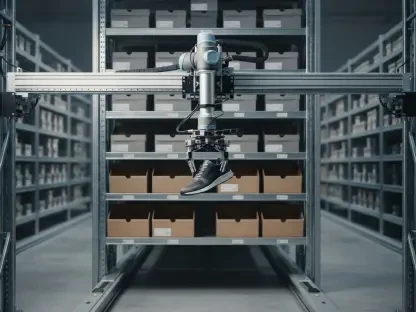
The S.Fashion innovation space in Walldorf serves as a blueprint for the stores of tomorrow, operating as a living laboratory where technology is tested in real-world scenarios. This facility is a fully functioning retail environment where every asset is connected through a comprehensive sensor network that monitors everything from shelf weight to foot traffic. Industry AI is woven into the logistics and customer touchpoints, creating a seamless loop between the backroom and the sales floor. High-fidelity RFID tags and robotic scanning systems maintain a perfect mirror of physical inventory, ensuring the digital record is an exact reflection of reality.
The operational model at S.Fashion functions across three distinct tiers: the intelligent back-end infrastructure, the interactive storefront, and the autonomous supply chain interface. On the floor, personalization reaches new heights as customers interact with smart mirrors that offer styling suggestions based on real-time stock availability. The inclusion of on-site micro-factories allows for hyper-personalization, such as AI-generated embroidery that turns a standard purchase into a unique artifact. This setup demonstrates how retail can pivot from a place of mass consumption to a center for customized production and creative engagement.
Expert Perspectives on Human-Centric Automation
Christian Klein has frequently emphasized that the true power of AI is unlocked only when it is applied within a deep business context. For SAP, the goal is not to create a generic chatbot but to build an intelligent assistant that understands the nuances of fashion retail, such as seasonal trends and sizing variances. By embedding this intelligence into the Business Technology Platform, technology moves from being a tool that humans use to a partner that handles heavy data processing. This transition allows store employees to rediscover the art of salesmanship, focusing on the customer rather than the computer.
Sujay Kumar views these innovations as the key to scaling high-touch retail experiences globally without ballooning operational costs. The objective is to absorb operational complexity at the software level so that store associates are no longer tethered to inventory clipboards or back-of-house administration. When technology manages logistics, the human element can focus on loyalty and satisfaction, turning a simple transaction into a lasting brand relationship. This balance between high-tech infrastructure and high-touch interaction ensures that automation enhances the human experience in the shopping journey rather than replacing it.
Strategies for Implementing Autonomous Retail Systems
Implementing an autonomous retail system starts with a foundation built on a dedicated Business AI platform that can scale with the organization. Connecting physical assets through a dense network of sensors and RFID tags is the critical first step in achieving total visibility. Once this data layer is established, deploying generative AI assistants like Joule allows for frictionless customer journeys where inquiries about fit or stock are answered instantly.