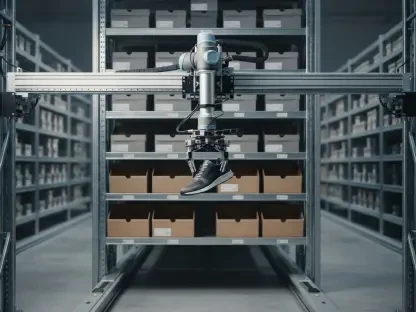

Mobile functionality for scanning items in the stockroom has transitioned from a luxury to a requirement for maintaining data integrity in modern retail environments. In the high-stakes world of liquor retail, success depends on significantly more than just maintaining a diverse selection of popular spirits and vintage wines. Unlike general retail sectors, beverage stores face a unique set of external pressures, ranging from stringent age-verification mandates to intense high-volume transaction periods that occur during holiday weekends and evening rushes. A specialized Point of Sale (POS) system functions as the essential central nervous system of the operation, effectively integrating legal compliance, supply chain logistics, and data-driven marketing into a unified interface. By automating repetitive administrative tasks and providing clear financial insights, these modern systems transform the standard checkout counter into a powerful engine for sustained store growth and operational stability.
Mitigating Legal Liability Through Integrated Verification
In the alcohol industry, the POS system serves as the primary line of defense against legal liabilities that could potentially shutter a business overnight. Integrated identification scanning is no longer an optional luxury but a fundamental requirement for modern liquor retail environments aiming for long-term stability. Advanced systems utilize high-speed barcode scanning to verify the authenticity of a driver’s license and automatically log the age check for every single transaction. This automation effectively eliminates human error during peak hours and provides a digital paper trail that protects the store owner from severe fines, license suspensions, and irreparable reputational damage. By mitigating the risk of underage sales, a specialized POS system secures the long-term viability of the business. Retailers should be wary of technology vendors that charge extra for these basic safety features, as they are essential for operating within strict legal limits.
Automating Compliance and Regional Pricing Regulations
Beyond simple age prompts at the register, sophisticated systems help managers navigate the complexities of state-specific pricing regulations and restricted sale hours with automated precision. These platforms are designed to handle variable tax rates and mandatory minimum pricing laws that often vary between jurisdictions, ensuring that every sale remains compliant with local mandates. This automated compliance allows the floor staff to focus entirely on customer service and product recommendations rather than worrying about the technicalities of regional liquor laws. Furthermore, the system can be programmed to automatically lock sales during prohibited hours, preventing accidental violations that could trigger an inspection. By centralizing these regulatory tasks within the software, owners reduce the administrative burden on themselves and their management teams. This level of automation ensures that the business remains audit-ready at all times without constant manual oversight.
Solving the Inventory Paradox with Case Breaks
One of the most persistent challenges in liquor retail is managing the inventory paradox, where a single product is frequently sold in multiple different formats. A shipment might arrive as a bulk case, but it is often broken down and sold as a 12-pack, a 6-pack, or even a single bottle depending on customer demand. Standard retail software often fails to reconcile these varying units, leading to significant discrepancies between the digital count and the physical stock on the shelves. A specialized liquor POS includes built-in case break logic that automatically updates all related inventory units the moment a sale is made, ensuring the data remains accurate across all categories. This real-time synchronization prevents the digital inventory from decoupling from reality, a phenomenon known as inventory drift. Without this specific functionality, annual inventory audits often reveal massive financial inaccuracies that can take weeks of manual labor to resolve and correct effectively.
Enhancing Accuracy Through Mobile Scanning and Audits
Maintaining high profit margins requires effective inventory management tools such as receiving against purchase orders and consistent cycle counting. Instead of performing a grueling and exhaustive annual inventory audit that disrupts store operations, these specialized systems facilitate rolling counts by aisle or product category. This approach allows staff to audit wine one week and spirits the next, ensuring that data remains fresh and actionable throughout the fiscal year. Handheld mobile devices further enhance this accuracy by allowing employees to scan items directly in the stockroom or on the sales floor without returning to a central terminal. This real-time data integrity prevents both overstocking and costly stockouts, ensuring that business capital is not tied up in slow-moving or obsolete products. By streamlining the receiving process, owners can verify that what was ordered and paid for actually arrived at the loading dock, further protecting the bottom line.
Comparing Specialist Systems Against Generalist Platforms
There is a significant and growing divide in the market between generalist platforms and beverage-specific specialist systems designed for high-SKU environments. While generalist POS systems are often praised for their sleek designs and low barrier to entry, they frequently struggle with the thousands of unique SKUs found in a typical modern liquor store. Specialist platforms come pre-loaded with vast product catalogs and can seamlessly integrate with distributor price files to ensure that cost changes are reflected instantly. As a business grows in complexity and volume, the friction and manual work required to maintain a generalist system often become more expensive than the monthly fee of a specialized solution. The manual entry of thousands of products and the lack of integrated beverage databases can lead to errors that compromise the integrity of financial reports. Choosing a system that understands the nuances of the industry is a strategic decision for long-term growth.
Addressing the Hidden Costs of Generalist Friction
The adoption of generic retail technology often introduces hidden operational costs that manifest as decreased efficiency and increased labor requirements. For instance, without a database tailored to the beverage industry, staff must manually enter ABV percentages, vintage years, and regional designations for every new bottle. This manual friction slows down the onboarding of new inventory and increases the probability of data entry errors that complicate tax reporting and inventory valuation. Specialist systems, however, are built with the understanding that a liquor store operates more like a high-density warehouse than a traditional boutique. By utilizing industry-specific workflows, these systems allow retailers to automate the most time-consuming aspects of their business. Reducing this friction ensures that the digital infrastructure supports rather than hinders the growth of the enterprise, allowing the management team to focus on expanding their market share and improving the overall customer experience.
Shifting Focus from Gross Sales to Margins
In an economic landscape where spirits volume may increase while total revenue remains relatively flat, tracking total sales figures is often a vanity metric that hides true performance. To truly boost profitability, store owners must shift their focus toward tracking the gross margin by category and individual SKU. A robust liquor POS allows owners to identify which specific products are generating actual profit and which are simply occupying valuable shelf space without contributing to the bottom line. By generating detailed margin reports in under a minute, owners can make informed procurement decisions that prioritize high-return items over low-margin fillers. This data-driven approach to stock selection ensures that every square foot of the retail floor is optimized for maximum financial return. Furthermore, tracking margins over time helps identify trends in consumer behavior, allowing managers to adjust their pricing strategies before a decline in profitability becomes a major issue.
Addressing Feature Bloat and Practical Investments
Retailers must be careful to avoid feature bloat, which consists of flashy digital tools that offer little practical return on investment for the average store owner. For example, complex AI demand forecasting models often fail to outperform simple, well-maintained reorder points in a neighborhood shop where local trends are more predictable. Similarly, expensive customer kiosks frequently take up valuable floor space without providing a proportional increase in sales or customer satisfaction levels. By focusing on boring but vital features like rapid transaction speeds and easy-to-use return functions, owners can ensure their technology investment supports daily operations effectively. The most profitable systems are those that prioritize reliability during worst-case performance scenarios over unproven experimental features. Simplifying the interface ensures that the system remains a tool for efficiency rather than a source of frustration for both employees and customers.
Streamlining Training and Workflow for New Staff
A high-quality POS system should have a low bar for training, allowing new hires to perform advanced tasks with minimal instruction. In an industry characterized by high turnover, the ability to get a new employee up to speed on returns, price overrides, and ID checks within minutes is a major operational advantage. A user-friendly interface reduces the likelihood of costly mistakes and ensures that staff feels confident using the system from their very first shift. This efficiency not only improves the customer experience by reducing wait times but also lowers the administrative burden on the store manager. When the POS system is intuitive, training time is slashed, and the risk of transaction errors is significantly minimized. This allows management to spend more time on high-level business strategy and less time on repetitive technical troubleshooting. Ultimately, a system that empowers the workforce leads to a more professional environment and a more successful retail operation.
Evaluating Long-Term Strategic Technology Investments
The implementation of specialized POS protocols allowed retailers to reclaim lost margins and refocus their efforts on high-value customer interactions. Business owners who prioritized data sovereignty ensured that their operational history remained a private asset, providing them with the agility needed to pivot as consumer preferences shifted toward new beverage categories. By investing in resilient, industry-specific hardware and software solutions, store managers successfully mitigated the risks associated with high-turnover staffing and complex regulatory landscapes. These strategic investments transformed the traditional liquor store into a highly efficient, data-driven enterprise that remained competitive in an increasingly crowded marketplace. Successful managers prioritized the consolidation of inventory data and the automation of legal compliance, ensuring the business remained healthy for years to come. Ultimately, these technological choices established a solid foundation for sustainable growth and long-term financial security.