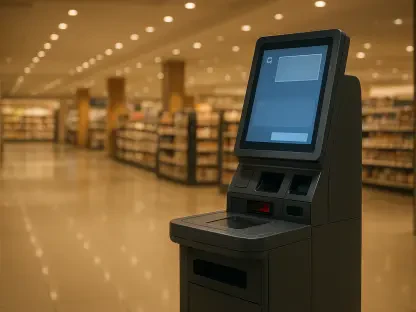

The global retail sector is currently navigating a period of unprecedented financial strain as inventory shrinkage and sophisticated theft reach a critical breaking point of ninety billion dollars. Retailers have historically operated on a defensive backfoot, relying on post-incident audits that merely quantify losses rather than preventing them. This reactive posture is no longer sustainable given the rising complexity of organized retail crime and internal vulnerabilities.
AI-native development firms are stepping into this vacuum, transforming legacy security from simple observation tools into active participants in floor management. By moving away from manual oversight, businesses are finally finding ways to intervene before a loss impacts the bottom line. These applications mark a decisive shift in operational strategy across both high-street boutique shops and massive logistics hubs.
Traditional loss prevention strategies often failed to bridge the gap between physical movement and digital records. Modern solutions address this by integrating directly with existing infrastructure to provide a cohesive view of store operations. This evolution allows security teams to move from retrospective investigation to real-time asset protection, fundamentally changing the economic landscape of the industry.
Analyzing the Technological Evolution and Market Projections for AI Security
From Reactive Cameras to Intelligent Computer Vision and Data Synchronization
Modern surveillance has moved beyond grainy footage toward sophisticated computer vision systems that interpret human movement as actionable data. These agentic systems identify suspicious behaviors and cross-reference them with physical inventory shifts in real time. Because the software is hardware-agnostic, companies can implement these capabilities without the need for expensive infrastructure overhauls.
Integrating cameras with Point of Sale (POS) and warehouse management systems effectively closes the gap between visual evidence and financial records. This synchronization ensures that every item moved is accounted for in the digital ledger. As consumer and employee behaviors evolve in response to high-tech monitoring, the presence of intelligent surveillance serves as both a deterrent and a reliable source of truth.
Growth Forecasts and the Rising Valuation of the AI Loss Prevention Sector
The synchronization of surveillance feeds with transaction data is projected to drive significant market growth from 2026 to 2029. Success in this sector is measured by the ability to scale solutions across thousands of cameras while maintaining high performance. Analysts observe that early adopters are recovering billions in revenue, which justifies the rising valuation of the AI security market.
This trend reflects a broader shift where high-tech monitoring is becoming a standard requirement for protecting profit margins. Financial models indicate that the cost of AI implementation is rapidly offset by the reduction in inventory shrink. As the global security software market expands, the focus remains on delivering measurable returns through operational integrity and loss mitigation.
Navigating the Technical Hurdles and Complexity of Real-Time Fraud Detection
Implementing real-time detection remains challenging due to the latency between an event and a notification. High-traffic environments often trigger false positives, which requires refined deep learning models that distinguish between harmless shopping and actual concealment. Overcoming these integration issues is vital for ensuring that security teams can act before a suspect leaves the premises.
Internal administrative fraud and warehouse mismanagement also present significant “hidden” hurdles for retailers. Fraudulent returns and unauthorized discounts are hard to track without mapping transaction logs directly to visual evidence. Advanced AI platforms address this by providing a granular level of oversight that identifies subtle patterns of theft that would otherwise remain undetected during routine audits.
The Regulatory Framework and Ethical Standards for AI Surveillance
Compliance with data privacy mandates like the GDPR and CCPA has become a non-negotiable priority as monitoring becomes more pervasive. Balancing the need for security with individual rights requires strict protocols on how facial recognition and behavioral analytics are deployed. Establishing industry standards for digital evidence handling ensures that AI-generated data is both admissible and ethically gathered.
Transparency with employees regarding the scope of surveillance helps prevent a breakdown in workplace morale. Establishing definitive proof through synchronized video and transaction data reduces the likelihood of wrongful accusations. Robust security protocols also protect this sensitive data from external breaches, ensuring that the tools used to prevent theft do not themselves become targets for cybercriminals.
The Future of Retail Intelligence: Generative AI and Autonomous Loss Prevention
The next wave of industry disruption involves fully autonomous security ecosystems that predict theft patterns before they occur. Generative AI will likely play a central role by automatically synthesizing legal documentation and incident reports to reduce administrative burdens. This evolution suggests a future where human intervention is reserved for only the most complex investigations and high-level strategy.
Long-term innovation in the logistics sector will focus on deep learning models that optimize entire supply chains through visual auditing. Reducing inventory shrink across the globe could spark a broader economic recovery by stabilizing prices for consumers. As computer vision continues to mature, the boundary between operational efficiency and asset protection will likely disappear as systems become more self-correcting and predictive.
Summary of Quytech’s Impact and the New Benchmark for Operational Security
The introduction of this AI-powered system marked a significant milestone in how the industry approached the crisis of retail shrinkage. By prioritizing data synchronization and computer vision, the platform offered a scalable remedy for losses that had previously seemed insurmountable. The hardware-agnostic nature of the tool allowed for rapid adoption across diverse retail environments, enabling firms to protect their operational integrity.
Fortune 500 companies and small enterprises alike gained access to a level of security that was once reserved for only the most technologically advanced facilities. Leaders recommended that organizations prioritize the integration of AI to protect their profit margins from market volatility. The shift toward real-time intervention provided a new benchmark for secure retail operations and turned the tide against the escalating costs of theft and administrative fraud.