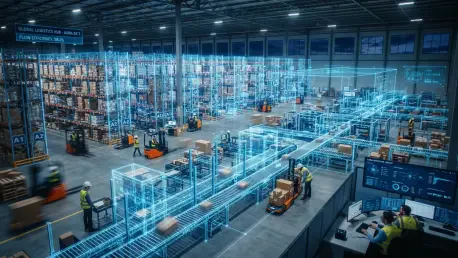

Managing complex trade-offs in warehouse operations has become more precise through the ability to run multiple future scenarios within a digital environment. This shift marks a significant milestone for Primark as the retail giant integrates Kallikor’s supply chain platform to build high-fidelity virtual replicas of its massive distribution hubs. By leveraging these digital twins, management teams can visualize and pressure-test every operational change or major capital investment before a single physical shelf is moved. This strategic move addresses the volatile nature of modern fashion logistics where every minute saved in sorting or dispatch translates directly into improved store availability. The platform utilizes actual enterprise data to construct granular flow models, providing a realistic playground where performance can be measured under hypothetical stresses. Consequently, the fashion retailer ensures that its core customer service levels are never compromised, even as it aggressively seeks out hidden efficiencies within its existing infrastructure. This digital transformation represents a fundamental change in how the organization plans for its international footprint. As the fashion landscape grows increasingly competitive, the ability to predict the outcome of logistical adjustments before they are implemented serves as a powerful competitive advantage, fostering a more resilient and responsive supply chain network that can adapt to changing consumer demands with accuracy.
Strategic Expansion and Risk Mitigation: The Role of AI Simulations
Central to this technological overhaul is the application of AI-enabled scenario exploration, which empowers Primark to evaluate several competing operating models at once. This capability is essential for aligning various departments—from finance to procurement—around a singular, data-driven strategy. When different teams see the projected outcomes of a specific network design, consensus is reached faster, and implementation timelines are shortened. Adam Hoccom, the director of supply chain at Primark, noted that this collaboration with Kallikor provides the necessary evidence base to innovate with confidence. It allows the brand to optimize facility layouts and workflows without the daunting financial risk of premature or poorly planned execution. Furthermore, the initiative is designed for long-term scalability, ensuring that as the company targets new global markets, its logistics framework can expand seamlessly. This includes testing future automation pathways and massive capital expenditures within the safety of the digital twin, effectively de-risking the transition to more advanced warehouse technologies. By simulating the long-term impact of these investments, the brand can prioritize projects that offer the highest return while maintaining the agility needed to pivot when market conditions shift. This methodical approach ensures that every dollar spent on infrastructure is backed by rigorous virtual testing and performance forecasting.
Navigating Institutional Transitions: Future-Proofing the Supply Chain
This technological leap arrived at a critical juncture as the retailer navigated significant structural transitions, including its formal separation from parent company Associated British Foods. To remain competitive in a shifting retail climate, the business model evolved to include its first-ever home delivery service in Great Britain alongside aggressive price reductions on core products. The digital twin technology served as the foundational pillar for this modernization, ensuring the supply chain remained cost-effective during such intense institutional change. Moving forward, the organization focused on integrating real-time telemetry from warehouse robotics directly into the Kallikor platform to refine accuracy even further. Executives prioritized the development of predictive maintenance schedules within the virtual model to prevent downtime before it occurred in the physical world. By establishing this digital-first mindset, the brand successfully prepared its workforce for a more technical environment while securing its status as a leader in logistics innovation. Future considerations involved expanding these models to encompass end-to-end maritime logistics, creating a holistic view of the product journey from the factory gate to the customer’s hands. This comprehensive strategy ultimately reinforced the brand’s ability to support rapid global growth while maintaining the low-cost efficiency that defined its market position.