
The Great Retail Pivot: Balancing Automation and Human Oversight
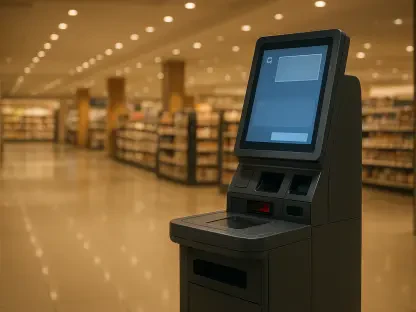
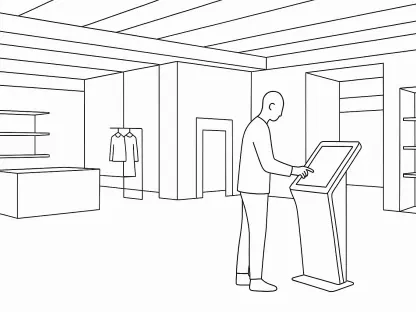
The rapid proliferation of self-checkout kiosks once seemed like an unstoppable march toward total retail automation, but the landscape in 2026 has shifted into a complex legal and social battlefield where efficiency now clashes with oversight. Retailers who previously viewed these terminals as a panacea for rising labor costs are facing a harsh reality as state and local governments begin to intervene in the name of labor rights and consumer protection. This intervention is not just about nostalgia for a friendly face at the register; it is a calculated response to the economic and social friction caused by unmonitored transactional machines that have arguably offloaded labor onto the consumer without providing a corresponding benefit.
The current retail environment is defined by a tension between the technological capability to automate and the societal demand for human accountability. Major market players across the food retail, pharmacy, and general merchandise segments are navigating a patchwork of new regulations that seek to redefine the “unpaid work” performed by shoppers. As the industry matures, the focus has shifted from the novelty of the technology to the ethical implications of its implementation. This includes how automation affects the elderly and disabled, the privacy risks inherent in AI-driven loss prevention, and the long-term sustainability of a workforce that is increasingly being displaced by kiosks.
The Evolution of the Checkout Experience and Market Dynamics
Emerging Trends in Automated Service and Labor Dynamics
A significant trend currently reshaping the industry is the emergence of a human backstop movement, which posits that total automation is a failed experiment in the high-stakes world of retail. Labor organizations, such as the United Food and Commercial Workers, have successfully argued that self-checkout is a raw deal that reduces job security for employees while forcing customers to troubleshoot technical errors without assistance. Consequently, many retailers are reconsidering their staffing models, moving away from a kiosk-only approach toward a more integrated system where human employees provide essential oversight for complex transactions and safety.
This shift in labor dynamics is also a response to evolving consumer behaviors that suggest a growing frustration with the friction of self-service. While early adopters embraced the speed of kiosks, a large segment of the population now expresses checkout fatigue, viewing the scanning and bagging process as a burden that should be compensated. This has opened a door for lawmakers to propose mandates that treat consumer participation as a form of labor with measurable value. The industry is witnessing a transition where the perceived convenience of technology is being weighed against the practical necessity of human intervention to ensure service quality and transaction integrity.
Quantifying the Shift: Market Projections and Performance Metrics
The financial outlook for the automated retail sector from 2026 to 2029 suggests a period of moderated growth as the industry absorbs the costs of compliance and increased staffing. While the global market for self-checkout systems continues to expand, the domestic market in the United States is facing a plateau driven by high inventory loss rates and the capital expenditure required to upgrade existing hardware to meet new regulatory standards. Performance metrics now increasingly include “shrink” percentages—a measure of inventory loss—which have remained stubbornly high in automated lanes compared to traditional staffed registers.
Forecasts for the next three years indicate that retailers will likely prioritize hybrid configurations that allow for rapid scaling between human-staffed and automated modes. The data indicates that stores maintaining at least a thirty percent human staffing ratio during peak hours see a significant reduction in scan errors and a marked improvement in customer satisfaction scores. As the market moves toward 2030, the success of retail automation will be measured not by the number of kiosks installed, but by the seamlessness with which these systems integrate with human labor to minimize friction and maximize throughput.
Navigating the Friction: Technological and Economic Hurdles
One of the most persistent hurdles in the drive toward automation is the economic reality of inventory loss, which often negates the projected payroll savings that initially justified the investment. Retailers are finding that the absence of a cashier significantly lowers the psychological barrier to theft, leading to a phenomenon known as partial scanning or “banana” fraud, where expensive items are rung up as cheaper produce. To combat this, businesses are forced to invest in expensive surveillance and weight-sensor technologies, which add complexity and frequently lead to false positives that frustrate honest customers and require employee intervention anyway.
Economic pressures are particularly acute for independent retailers who lack the capital to absorb the costs of both high shrink and new regulatory compliance. For a small neighborhood pharmacy or an independent grocer, the loss of high-margin impulse sales typically found at staffed registers can be a major blow to the bottom line. These smaller players often find that the “math” of self-checkout does not work in their favor, as the cost of hardware maintenance and the loss of personal customer connection outweigh the marginal reduction in hourly wages. Strategies to overcome these hurdles are moving away from purely technical solutions toward a renewed focus on store layout and the strategic placement of staff to monitor transaction zones.
The Legislative Frontier: New Mandates and Compliance Standards
The regulatory landscape has become increasingly sophisticated, with states like Rhode Island leading the way through comprehensive staffing mandates that take effect in 2027. This legislation establishes clear operational caps, limiting grocery stores to eight self-checkout kiosks and requiring at least one human-staffed lane for every three operational machines. Furthermore, these mandates prohibit the practice of diverting kiosk monitors to other tasks, ensuring that a human employee is always dedicated to assisting shoppers and verifying transactions. Such laws represent a significant shift from a hands-off approach to a highly regulated framework that prioritizes service levels over corporate efficiency.
In contrast to the staffing-focused models, New York has introduced a more radical approach through proposals that would mandate a ten percent discount for customers who use self-checkout systems. This concept of consumer compensation frames the act of scanning one’s own groceries as a service provided to the retailer, which must be financially acknowledged. While this faces significant pushback from retail lobbyists who argue that prices should be determined by market forces, the mere introduction of such bills highlights a changing public sentiment. Compliance now involves not just maintaining hardware, but also ensuring that automated systems are accessible, fair, and transparent in how they handle age-restricted goods and customer data.
The Roadmap Ahead: AI Integration and the Hybrid Retail Model
The future of the automated storefront lies in the integration of sophisticated artificial intelligence that supports rather than replaces the human element. Advanced computer vision and AI-driven age estimation are currently being tested to solve engineering problems such as theft and verification without the need for constant manual overrides. However, these technologies introduce new political and ethical risks regarding privacy and bias. To maintain public trust, the next generation of retail technology will likely prioritize “AI-assisted workflows,” where machines identify potential errors or anomalies but a named human owner remains responsible for the final decision.
Looking toward 2030, the hybrid retail model will likely become the industry standard, characterized by flexibility and transparency. This model utilizes technology to handle routine, low-value tasks while freeing up human employees to focus on high-value service, such as product expertise and loss prevention. Consumer preferences are gravitating toward environments where they have the choice between a quick, automated transaction and a more thorough, human-led experience. Innovation in this space will be driven by the need to balance the speed of automation with the security and empathy of human interaction, all within a regulatory framework that is no longer willing to give technology a free pass.
Synthesis of Findings: Defining the Future of the Automated Storefront
The investigation into the shifting landscape of retail automation revealed that the period between 2024 and 2026 served as a critical turning point for the industry. Legislators across several states recognized that the unchecked expansion of self-checkout systems had created unintended consequences for labor stability and consumer fairness. The findings indicated that while technology offered a path toward reduced overhead, the resultant increase in inventory shrink and customer dissatisfaction necessitated a regulatory correction. This correction took the form of staffing ratios, operational caps, and discussions around financial compensation for customer labor, effectively ending the era of unregulated retail automation.
Stakeholders in the retail sector acknowledged that the future success of the automated storefront depended on a more nuanced approach to technology. The report concluded that the most resilient businesses were those that treated automation as a tool to augment human labor rather than a complete replacement for it. Moving forward, retailers should prioritize the implementation of hybrid models that allow for a seamless transition between automated and staffed service based on real-time store traffic and transaction complexity. Investment in AI should focus on improving the accuracy of loss prevention while maintaining a clear audit trail and human accountability to ensure compliance with emerging privacy laws.
The industry must also address the specific challenges faced by smaller retailers by developing modular and more affordable compliance tools. Manufacturers of kiosk hardware were advised to integrate staffing dashboards and real-time compliance tracking directly into their software suites to help businesses navigate the patchwork of state laws. Ultimately, the transition toward a regulated retail environment was seen not as a hindrance to innovation, but as a necessary step in creating a sustainable and equitable shopping experience. By embracing transparency and prioritizing the human element, the retail industry positioned itself to benefit from the efficiencies of automation while maintaining the trust and loyalty of the modern consumer.