
The global retail landscape is currently undergoing a fundamental reconfiguration as legacy systems give way to intelligent ecosystems that prioritize real-time responsiveness and seamless consumer engagement. This evolution centers on the emergence of the Autonomous Enterprise, a concept where software no longer merely records data but understands business context to execute complex decisions independently. The strategic alliance between SAP and VF Corporation provides a definitive template for this shift through their collaborative S.Fashion project. By establishing a living laboratory in Walldorf, these organizations are testing how Industry AI can bridge the gap between abstract business strategy and the physical reality of the store floor.
Retailers today find themselves at a crossroads where digital transformation is no longer a peripheral goal but a core requirement for survival in a competitive market. Leading players are increasingly investing in technological pillars that connect every aspect of the supply chain directly to the end consumer. Within this infrastructure, the partnership between a software pioneer and the parent company of iconic brands like The North Face signifies a move toward a unified digital-physical ecosystem. This integration aims to eliminate the silos that have traditionally separated warehouse management from the retail experience, creating a singular flow of information that adapts to shifting market demands.
Understanding the strategic significance of this partnership requires a look at how data is now utilized to drive operational agility. By placing SAP’s vision for the Autonomous Enterprise into a functional retail setting, the project seeks to prove that AI can handle multilayered processes such as inventory management and replenishment. This approach allows technology to absorb the underlying complexity of retail, effectively streamlining back-end coordination so that human staff can focus on building deeper relationships with their customers. Consequently, the store becomes more than a place of transaction; it becomes a responsive environment that anticipates human needs.
Navigating the Evolution of Intelligent Global Retail Ecosystems
The shift toward the Autonomous Enterprise represents a departure from traditional automation, focusing instead on systems that can learn and adapt to specific business environments. In the current landscape, the most successful market players are those that leverage AI as a connective tissue between disparate applications and data sources. This technological pillar supports a model where the system handles the tedious coordination of stock levels and pricing across global networks. By doing so, enterprises can maintain a level of efficiency that was previously impossible under manual oversight, ensuring that the brand remains resilient against supply chain disruptions.
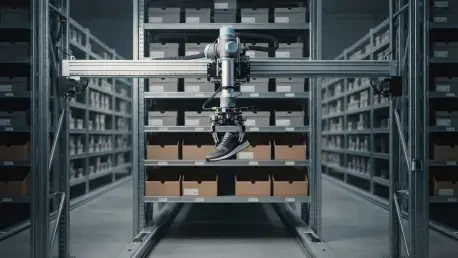
The collaboration at the S.Fashion site serves as a practical demonstration of these pillars in action, showcasing how connected hardware and software applications create a unified ecosystem. Every product within this space is tracked using item-level RFID technology, ensuring total visibility of stock from the moment it enters the premises. This level of detail allows for the implementation of robotics in item retrieval and customization, which significantly reduces the need for manual handling. When the digital and physical worlds are synchronized in this manner, the enterprise can operate with a degree of precision that enhances both the bottom line and the user journey.
Analyzing Market Dynamics and Technological Trajectories
Core Trends Shaping the Modern Shopping Experience
Transitioning from traditional, static software toward context-aware AI systems represents the next frontier of the retail journey. While legacy programs functioned as passive ledgers, modern AI agents interpret real-time events to coordinate subsequent steps across various departments. For instance, when a customer interacts with a product, the system can trigger updates across inventory protocols and fulfillment centers simultaneously. This proactive approach ensures that the shopping experience remains fluid, allowing customers to find exactly what they need without the delays associated with manual system updates.
The rise of hyper-personalization is becoming a defining feature of modern retail through the use of generative design and smart fitting rooms. In advanced retail environments, shoppers can engage with personalization stations where AI converts simple text prompts into unique artwork for immediate embroidery on garments. This level of engagement transforms the consumer from a passive buyer into an active cocreator, fostering a deeper connection with the brand. Inside the fitting rooms, intelligent mirrors and recognition technology suggest alternative sizes or matching accessories, providing a curated styling service that enhances the overall discovery process.
Frictionless commerce is also moving beyond simple mobile payments into the realm of fully autonomous, staffless operations. By integrating mobile applications with in-store sensors and digital guides like SAP Joule, retailers can offer extended hours where the system manages security, entry, and checkout independently. This model allows for greater operational flexibility and localized service without the overhead of constant manual intervention. Moreover, the transition to mobile-first interactions creates a digital trail that allows for better inventory tracking and personalized marketing, ensuring that every square foot of retail space is optimized.
Data Projections and the Growth of Autonomous Retail
From 2026 to 2028, the retail industry anticipates a significant surge in the adoption of end-to-end automation to mitigate rising operational costs. Projections suggest that companies implementing autonomous inventory management could see a dramatic reduction in stockouts and overstock situations, which currently impact global profitability. The widespread implementation of item-level RFID tracking is a critical catalyst for this growth, as it provides the granular data necessary for AI systems to maintain a perfectly accurate view of available stock across all channels. This transparency allows for more efficient replenishment cycles and reduces the carbon footprint associated with excess shipping.
Performance indicators for AI-driven inventory management show that customer retention increases significantly when products are consistently available and personalized. As adoption rates for Industry AI continue to climb, retailers are finding that the initial investment in smart infrastructure pays for itself through improved sell-through rates. The ability to track every item in real time allows for dynamic pricing strategies that react to local demand, ensuring that margins are protected even during seasonal shifts. These data-driven insights are becoming the backbone of the modern retail strategy, allowing brands to scale their operations with confidence.
Addressing Structural Barriers and Operational Complexities
Overcoming the technical debt inherent in legacy retail management systems remains one of the most significant challenges for global brands. Many retailers still operate on fragmented platforms where the point-of-sale system does not communicate effectively with the warehouse or the e-commerce engine. Bridging this gap requires a complete architectural overhaul, moving away from siloed databases toward a unified platform that can support real-time data processing. The complexity of this transition often slows down the adoption of innovative AI solutions, as organizations must first clean and consolidate their historical data to ensure the AI has a reliable foundation.
In addition to technical hurdles, managing the human element is a critical component of any digital transformation strategy. As AI takes over logistical tasks such as inventory counts and transaction processing, the role of the retail associate must necessarily evolve. Reskilling staff for high-touch service roles becomes a priority, where their value lies in emotional intelligence and brand storytelling rather than manual labor. Creating a balance between the efficiency of autonomous systems and the warmth of human interaction is essential for maintaining brand loyalty, as customers still value the personalized advice and connection provided by knowledgeable staff.
Governing Data Integrity and Regulatory Compliance Standards
Navigating global data privacy laws is a complex endeavor in an environment where personalization relies on capturing detailed consumer preferences. Retailers must implement rigorous security protocols to ensure that biometric data for autonomous entry and digital transaction histories are protected from unauthorized access. Ensuring compliance with shifting regulations requires a proactive approach to data governance, where transparency is the foundation of the relationship between the brand and the customer. This commitment to privacy is not just a legal requirement but a strategic advantage that builds trust in an increasingly digital world.
Implementing these security protocols requires a sophisticated digital infrastructure that can handle transactions across multiple platforms without compromising safety. Ethical AI usage also extends to consumer profiling, where styling recommendations must be made without reinforcing biases or compromising user autonomy. By prioritizing ethical standards, retailers can ensure that their AI systems are used to empower the consumer rather than manipulate them. This focus on integrity ensures that the technological advancements in retail are sustainable and aligned with the values of a modern, socially conscious audience.
Mapping the Future of Retail Innovation and Disruption
The future store layout is likely to incorporate holographic try-ons and sophisticated robotics that handle item retrieval with extreme precision. These technologies allow for smaller retail footprints, as customers can browse a digital catalog and have items delivered to a fitting room by a robotic system in seconds. This shift supports the rise of localized, small-scale autonomous commercial models that can thrive in high-traffic urban areas where large-scale storage is impractical. Furthermore, these innovations allow brands to maintain a physical presence in more locations, bringing the products closer to where consumers live and work.
Emerging opportunities in localized commerce will be heavily influenced by global economic shifts and the need for greater efficiency in the last mile of delivery. Predicting the influence of these shifts on AI investment strategies suggests a move toward more resilient, decentralized supply chains. As robotics become more affordable and integrated, even smaller retailers will be able to leverage the same level of automation as major global brands. This democratization of technology will likely lead to a surge in creative retail concepts, where the focus moves from mass production toward niche, highly customized offerings that cater to specific community needs.
Summarizing the Blueprint for the Autonomous Enterprise
The synthesis of findings from the S.Fashion initiative provided a clear blueprint for how the Autonomous Enterprise scales across global brand portfolios. This project proved that the convergence of operational efficiency and consumer joy was not only possible but necessary for long-term viability in a fast-paced market. By testing these technologies in a live environment, the collaboration highlighted the potential for AI to absorb operational complexity, allowing brands to focus on creative engagement. The lessons learned in Walldorf emphasized the importance of data integrity and the need for a phased approach to scaling AI innovations across diverse product lines.
The recommendations that emerged from the study focused on the importance of maintaining a human-centric approach while adopting advanced automation. Successful brands used the efficiency gains from AI to reinvest in customer-facing roles, ensuring that the digital-physical gap was bridged by expert service. The initiative ultimately demonstrated that the future of retail would be defined by the seamless integration of intelligent systems that prioritized both the consumer experience and operational precision. As organizations moved toward broader adoption, the roadmap developed through this partnership offered a vital guide for navigating the complexities of modern commerce.