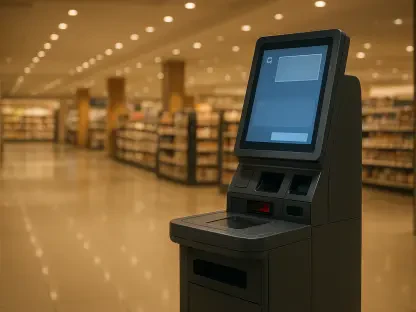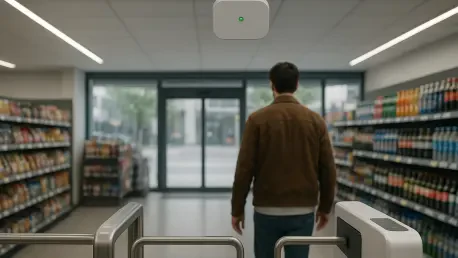

The rapid evolution of German supermarkets from static brick-and-mortar storefronts into dynamic, data-driven ecosystems signifies a fundamental shift in how the nation approaches its daily commerce. Throughout the current year, the retail market transitioned from small-scale technology experiments in urban hubs to a massive, nationwide integration of artificial intelligence and automated systems. This transformation is most visible in the food retail and specialty store sectors, where the traditional shopping experience is being replaced by sophisticated “smart store” infrastructure. Leading the charge, major market players like REWE Group moved beyond simple digitalization to implement comprehensive AI strategies that redefine the relationship between the consumer and the physical store.
According to the latest findings from the KPMG 2026 Retail Sales Monitor, this technological leap is not merely a pursuit of innovation but a strategic response to structural economic challenges. Severe labor shortages across the service sector and rising operational costs made the adoption of automation a matter of survival rather than a luxury. Consequently, the industry is witnessing a focused effort to optimize every square meter of retail space. By automating routine tasks, retailers are attempting to stabilize their margins while addressing a workforce gap that threatened to disrupt store hours and service quality. This shift marks the end of the localized pilot phase and the beginning of a cohesive, tech-enabled retail environment.
The current landscape demonstrates a clear preference for technologies that offer immediate scalability and measurable efficiency. While early efforts focused on mobile apps and websites, the focus in 2026 is squarely on the physical floor. The integration of high-speed connectivity and edge computing allowed stores to process vast amounts of data locally, ensuring that the transition to an automated ecosystem was both seamless for the customer and manageable for the operator. This evolution reflects a broader trend toward a hybrid retail model, where digital intelligence supports physical convenience in a way that was previously only possible in purely online environments.
Strategic Drivers and Market Dynamics of Retail Automation
Emerging Trends in Consumer Autonomy and Operational Intelligence
The rise of consumer autonomy is perhaps the most significant cultural shift in German retail today. Shoppers are increasingly moving away from traditional manned checkouts in favor of “Pick&Go” and scanless shopping formats. These environments utilize advanced computer vision and sensor fusion to track items as they are removed from shelves, allowing customers to complete their journey without ever interacting with a terminal. This trend is particularly dominant in urban convenience formats where speed is the primary driver of loyalty. The transition from manual scanning to total sensor-based recognition represents the final frontier of frictionless retail, effectively removing the psychological and physical bottleneck of the checkout line.
Moreover, the integration of the “Smart Cart” has emerged as a vital digital interface that bridges the gap between the physical aisle and real-time data. These advanced trolleys, equipped with onboard processing and interactive displays, provide shoppers with instant information on pricing, nutritional data, and personalized promotions based on their location in the store. By acting as a personal assistant, the smart cart enhances the shopper’s sense of control while providing retailers with unprecedented insights into the “path to purchase.” This real-time interaction allows for a level of personalization that mirrors the e-commerce experience, yet retains the immediate gratification of physical shopping.
In contrast to simple self-service, the market is also seeing a surge in autonomous food preparation and robotics, especially within the retail catering segment. Automated kitchens are now being deployed to handle high-demand items such as salads and fresh meals, solving the consistency and labor challenges associated with in-store dining. These robotic solutions are not just novelty items; they are operational intelligence tools that adjust production based on real-time foot traffic and historical demand data. This ensures that fresh products are always available, minimizing waste and maximizing the efficiency of the on-site culinary staff.
Quantifying Growth: Market Data and Projections for the Smart Store
The proliferation of checkout automation in the German food sector reached a critical milestone this year, with the number of self-checkout stations doubling compared to previous industry cycles. This growth is supported by a massive investment in Electronic Shelf Labels (ESLs), which are now utilized by over 90% of surveyed retailers. ESLs have become the foundational layer of the smart store, enabling dynamic pricing and synchronized promotions across thousands of locations at the push of a button. The efficiency gains from eliminating manual price tagging are being redirected into customer service, proving that automation can lead to better staffing outcomes.
Current performance indicators suggest a strong correlation between the implementation of smart technology and increased consumer spending. Analysis of basket values shows that shoppers utilizing smart carts or scanless technologies tend to purchase more items and visit the store more frequently. This “basket value” growth is attributed to the reduced friction of the shopping process and the effectiveness of real-time, AI-driven suggestions. As these technologies become standard, the data they generate allows for a level of space and assortment optimization that was previously unattainable. Retailers are now projecting significant margin improvements as AI accurately predicts local inventory needs.
Looking ahead from 2026 to 2028, the industry expects a move toward fully autonomous store networks that operate with minimal human intervention during off-peak hours. The data gathered from current smart store operations is being used to train the next generation of logistics AI, which will manage the entire supply chain from the warehouse to the individual shelf. This level of optimization is expected to reduce stockouts and overstock situations by nearly 30%, significantly improving the sustainability of the retail model. The focus is shifting from simply having a “smart” store to managing an entire fleet of “intelligent” nodes in a global commerce network.
Navigating the Complexities of Technological Integration
Moving from successful pilot programs to a cohesive ecosystem across thousands of diverse locations remains the primary “Scale Test” for German retailers. It is one thing to operate a single high-tech store in a flagship Berlin location, but quite another to maintain that standard across a regional network of varied store sizes and aging building infrastructures. The challenge lies in creating a unified technical stack that can handle the unique constraints of each site while providing a consistent customer experience. This requires a modular approach to technology, where hardware and software can be updated independently to keep pace with rapid innovation cycles.
Data integrity is the most critical obstacle in this journey, as fragmented or inconsistent data can cripple even the most advanced AI-driven demand forecasting systems. If the inventory data in the backend does not match what is actually on the shelf, the AI’s ability to automate reordering or provide accurate stock levels to customers is compromised. Retailers are finding that they must invest heavily in data cleaning and centralized cloud platforms to ensure a single source of truth. Without this foundation, the “smart” features of the store remain superficial, unable to provide the deep operational benefits that justify the initial investment.
Furthermore, the high capital expenditure and ongoing maintenance requirements of hardware-heavy innovations like robotic kitchens and smart carts present a significant financial hurdle. These systems require a new breed of technical support and a shift in the traditional retail labor model. Employees who previously spent their shifts stocking shelves or operating registers are being retrained to handle technical oversight and provide high-touch customer service. This transition is difficult and requires a culture of continuous learning. Retailers must balance the desire for rapid automation with the need to support their workforce through this significant professional evolution.
The Regulatory Framework and Data Sovereignty in German Retail
The implementation of AI in the German retail sector is uniquely shaped by the rigorous standards of the European General Data Protection Regulation (GDPR). German retailers must navigate the delicate balance between collecting enough customer behavior data to fuel AI optimization and respecting the strict privacy rights of the individual. This has led to the development of “Privacy by Design” solutions, where data is anonymized at the point of collection. For example, computer vision systems in scanless stores often process images locally and only transmit non-identifiable numerical data to the central server, ensuring that customer identities remain protected.
Cybersecurity is another mission-critical component of the connected store ecosystem. As stores become more dependent on high-speed internet and cloud-based AI, they also become more vulnerable to digital disruptions. Retailers are prioritizing the creation of resilient, decentralized networks that can continue to function even if a primary connection is lost. Maintaining the reliability of these systems is essential for consumer trust; a single failure in a scanless checkout system can lead to significant reputational damage. Consequently, investment in robust security protocols is now viewed as an integral part of the store’s physical infrastructure.
Standardized technological infrastructure also plays a vital role in ensuring industry-wide compliance and operational transparency. By adopting common data formats and communication protocols, retailers can more easily demonstrate compliance with both privacy laws and consumer protection regulations. This transparency is not just about avoiding fines; it is about building a sustainable relationship with a consumer base that is traditionally cautious about data usage. The move toward anonymized space optimization shows that it is possible to achieve high levels of operational efficiency without compromising the digital sovereignty of the individual shopper.
The Future Frontier: Innovation and the Autonomous Retail Vision
The evolution of “Invisible AI” is set to become the primary engine for real-time logistics and inventory management across the continent. Instead of visible gadgets, the future of retail will be defined by silent systems that monitor shelf levels, predict freshness, and automatically adjust orders based on weather patterns or local events. This invisible layer of intelligence will allow stores to run more efficiently with smaller footprints, enabling retailers to bring fresh food closer to where people live and work. The goal is to create a store that “breathes” with the neighborhood, constantly adapting its offerings to the immediate needs of the community.
Potential market disruptors, such as the full-scale deployment of autonomous “Fresh & Smart” kitchens, will likely redefine the role of the supermarket in the urban food chain. By combining advanced computer vision with robotic meal preparation, retailers can offer high-quality, hot meals at a price point that competes with traditional fast food, all while maintaining higher margins. This blur between grocery retail and food service is a direct result of AI’s ability to manage complex, multi-step processes with minimal human oversight. As these technologies mature, the supermarket will increasingly function as a community hub for both provisions and prepared nutrition.
Retail media and smart interfaces are also redefining how brands interact with consumers at the point of sale. The smart cart and digital shelf edge are becoming valuable advertising real estate, allowing brands to present targeted information to shoppers at the exact moment of decision. This creates a new revenue stream for retailers, potentially offsetting the costs of the technological infrastructure itself. As global economic conditions remain volatile and labor scarcity persists, the push toward fully autonomous retail formats will only accelerate, driven by the dual need for cost control and a superior, modern customer experience.
Conclusion: Synthesizing the Impact of AI on German Commerce
The German retail sector recognized that the digital store was no longer a hypothetical model and moved decisively toward a standard of operational resilience. Leaders shifted their focus from mere experimentation toward building interoperable data structures that allowed for global visibility across local branches. This transition required a fundamental rethinking of how capital was allocated, as companies prioritized technical infrastructure over traditional real estate expansion. By the end of this transformative period, foundational technologies like electronic shelf labels and automated checkouts functioned as the baseline for all modern commerce, proving that the industry had moved past the era of novelty into a phase of mature, integrated intelligence.
The success of these strategies depended heavily on the quality of data integration, which served as the lifeblood of the autonomous ecosystem. Stakeholders learned that automation was most effective when it was used to reallocate human talent toward specialized service and technical oversight rather than simply replacing it. This shift created a more resilient workforce, capable of managing the complexities of a tech-enabled environment while providing the high-touch interaction that consumers still valued. The industry concluded that the long-term economic value of the smart store lay in its ability to provide consistency, availability, and a frictionless experience that met the rising expectations of the digital age.
For stakeholders moving forward, the focus remained on scalability and the maintenance of operational consistency across diverse networks. The lessons learned during the massive rollout of 2026 highlighted the necessity of a disciplined approach to technological adoption, where every innovation was measured against its ability to solve specific business problems. By focusing on the vital link between data and physical action, German retailers established a blueprint for the future of commerce. They demonstrated that through careful planning and a commitment to data sovereignty, it was possible to create a retail landscape that was both highly automated and deeply centered on the needs of the human consumer.