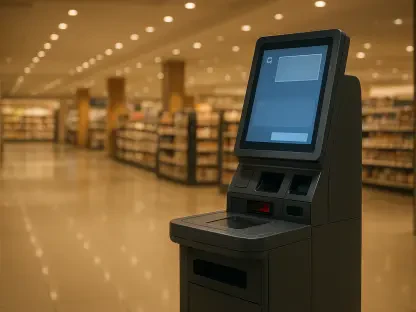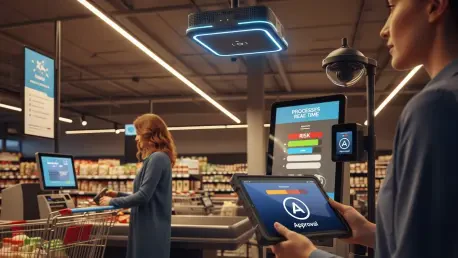

Checkout lines moved to screens, carts turned into cookies, and once-static shelves morphed into dynamic promises that update by the millisecond, yet the quiet killer of retail profitability—shrink—kept pace and slipped into the gaps between channels where slow decisions and siloed data let losses hide in plain sight. That shift reset the stakes: the winners are no longer those with the biggest storefronts or the flashiest apps but those that move intelligence next to the transaction and protect business logic with the same rigor once reserved for the perimeter.
The Margin-Protection Mandate: Why Digital Shrink Now Defines Retail Resilience
Shrink used to be a back-of-house conversation about tags, cameras, and bag checks; now it is an omnichannel reality that flows across web, app, POS, self-checkout, and fulfillment. Theft blends with administrative errors and account abuse, and each hop between systems adds room for manipulation: miscounted inventory here, mismatched session identity there, a coupon engine one step behind the cart. The same item can be in three states at once—promised online, scanned at a kiosk, and awaiting a picker—which turns “out of stock” into “out of sync.”
The consequences land squarely on margins. Phantom stock inflates availability while depressing sell-through, loyalty abuse drains promotion budgets, and return fraud converts operational friction into direct loss. Bot-driven demand spikes further distort truth, pushing high-demand SKUs into invisible limbo and forcing late markdowns. High-velocity segments—grocery, electronics, fashion, quick commerce, and big-box omnichannel—feel it first because tight cycles and thin margins magnify every misread signal.
Technology both compounds and relieves the pressure. Edge computing and real-time telemetry promise faster detection; client-side integrity and unified commerce platforms close visibility gaps; and agentic automation tests defenses by probing business rules at scale. Around this nexus sit ecosystems of commerce platforms, CDNs and edge networks, fraud and bot vendors, observability stacks, and POS/WMS providers, all shaped by obligations like PCI DSS, GDPR/CCPA/CPRA, PSD2/SCA, consumer protection laws, and OWASP-aligned security standards. Resilience now depends on orchestrating these parts into one margin-first operating model.
Forces Reshaping Loss Prevention at the Digital Edge
Trendlines That Matter: From Perimeter Walls to Business-Logic Guardrails
Operating principles shifted from uptime-first to margin-first as retailers realized that a five-nines checkout means little if bots quietly hoard inventory and loyalty points drain unchecked. Prevention must happen within the transaction window, where a policy nudge or identity challenge can redirect a risky flow without derailing a legitimate one. That places business logic—carts, coupons, returns, loyalty, fulfillment promises—at the heart of the control surface.
The rise of denial of inventory, tracked by OWASP as OAT-021, turned stock into a weapon. Agentic bots stage hoarding, shoppers deploy their own assistants, and the exchange becomes agent-versus-agent commerce. In response, cybersecurity and operations converge: observability ties to order state, inventory truth anchors decisioning, and distributed inference at the edge reduces latency and false positives. Unified commerce stands out as the antidote to silos, offering a single source of truth across POS, ecommerce, WMS, OMS, and IoT.
The opportunity is to welcome good automation while constraining abuse. Trusted agent protocols can authenticate shopper-approved assistants, allowing legitimate speed while bounding behavior that distorts availability or pricing logic. Done well, the network becomes a cognitive backbone that admits helpful actors and throttles hostile ones without punishing humans in the middle.
By the Numbers: Shrink, Fraud, and the Case for Low-Latency AI
Recent figures tell a blunt story: reported shoplifting rose roughly 18 percent, ecommerce fraud climbed about 55 percent, and fraudulent returns jumped around 71 percent, according to NRF 2025. Executives responded in kind, with approximately 85 percent planning AI-driven prevention and detection, signaling a pivot from passive monitoring to active control.
The operational symptoms are visible on dashboards: cart abandonment spikes under attack, sell-through sags during peaks despite sufficient stock on hand, and return rates detach from historical baselines for certain risk tiers. Leading teams now track latency-to-decision as carefully as page load times, because the shorter the signal-to-action loop, the more margin gets preserved with less customer friction.
Looking forward, the traffic mix is expected to tilt toward agentic bot activity while controls consolidate at the edge and observability platforms become the common glass. The performance thesis is simple but unforgiving: speed and context win; distance and fragmentation lose.
Closing the Gaps: Challenges to Real-Time, Cross-Channel Prevention
Fragmented systems create blind spots where loss thrives. POS, ecommerce, WMS/OMS, and in-store sensors often run as islands, so BOPIS flows, digital coupons, and self-checkout events drift out of sync. When identity is inconsistent, sessions cannot be stitched reliably, and inventory reconciliation lags, even a good model misfires because it sees a partial truth.
Latency magnifies those faults. Round trips to centralized data centers burn the precious milliseconds when a cart is filled, a payment is authorized, or a refund is requested. Models placed far from users lack timely context, and governance scruples—privacy, lineage, explainability—while necessary, can slow deployment if not designed into the edge. Meanwhile, denial of inventory requires special attention: distinguishing human demand from agent hoarding, then restoring sell-through by releasing stock based on behavioral risk.
The organizational plane can be just as tricky. Loss prevention, security, digital, and operations often own different metrics and escalation paths, which delays decisive action. Practical remedies cohere into a pattern: deploy an autonomous shrink analyst at the edge to score risk in-transaction; implement global observability that unifies telemetry across channels; protect client-side integrity with anti-skimming, script governance, and tamper detection; embed business-logic guardrails such as adaptive rate limits, dynamic cart windows, and behavioral stock release; and align incentives with joint runbooks spanning LP, SecOps, and Digital.
Rules, Standards, and Trust: The Compliance Backbone for Agentic Commerce
Compliance frames what can be done and how fast. Payment data stays under PCI DSS guardrails, and profiling, consent, and data minimization live under GDPR and CCPA/CPRA. Strong customer authentication under PSD2/SCA forces a balance between friction and fraud, encouraging risk-based challenges that trigger in real time rather than blanket checks that punish every user.
Security frameworks offer maps for aligning threats to workflows. OWASP’s automated threat taxonomy, including OAT-021, can be traced to retail journeys like add-to-cart, checkout, and returns, making control gaps visible and testable. Client-side and supply-chain integrity depend on script management, Subresource Integrity, Content Security Policy, and software bills of materials to prevent silent compromises that bypass server-side vigilance.
As agents proliferate, standards matter more. Web Bot Auth, Trusted Agent Protocol, and AP2 help distinguish customer-authorized automation from hostile traffic, enabling policies that admit helpful assistants at full speed while curbing hoarding and scraping. Governance sits behind it all: auditability of AI decisions, model risk management, explainability that supports customer redress, and operational logs that survive scrutiny.
Where It’s Going: Edge-Native Intelligence and the Autonomous Shrink Analyst
Architecture is trending toward the network as a cognitive backbone—observing, inferring, and enforcing at every touchpoint from browser to store to fulfillment node. Agentic AI at the edge runs policy-aware, self-updating playbooks that issue holds, challenges, or inventory releases in milliseconds, trimming false positives by leaning on local context and shared state.
Unified commerce continues to mature as a real-time inventory truth layer spanning BOPIS, ship-from-store, and returns reconciliation. At the same time, consumer behavior is shifting: helpful shopping agents are becoming normal, and shoppers expect experiences that are instant, fair, and low-friction even during hype moments. Composable commerce, store-as-a-node fulfillment, privacy-preserving edge analytics, and 5G-enabled in-store inference act as market disruptors, while economic pressure, sophisticated fraud, and tightening privacy and security rules accelerate adoption.
Validation is already visible. Shopify’s global edge sync curbs overselling and reduces phantom stock by keeping POS and storefronts aligned. Delivery Hero runs millisecond-local inventory alignment under spiky demand so digital shelves reflect physical reality. Fossil’s client-side monitoring blocks Magecart-style compromises and carding bots, securing checkout integrity without adding drag. Together, these examples show how bot defense, browser integrity, and near-user inference combine into practical margin protection.
Synthesis and Action Plan: Building a Defense That Protects Every Click and Scan
Three conclusions emerge. First, shrink is digital and omnichannel, so prevention must defend business logic, not just the perimeter. Second, latency and silos are the main enemies of in-transaction control, undermining both accuracy and experience. Third, denial of inventory is a stealthy, high-impact drain that demands behavioral, real-time countermeasures tuned to inventory truth.
A pragmatic path starts with consolidating telemetry from ecommerce, POS, WMS/OMS, and IoT into unified observability that provides cross-channel, real-time truth. Place AI next to data by deploying inference at the edge, inside stores, and near fulfillment nodes, then instrument guardrails for carts, coupons, loyalty, and returns with adaptive policies. Prioritize OAT-021 defenses—dynamic cart windows, hoarding rate limits, and risk-based stock release—while enforcing client-side integrity through script governance, anti-skimming, and session tamper detection. Prepare for agentic commerce by piloting standards like Web Bot Auth, Trusted Agent Protocol, and AP2 so customer-authorized automation gets a green lane and hostile agents meet tight constraints.
Board-level readiness tightened around three questions that guided action and investment: whether a unified, real-time view of inventory existed across channels; whether the enterprise protected core business logic rather than just the perimeter; and whether AI sat close enough to data to act within the transaction window. By treating the network as an intelligent enforcement plane and deploying an autonomous shrink analyst at the edge, retailers translated these answers into preserved margin, steadier sell-through, and smoother experiences.