
Zainab Hussain is a distinguished e-commerce strategist who has spent years navigating the complexities of customer engagement and retail operations management. Her expertise lies in bridge-building between emerging digital tools and traditional brick-and-mortar logistics, making her a vital voice in the rapidly evolving non-alcoholic beverage sector. In this conversation, we examine the strategic expansion of the brand Bero as it scales from massive national retail partnerships into the intricate, fragmented world of independent corner stores. We explore the implementation of sophisticated AI-driven portals, the shifting dynamics of group venue selection in the hospitality industry, and the sensory strategies required to turn a non-alcoholic option into a lifestyle staple.
Bero has successfully secured shelf space in major chains like Walmart, Kroger, and Publix, but the brand is now targeting over 125,000 independent corner stores. How does a brand manage the transition from centralized big-box logistics to the highly localized and unique environment of these smaller independent retailers?
The shift from massive chains like Target or Albertsons to the independent corner store market is a move toward hyper-local accessibility. In major cities, these 125,000 doors represent where consumers shop almost every single day, creating a high-frequency touchpoint that big-box retailers can’t always replicate. To manage this without drowning in logistical chaos, the brand is looking toward emerging digital networks that specifically “connect the dots” between smaller independents and national distributors. It is about moving from a “one-to-many” shipping model to a more nuanced, fragmented approach where the product is available exactly when a person walks down the street for a quick errand. This next phase is truly a breakout period because it bridges the gap between planned grocery trips and spontaneous, daily convenience.
The brand is utilizing an internal portal powered by Claude 4.6 to streamline its B2B operations. What specific operational bottlenecks does this AI integration solve for distributors when they are managing purchase orders and digital assets?
Integrating a sophisticated AI like Claude 4.6 into an internal portal transforms the relationship between a brand and its distributors from a manual back-and-forth into a frictionless exchange. Distributors can go directly into this portal to place purchase orders or pull down the “latest and greatest” imagery from a digital asset management system, which is crucial for maintaining brand credibility. When a distributor is preparing a proposal or an RFP for a major chain, they need immediate access to approved, high-quality assets without waiting for a marketing team to email files. By centralizing this information, the brand ensures that whatever imagery appears on third-party tools is current and high-fidelity. This level of autonomy for the distributor reduces administrative friction and allows the brand to scale its presence across diverse platforms with total visual consistency.
Data indicates that one-third of bar and restaurant visitors in the U.K. are alcohol-free, and more importantly, two-thirds of adults say non-drinkers influence where the whole group goes. How should B2B strategies for bars and restaurants change to reflect this significant shift in consumer influence?
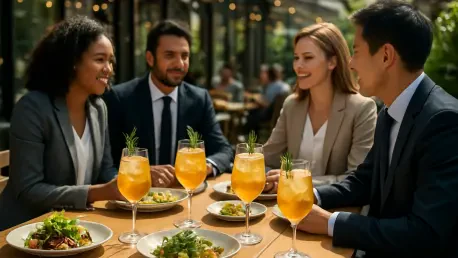
The fact that a single non-drinker can dictate the venue selection for an entire group of adults makes that consumer the most important person in the room for a retailer. Bars and restaurants are primary targets because these are “high-fun” environments where consumers are naturally more open to experimenting with new flavors and brands. If a brand like Bero can secure a spot on the menu, they aren’t just selling a bottle; they are associating their product with a positive social memory. This “on-premise” experience is the ultimate sampling ground that eventually drives the consumer to pick up a pack at a retail store or online. Retailers must expand their portfolios to include elevated non-alcoholic options, or they risk losing not just the non-drinker, but the entire group of customers to a competitor who offers better choices.
Bero is now in its second year at Target and is intensifying its focus on in-store sampling and creator partnerships. What is the tactical reasoning behind shifting from simple distribution to these more active, high-spend engagement initiatives?
Once a brand moves past the initial launch phase in a major retailer like Target, the priority shifts from simply being “on the shelf” to actively driving consumer traffic to those specific aisles. Entering the second year requires a brand to show up, spend capital, and prove its value to the retailer by moving units through sensory engagement like in-store sampling. These samplings allow consumers to overcome the initial hesitation of trying a non-alcoholic beer by experiencing the flavor profile firsthand in a retail setting. When you pair that physical experience with retail media and creator partnerships, you create a multi-channel “surround sound” effect that builds long-term loyalty. It is a necessary investment to demonstrate to the retailer that you are a partner in their growth, rather than just a product taking up space.
The brand has expressed a desire to “open up the day” for consumers, encouraging the consumption of non-alcoholic beer during lunch or other traditionally non-drinking moments. What are the broader implications for B2B retailers who need to adapt their digital and physical portfolios for this lifestyle shift?
“Opening up the day” represents a fundamental pivot from viewing non-alcoholic beer as a mere substitute for alcohol to seeing it as a versatile beverage for any occasion, such as a business lunch or a mid-afternoon break. For retailers, this means the product needs to be positioned differently in both physical store layouts and digital catalogs, perhaps moving beyond the “liquor” section and into wellness or general beverage categories. If a digital portfolio doesn’t offer these elevated choices, the modern consumer will simply look elsewhere, as they are increasingly seeking quality and variety that matches their healthy lifestyle. This shift forces B2B entities to rethink their stocking strategies and ensure they have a diverse range of flavors that can cater to someone at 1:00 PM just as effectively as at 9:00 PM.
What is your forecast for the non-alcoholic beverage category’s role in B2B retail?
I expect that within the next twenty-four months, the non-alcoholic segment will no longer be treated as a niche “alternative” but will become a core pillar of the beverage category, commanding dedicated shelf sets and specialized marketing budgets. As the data shows that non-drinkers are becoming the primary influencers in group social decisions, we will see a massive surge in B2B portals adopting AI tools to help distributors manage the rapid turnover and high demand for these products. We are moving toward a retail environment where the “choice” to not drink is celebrated with the same level of brand sophistication, premium packaging, and distribution intensity as traditional spirits, forever changing how retailers curate their drink portfolios.