
Modern automotive retail has entered a phase where the speed of digital engagement often determines the finality of a sale, leaving traditional sales methods in the rearview mirror. As dealerships navigate a volatile market where real-time budget allocation is critical, the inverse relationship between surging conversion rates and declining lead costs has become a focal point of strategy. This shift highlights the necessity for automated systems that can identify and prioritize high-demand inventory and service channels with precision.
Optimizing Ad Spend in a High-Velocity Automotive Market
The early months of the year demonstrated a remarkable trend where conversion rates rose sharply while lead costs experienced a significant decline. This phenomenon suggests that the traditional struggle of balancing reach and affordability is being resolved through more intelligent allocation of marketing resources. Dealerships are increasingly moving away from static budgeting, opting instead for dynamic systems that respond to market fluctuations as they happen.
In this high-velocity environment, the focus has shifted toward high-demand sectors such as fixed operations and pre-owned inventory. By leveraging real-time data, businesses ensure that their ad spend is not wasted on stagnant listings but is instead funneled toward the vehicles and services most likely to generate immediate interest. This strategic agility is essential for maintaining a competitive edge when consumer demand and inventory availability are in constant flux.
The Evolving Landscape of Automotive Retail Technology
The transition from traditional digital marketing to AI-driven automation represents a fundamental change in how franchised dealerships operate. This evolution is driven by the need for greater efficiency in an environment where margins are under constant pressure from tightening vehicle supplies. Modernizing the digital storefront is no longer a luxury but a requirement for maintaining profitability as the automotive retail space becomes more tech-centric.
Recent industry benchmarks provide a clear picture of how these technological advancements are reshaping efficiency across the sector. These metrics serve as a vital tool for dealerships to evaluate their performance against the broader market and identify areas where digital integration can be improved. As the gap between leaders and laggards widens, the importance of adopting automated solutions to manage complex marketing ecosystems becomes increasingly apparent.
Research Methodology, Findings, and Implications
Methodology
The research methodology involves tracking year-over-year performance metrics across franchised dealerships using a comprehensive intelligence index. This data-driven approach allows for a precise analysis of how digital strategies correlate with actual sales outcomes.
The study focuses on diverse advertising channels, including Google Search, Performance Max, and various social platforms. By examining consumer engagement through AI chatbot interaction logs and measuring the share of traffic across Large Language Models, the research captures a detailed snapshot of shopper behavior.
Findings
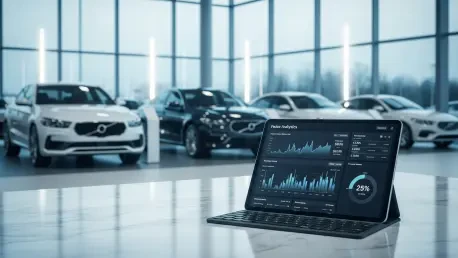
The findings document a 37.3% surge in conversions alongside a 14.8% reduction in Cost Per Lead, signaling a breakthrough in digital efficiency. This relationship suggests that automated systems are successfully optimizing ad spend in real-time.
A key highlight is the “six-message threshold” in AI interactions; once a shopper exchanges six messages with a chatbot, the probability of conversion jumps to 45.6%. Furthermore, investment in Google’s Performance Max yielded a 119% increase in conversions, while Google Gemini saw its traffic share grow to 8.5%.
Implications
These results indicate that AI has evolved into a conversion multiplier that fundamentally dictates market competitiveness. The data shows a shift in consumer behavior toward deep, immediate digital interactions, moving away from the friction of traditional human hand-offs.
As vehicle day supply contracts, dealers are finding success by reallocating spend toward Certified Pre-Owned inventory and service revenue. This strategic pivot ensures that dealerships remain profitable by focusing on areas with higher turnover and more reliable income streams.
Reflection and Future Directions
Reflection
The successful implementation of AI-powered automation effectively addressed the historical inefficiencies of manual ad management. It allowed dealerships to maintain high performance levels even as the broader market faced inventory constraints and supply chain issues.
Despite a 14% drop in vehicle day supply, website traffic rose by 10%, indicating that consumer interest remains robust. Providing shoppers with instantaneous, data-rich responses via chatbots proved to be a critical factor in overcoming the traditional hurdles of digital research.
Future Directions
Looking ahead, the long-term impact of Google Gemini’s rapid growth will likely reshape the dealership search ecosystem in profound ways. There is significant potential for deeper integration between Large Language Models and dealership management systems to create a more personalized journey.
Future strategies will focus on refining predictive AI to optimize inventory acquisition and trade-in solicitation as market dynamics shift. This evolution allows dealers to anticipate consumer needs more accurately and adjust their operations before market shifts occur.
Navigating the Future of Digital Dealership Operations
The breakthrough in digital marketing efficiency established a new standard where smarter spending became the cornerstone of success. AI integration ensured that dealerships maintained high engagement levels despite a shrinking margin for error in a fast-paced retail environment. This technology provided the tools necessary to navigate inventory shortages while maximizing the value of every digital interaction. Leaders in the sector recognized that the future of automotive retail was inextricably linked to the continued advancement of automated, data-driven systems.