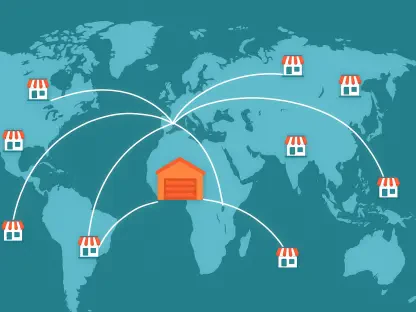

Enterprise Resource Planning systems allow large-scale retailers with complex supply chains to maintain a single source of truth across multiple warehouses and hundreds of suppliers. In Singapore, this technological backbone has become the catalyst for a radical shift in how goods are moved, tracked, and sold in one of the world’s most competitive urban markets. The city-state’s unique position as a global financial hub and its dense, tech-savvy population have created a pressure cooker for retail innovation, forcing businesses to abandon traditional cash registers in favor of integrated digital ecosystems. As the industry matures, the focus has pivoted from mere transaction processing to comprehensive architectures that manage everything from real-time inventory to complex customer loyalty loops. This transformation is not just about convenience; it is a direct response to a hyper-competitive landscape where efficiency determines survival. Retailers today are navigating a reality where digital adoption is no longer a luxury but a fundamental necessity for managing high operational costs and labor constraints. By examining the current market leaders, it becomes clear how these technological infrastructures are being deployed to redefine the relationship between the storefront and the back office. The resulting ecosystem is characterized by a seamless flow of data that connects the physical act of purchasing with the complex logistics of supply chain management, ensuring that retailers can respond to consumer demands with unprecedented precision.
Strategic Development: The Role of Government Support and Market Density
Singapore’s rapid ascent as a retail technology powerhouse is deeply rooted in its specific economic and geographic context. The city-state’s high digital payment penetration, largely driven by the government’s push for a cashless society through initiatives like PayNow, has necessitated a shift in point-of-sale infrastructure. Unlike other markets where cash remains king, Singaporean retailers require payment-agnostic systems that can seamlessly integrate credit cards, digital wallets, and local bank transfers into a single workflow. This demand has been met with significant financial support through the Productivity Solutions Grant (PSG) and the SMEs Go Digital initiative, which provide small businesses with the capital needed to adopt sophisticated software. These grants have lowered the entry barrier for modernization, allowing traditional shop owners to compete with international chains by utilizing advanced analytics and inventory management tools that were once exclusive to enterprise-level organizations. The convergence of accessible funding and high consumer expectations has created an environment where technological laggards are quickly phased out by more agile, data-driven competitors.
The second layer of this innovation is found in the “Store of Tomorrow” initiatives currently being pioneered by major local players such as the FairPrice Group. These initiatives serve as a blueprint for the wider industry, demonstrating how artificial intelligence can be used to optimize everything from shelf placement to demand forecasting. By implementing electronic shelf labels and smart carts that allow for autonomous scanning, these large-scale operators are effectively solving the chronic labor shortage that plagues the local retail sector. These technologies allow a smaller workforce to manage higher transaction volumes while reducing human error in pricing and stock management. As these innovations become more affordable and accessible, they are trickling down from supermarkets to specialty boutiques, creating a standardized expectation for digital convenience among Singaporean consumers. This competitive environment ensures that only the most technically adept retailers can maintain their market share in a landscape that rewards speed, accuracy, and data-driven insights. The ongoing evolution of these stores highlights a future where the physical shopping experience is entirely augmented by invisible, yet powerful, digital frameworks.
EPOS: The Local Specialist for Small and Medium Enterprises
Established in 2009, EPOS has spent nearly two decades refining its offerings specifically for the unique nuances of the Singaporean market. It is widely recognized as the quintessential “home-grown” provider, catering to the needs of local minimarts, specialty grocers, and hardware stores that form the backbone of neighborhood commerce. With a client base exceeding 6,000 businesses, EPOS has built its reputation on deep integration with local regulatory frameworks and a profound understanding of the operational hurdles faced by smaller merchants. Their software is designed to be intuitive yet robust, allowing shop owners who may not be tech-savvy to manage complex inventory movements and customer databases with minimal training. This focus on accessibility has made them a preferred partner for the government’s digitalization grants, as their systems are pre-approved and guaranteed to meet local compliance standards. The company’s longevity in the market provides a level of trust that newer, venture-backed startups often struggle to match, especially in a sector where reliability is the most valued currency.
The primary differentiator for EPOS remains its commitment to localized support, which includes a 24/7 service model tailored to the retail industry’s non-standard operating hours. In a market where a technical glitch on a Sunday afternoon can result in significant revenue loss, having a local team that understands the urgency of the situation is a critical competitive advantage. Beyond support, their technology stack is built to handle Singapore-specific requirements such as Goods and Services Tax (GST) reporting and direct synchronization with popular accounting software like Xero and QuickBooks. This seamless back-end integration allows small business owners to automate their financial reporting, significantly reducing the administrative burden of running a physical store. By focusing on “local market fit,” EPOS ensures that their users are not just buying a point-of-sale system, but a comprehensive business management tool that scales alongside their growth. This localized approach has allowed them to maintain a dominant position despite the influx of international competitors, proving that understanding the specific cultural and regulatory context of a market is just as important as the technology itself.
Qashier: The Integrated Payments Powerhouse
Founded in 2019, Qashier represents a modern wave of retail technology that blurs the lines between traditional software and financial services. The company has achieved rapid regional growth by positioning itself as a “one-stop-shop” for merchants who are overwhelmed by the complexity of managing multiple vendors for payments, hardware, and inventory. As a licensed Major Payment Institution under the Monetary Authority of Singapore, Qashier is unique in its ability to bundle payment processing directly with its proprietary point-of-sale software. This vertical integration allows retailers to use a single, sleek device to accept every type of payment—from traditional credit cards to regional e-wallets like GrabPay and ShopeePay—while simultaneously updating their stock levels and customer profiles. This reduction in technical friction is particularly appealing to high-growth consumer brands that prioritize speed and a clean aesthetic at the checkout counter. By mid-2026, Qashier reached a significant milestone of profitability, processing over a billion dollars in annual payment volume across its expanding network of over 25,000 merchants.
The true value of the Qashier ecosystem lies in its ability to turn every transaction into a source of actionable data. Because the payment processing is native to the system, retailers can easily link purchasing behavior to specific customer profiles without requiring manual input or separate loyalty cards. This enables even small-scale retailers to run sophisticated, automated rewards programs that drive repeat business and increase customer lifetime value. For example, a boutique could automatically trigger a discount code via SMS the moment a frequent shopper reaches a certain spending threshold, all managed within the same interface used to ring up sales. This level of fintech-retail convergence allows merchants to move away from generic marketing toward highly personalized engagement strategies. Furthermore, Qashier’s aggressive regional expansion into Malaysia, Thailand, and the Philippines provides a scalable path for Singaporean brands looking to expand overseas, as they can maintain the same technological infrastructure across multiple countries. This focus on simplicity and data integration has positioned Qashier as a leader for the next generation of digitally native retailers.
Edgeworks Solutions: The Omnichannel and Automation Expert
With nearly twenty years of experience in the industry, Edgeworks Solutions has evolved into a veteran player specializing in solving the most complex operational challenges in modern retail. Their flagship platform, EQuipPOS, is widely regarded as a market leader in the self-checkout and autonomous store space, providing the robust hardware and software necessary to handle high-volume traffic with minimal staff intervention. This focus on automation is a direct response to the persistent labor shortages and rising wage costs that have come to define the Singaporean retail landscape. Edgeworks provides more than just a terminal; they offer an entire ecosystem of self-service kiosks, mobile checkout options, and AI-powered security features that allow retailers to rethink their entire store layout. By shifting the burden of scanning and payment to the customer, retailers can reallocate their human staff to higher-value roles, such as personalized consultation or inventory curation, thereby improving the overall quality of the shopping experience.
Beyond the physical storefront, Edgeworks is a pioneer in the field of omnichannel synchronization, bridging the gap between traditional brick-and-mortar operations and the sprawling world of digital marketplaces. Their software acts as a central nervous system that integrates physical store inventory with major e-commerce platforms such as Shopify, Magento, and WooCommerce, as well as local marketplaces like Lazada and Shopee. This real-time synchronization ensures that stock levels are always accurate across every channel, preventing the common problem of overselling items that are already out of stock in the warehouse. Additionally, Edgeworks has been a leader in implementing Radio Frequency Identification (RFID) technology, which allows for near-instantaneous stock takes and rapid scanning at the point of sale. For a retailer managing thousands of individual units across multiple locations, this level of technical sophistication is essential for maintaining operational control and maximizing profitability. By focusing on the intersection of automation and multi-channel sales, Edgeworks has become the go-to provider for established brands that need to modernize their operations without sacrificing reliability.
HashMicro: The Enterprise Resource Planning Leader
HashMicro occupies a distinct and vital tier within the retail technology market, focusing on large-scale enterprise solutions that go far beyond the front counter. Since its inception in 2015, the company has grown into a regional giant with a workforce of over 600 professionals, specializing in comprehensive Enterprise Resource Planning (ERP) systems. While other providers focus on the “moment of sale,” HashMicro manages the entire lifecycle of a retail business, from international procurement and warehouse management to complex financial accounting and human resources. This makes them the preferred choice for massive supermarket chains, department stores, and retailers with multi-national supply chains that require a “single source of truth” to maintain organizational alignment. Their systems are designed to handle the immense data loads generated by hundreds of outlets and thousands of suppliers, ensuring that every department—from the loading dock to the boardroom—is working with the same real-time information. This level of visibility is crucial for high-level decision-making and long-term strategic planning in a volatile global economy.
In the current landscape of 2026, HashMicro has aggressively integrated artificial intelligence into its core modules to provide predictive insights that were previously impossible to achieve manually. Their AI-driven demand forecasting tools analyze historical sales data, seasonal trends, and even external factors like weather and local events to predict exactly how much stock a retailer needs at any given time. This precision helps large-scale operators significantly reduce waste, particularly in the grocery and perishable goods sectors, where overstocking can lead to massive financial losses. Furthermore, their warehouse management system utilizes AI to optimize picking routes and storage layouts, further driving down operational costs and improving the speed of the supply chain. For an enterprise-level retailer, the goal is not just to record transactions but to optimize every single process that leads up to that transaction. HashMicro’s ability to provide this level of deep operational intelligence has solidified its position as the leading choice for organizations that view technology as their primary engine for growth and efficiency.
MEGAPOS: The Hybrid Mid-Market Provider
MEGAPOS serves as a critical bridge in the Singaporean market, offering a sophisticated yet practical solution for retailers who have outgrown basic systems but are not yet ready for the complexity of a full-scale enterprise ERP. One of their most significant technical advantages is a relentless focus on “offline resilience,” a feature that is often overlooked in an era dominated by cloud computing. MEGAPOS systems are designed with a hybrid architecture that allows them to function locally during internet outages, ensuring that sales can continue and transactions can be processed even when the network is down. Once connectivity is restored, the system automatically synchronizes all local data with the central cloud server. This functionality provides a vital safety net for essential retailers, such as pharmacies and convenience stores, where any downtime can have immediate and severe consequences. This commitment to operational continuity has made MEGAPOS a trusted name for businesses that prioritize reliability above all else.
The company is also a leader in hybrid hardware technology, successfully adapting self-ordering kiosks and “click and collect” terminals from the food and beverage industry for use in the retail sector. As consumer habits continue to shift toward a mix of online browsing and in-store pickup, MEGAPOS provides the necessary infrastructure to manage these hybrid journeys seamlessly. Their software stack is highly scalable, allowing a business to start with a single outlet and grow to a multi-store operation without the need to migrate to an entirely different platform. This flexibility is supported by robust multi-outlet management features, which allow owners to monitor sales, inventory, and staff performance across all locations from a single dashboard. By providing enterprise-grade features like advanced inventory tracking and comprehensive CRM tools at a mid-market price point, MEGAPOS has carved out a unique niche. They cater to the ambitious retailer who requires deep operational insights and modern hardware but demands a system that is easy to deploy and maintain on a daily basis.
Strategic Differences Between POS and ERP Systems
Understanding the current state of Singapore’s retail tech landscape requires a clear distinction between POS-led and ERP-led systems, as these two paths serve very different operational philosophies. POS-led providers, such as EPOS, Qashier, and MEGAPOS, place the primary emphasis on the transaction and the immediate customer experience. These systems are designed to be “front-of-house” first, excelling at speed, ease of use, and integration with customer loyalty programs and local payment methods. For a high-growth consumer brand or a local specialty shop, the “moment of truth” happens at the checkout, and a POS-led system ensures that this moment is as frictionless as possible. These platforms are typically easier to deploy, require less specialized training for staff, and offer immediate benefits in terms of customer data collection and sales reporting. They are the ideal choice for businesses where the primary challenge is managing high foot traffic and maintaining brand engagement across multiple physical touchpoints.
In contrast, ERP-led solutions like HashMicro are designed for businesses where the primary complexity lies deep within the “back-office” and the supply chain. While these systems include point-of-sale functionality, their true power resides in their ability to manage the intricate web of logistics, international procurement, and multi-layered financial reporting that defines large-scale retail operations. An ERP system is less about the individual transaction and more about the entire journey of a product from the manufacturer to the shelf. For a retailer dealing with hundreds of international suppliers and complex customs regulations, the checkout counter is merely the final step in a much larger process. Choosing between these two paths depends entirely on where a retailer’s primary “pain point” exists. If the business is struggling with slow lines and poor customer retention, a POS-led system is the solution. However, if the business is facing massive inventory discrepancies, procurement errors, or a lack of financial visibility across multiple warehouses, only an ERP-led architecture can provide the necessary structural integrity to support continued growth.
The Proliferation of AI and Smart Store Operations
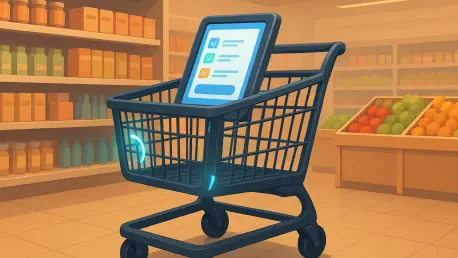
Artificial Intelligence has moved beyond experimental pilot programs and is now a ubiquitous force on the Singaporean retail floor. This is most visible in the rapid adoption of smart carts, which are revolutionizing the traditional grocery shopping experience. These carts are equipped with advanced sensors and computer vision technology that allow customers to scan items as they place them in the basket, effectively turning the cart into a mobile checkout terminal. This technology not only eliminates the need for traditional checkout lines but also provides retailers with incredibly granular data on shopping habits, such as the specific path a customer takes through the store and which items they consider before putting back on the shelf. This “in-store analytics” was once the holy grail of retail management, and it is now becoming a standard tool for large-scale operators who want to optimize their floor plans and promotional strategies based on real-world behavior rather than guesswork.
Beyond the visible hardware, AI is also driving a silent revolution in the back office through advanced demand forecasting and waste reduction. By analyzing massive datasets that include everything from historical sales trends to real-time weather patterns and public transport data, these AI models can predict the exact quantity of perishable items a store will sell on any given day. This level of precision is particularly critical in Singapore, where the high cost of space makes inventory efficiency a primary driver of profitability. Leading tech providers are now integrating these predictive capabilities directly into their standard software packages, allowing even mid-sized retailers to benefit from data-driven procurement. The result is a significant reduction in food waste and overstocking, which not only improves the retailer’s bottom line but also aligns with national sustainability goals. As AI continues to evolve, we can expect to see even more sophisticated applications, such as dynamic pricing that adjusts in real-time based on stock levels and expiration dates, further cementing technology’s role as the central pillar of modern retail operations.
The Shift Toward Digital Pricing and Labor Efficiency
One of the most impactful changes in the Singaporean retail environment has been the massive transition from manual paper price tags to Electronic Shelf Labels (ESLs). This technology allows a central management system to update prices across thousands of items in hundreds of stores simultaneously, eliminating the need for staff to manually change tags for every promotion or price adjustment. For a large supermarket chain, this shift represents a staggering increase in efficiency, with some operators estimating savings of up to 15,000 staff hours annually. These hours are then redirected toward customer-facing roles, such as restocking shelves or assisting shoppers, which directly improves the quality of the in-store experience. The implementation of ESLs also ensures 100% pricing accuracy between the shelf and the checkout counter, removing a common source of customer frustration and administrative error. This move toward “automated pricing” is a clear indicator of how technology is being used to strip away repetitive, low-value tasks from the retail workforce.
Furthermore, the adoption of ESLs enables the implementation of dynamic promotional strategies that were previously impossible to execute. Retailers can now run “flash sales” or time-limited discounts that automatically toggle on and off at specific times of the day, allowing them to better manage stock levels for items nearing their sell-by date. This level of agility is essential in a market where consumer behavior can change rapidly based on time of day or local events. The integration of digital pricing with the broader inventory management system also allows for a more responsive supply chain, where price adjustments can be used as a tool to balance supply and demand in real-time. As the cost of ESL technology continues to decrease, it is becoming a standard feature in many specialty stores and pharmacies, signaling the end of the manual price tag era. This shift is not just about saving time; it is about creating a more flexible, accurate, and responsive retail environment that can adapt to market conditions in a matter of seconds.
Unified Commerce and the Death of Retail Silos
The traditional model of operating online and physical stores as separate, disconnected silos is no longer viable in the modern Singaporean market. Today’s consumers expect a “unified commerce” experience, where the boundaries between digital and physical shopping are completely invisible. This requires a technological infrastructure that provides a single, real-time view of both the customer and the inventory across every possible touchpoint. If a customer sees an item on a social media ad, they expect to be able to check its availability at their nearest physical store, buy it online, and then return it in person if it doesn’t meet their expectations. Delivering this level of service requires deep integration between the e-commerce platform and the physical point-of-sale system, a challenge that leaders like Edgeworks and HashMicro have spent years solving. By centralizing all data into a single platform, retailers can ensure that they never lose a sale due to inventory discrepancies or a disjointed customer journey.
This unified approach also allows for a much deeper understanding of customer loyalty and behavior. When a retailer has a single view of a customer’s interactions—whether they are clicking on an email, browsing the website, or visiting a store—they can create highly personalized marketing campaigns that actually resonate with the individual. For instance, a system could recognize that a customer frequently buys a specific brand of coffee online and then offer them a complimentary sample of a new blend the next time they walk into a physical outlet. This level of personalization is the key to building long-term brand loyalty in a market where consumers are constantly bombarded with choices. As we move deeper into 2026, the success of a retail brand will be determined by its ability to execute this unified vision, ensuring that the brand experience remains consistent and high-quality regardless of how or where the customer chooses to shop. The focus has moved from being “multi-channel” to being truly “omnichannel,” where the technology serves as a seamless bridge between the digital and physical worlds.
Strategic Recommendations for Selecting a Tech Partner
The process of selecting a retail technology partner in Singapore must be driven by a clear-eyed assessment of a business’s specific operational challenges and long-term growth objectives. For small-to-medium enterprises that are just beginning their digital journey, the primary focus should be on ease of use, local compliance, and the availability of 24/7 support. In this context, a provider like EPOS, with its deep roots in the local community and pre-approved status for government grants, offers a safe and reliable path forward. These businesses should prioritize systems that automate their basic accounting and GST reporting, as these are often the most time-consuming administrative tasks. By choosing a partner that understands the local regulatory environment, small business owners can focus their energy on serving their customers and growing their product lines, rather than wrestling with complex software configurations.
Conversely, high-growth brands and enterprise-level chains must look for partners that offer deep scalability and advanced data integration. For these organizations, the ability to unify payments, inventory, and supply chain management into a single architecture is a non-negotiable requirement. Providers like Qashier are ideal for brands that need to scale rapidly across the region while maintaining a lean operational footprint, whereas HashMicro offers the back-office depth required to manage multi-national logistics and complex manufacturing processes. Before finalizing any agreement, it is essential for retailers to conduct rigorous testing on the system’s performance during peak-hour rushes and its resilience during internet outages. They must also ensure that the provider has a clear roadmap for integrating future technologies, such as AI-driven demand forecasting or autonomous checkout kiosks. In a landscape that changes as rapidly as Singapore’s retail sector, the right technology partner is not just a vendor, but a strategic ally that enables the business to adapt and thrive in an increasingly digital world.
Implementation Success and Critical Compliance Standards
In the preceding years, the Singaporean retail landscape underwent a fundamental structural change that prioritized digital resilience over traditional operational models. Retailers throughout the city-state identified that the successful implementation of new technology depended heavily on its ability to handle local financial standards, particularly the nuances of Goods and Services Tax reporting. Those businesses that chose providers with deep local expertise avoided the significant administrative bottlenecks that plagued competitors who opted for generic, international software solutions. It was observed that the most successful digital rollouts occurred when management prioritized transaction latency tests and verified the effectiveness of offline-first architectures before a full-scale launch. This practical approach ensured that the transition from manual processes to automated systems did not disrupt the customer experience or lead to data loss during critical high-traffic periods.
Furthermore, the industry moved toward a more integrated model where financial technology and retail operations were no longer viewed as separate departments. Retailers who successfully adopted unified payment systems reported a marked decrease in transaction fees and a significant improvement in the speed of their checkout processes. These organizations recognized that the future of retail lay in the ability to turn raw transaction data into actionable insights, and they strategically selected partners who could deliver these capabilities through a single, cohesive platform. As the sector continues to evolve, the focus shifted from basic digitalization to the optimization of every touchpoint in the customer journey. The key takeaway for any organization operating in this market was that technology must serve as a bridge between the efficiency of the back office and the quality of the front-of-house experience. By focusing on these core principles, Singaporean retailers established a global benchmark for what a truly modern, tech-enabled retail ecosystem should look like.