
The massive investment in the Bardon Distribution Centre reflects a growing industry trend toward using robotics to manage fluctuating consumer demand. This facility represents a pivotal shift in how perishable goods move from farm to table, emphasizing speed and precision over traditional manual labor. Spanning a vast 1.3 million square feet in Leicestershire, this hub serves as the cornerstone of a broader infrastructure expansion strategy. By integrating advanced robotics into the supply chain, the organization aims to stabilize operational costs while increasing throughput. This move is not merely about scaling up; it is about redefining the grocery landscape to ensure that fresh produce reaches consumers at the peak of quality. As the retail sector faces pressure from rising costs and labor shortages, such technological advancements provide a roadmap for maintaining competitive pricing without compromising service. The facility’s launch signals a new era where data-driven automation dictates the efficiency of the national food supply.
Advanced Robotics and Precision Logistics
Advanced Environmental Control
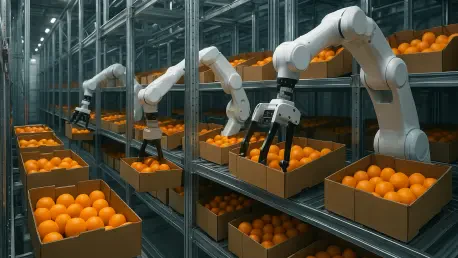
The logistical framework at Bardon, engineered by the intralogistics integrator Cimcorp, is meticulously designed to navigate the inherent volatility of fresh produce management. Maintaining the integrity of fruits and vegetables requires more than just speed; it demands a nuanced approach to environmental control. To achieve this, the facility is divided into three distinct temperature zones, each tailored to specific botanical requirements. For instance, ripening-sensitive fruits like bananas are housed in specialized chambers that prevent premature spoilage, while hardy vegetables like carrots are managed in chilled sections. This granular control allows for a significant reduction in food waste, as items move through the supply chain with minimal human contact and maximum atmospheric consistency. By utilizing automated fruit and vegetable logistics, the center ensures that even the most delicate avocados or ginger roots arrive at retail locations in optimal condition, supporting the retailer’s promise of high quality at low prices.
Automated Retrieval Systems
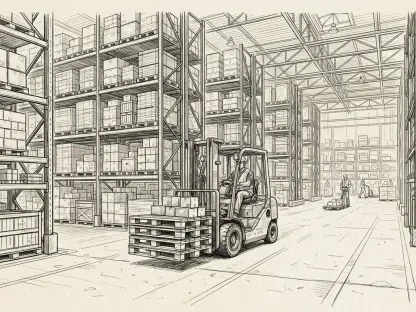
Beyond environmental regulation, the facility utilizes a complex network of high-bay racking and automated shuttles to streamline the flow of goods. These systems are capable of identifying and retrieving pallets with surgical precision, drastically shortening the time between a supplier delivery and a store shipment. This level of automation is particularly critical during periods of high demand, where manual systems often struggle to keep pace with the volume of transactions. The integration of high-speed shuttles allows for a seamless transition of goods, effectively turning the warehouse into a living, breathing organism that responds to real-time data. This technological leap not only optimizes floor space but also enhances worker safety by delegating heavy lifting to mechanical systems. As the facility moves toward full operational capacity by 2027, the synergy between software-driven logistics and hardware will likely serve as a gold standard, proving that efficiency and quality are not mutually exclusive.
Strategic Growth and Environmental Sustainability
Unprecedented Supply Chain Capacity
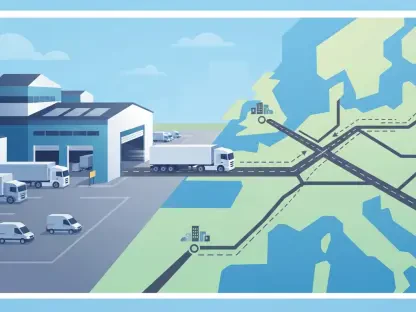
The scale of operations at the Bardon site is set to reach unprecedented levels, with projections indicating it will process over 3.3 million pounds of produce daily during peak seasons. Every day, approximately 6,000 pallets of goods depart from the facility to supply a growing network of stores across the country. This massive throughput is essential for achieving the strategic objective of expanding the brand’s footprint to 1,500 locations. By centralizing distribution and leveraging automated systems, the organization can manage nearly 7 million pallets annually with a workforce of roughly 1,000 employees. This balance of human expertise and robotic speed creates a resilient supply chain capable of absorbing sudden market shifts. The ability to increase produce sales volume by 14 percent by late 2027 hinges on this facility’s performance. It demonstrates a sophisticated understanding of how high-volume logistics can be optimized to support aggressive retail expansion while maintaining the thin margins necessary for discount-driven business models.
Future-Proofing Through Sustainability
Environmental stewardship was integrated into the facility’s core design, featuring 19,000 rooftop solar panels that contributed to its status as the lowest carbon-density warehouse within the group. The focus on sustainability proved that large-scale industrial projects can prioritize ecological responsibility alongside commercial profitability. Moving forward, businesses should consider how decentralized energy generation and automated efficiency can mitigate the environmental impact of long-range logistics. The successful deployment of this infrastructure suggested that future grocery investments must prioritize hybrid models that blend robotic speed with high-density green energy solutions. To replicate this success, industry leaders should audit their existing distribution networks for potential automation bottlenecks and explore carbon-neutral building materials. The Bardon initiative demonstrated that the path to market dominance is paved with technological innovation and a commitment to operational agility. Leaders who adopted these strategies early found themselves better prepared for the logistical complexities of a modern, fast-moving retail environment.