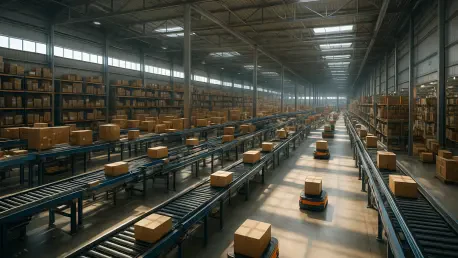

The physical structures that once served as dusty repositories for stagnant inventory have undergone a complete metamorphosis, emerging as the high-tech nerve centers that dictate the pace of global commerce in an increasingly demanding market. This shift reflects a broader evolution in the global logistics sector, where the focus has transitioned from back-office cost management to high-value strategic execution. As e-commerce continues to reshape consumer expectations, the warehouse has moved to the center of the supply chain, serving as the critical stage where brand promises are either fulfilled or broken.
The logistics landscape currently faces a radical realignment driven by the regionalization of trade and a demand for extreme operational agility. Traditional models that prioritized bulk storage and slow-moving inventory are no longer viable in an environment characterized by rapid turnover and fragmented delivery destinations. Market players now navigate a complex global economy by leveraging warehouse hubs as engines of growth rather than mere expenses. This transformation is supported by a robust regulatory framework that ensures safety and efficiency, particularly as supply chains become more interconnected and geographically diverse.
The Great Transformation: From Cost Center to Growth Engine
The modern warehouse has shed its reputation as a static storage space to become a dynamic environment where value is created in real time. In the past, success was measured by how cheaply goods could be housed; today, it is measured by how quickly and accurately they can be dispatched to the final consumer. This change is largely fueled by the transition toward localized trade, where businesses establish footprints closer to their target markets to mitigate the risks associated with global disruptions and rising shipping costs.
Furthermore, the rise of omnichannel retail has forced a total reimagining of internal facility architecture. Warehouses now operate as high-speed fulfillment centers capable of managing thousands of unique stock-keeping units simultaneously. This operational shift allows brands to differentiate themselves through superior service levels, turning logistics capabilities into a core component of their value proposition. The warehouse is no longer the end of the supply chain but the beginning of the customer experience.
Driving Innovation Through Market Intelligence and Tech
The integration of advanced technology has turned the warehouse into a data-driven ecosystem that thrives on market intelligence. Innovations in warehouse management systems allow for a level of transparency that was previously unattainable, enabling operators to track every movement within the facility with granular precision. This technological infusion is not merely about replacing manual labor but about enhancing the ability of the facility to respond to the volatile shifts in consumer demand.
Emerging Trends and the Shift to Individual Fulfillment
Consumer behavior now dictates a move away from bulk pallet handling toward the precision of individual item processing. This trend has given rise to hyperlocal fulfillment centers, which are smaller facilities located within urban areas to facilitate near-instant delivery. Brands are increasingly leveraging these regionalized hubs to place products within a short distance of the consumer, thereby reducing the “last mile” complexity. This geographical proximity has become a decisive factor in maintaining brand loyalty in a market where speed is a non-negotiable requirement.
Market Growth Projections and Economic Indicators
Analysis of current market data reveals a significant escalation in the valuation of strategically located warehouse space. From 2026 to 2029, the demand for premium logistics real estate in free zones and proximity to major ports is expected to outpace supply, driving an increase in rental yields and long-term investment. Performance indicators suggest that as global trade continues to regionalize, the scarcity of urban land will further heighten the importance of vertical warehousing and high-density storage solutions. Economic forecasts point to a sustained expansion of the sector as businesses prioritize resilience over the lowest possible cost.
Navigating the Complexities of Modern Logistics Operations
Despite the technological advancements, the industry faces significant operational hurdles, most notably the recurring challenge of labor shortages. Peak seasons, such as major sales events and holidays, place immense pressure on manual systems, making the recruitment and training of temporary staff a costly endeavor. To address this, organizations are shifting toward scalable automation that allows facilities to adjust their output without a linear increase in headcount. This transition requires a sophisticated approach to human-robot collaboration, where technology handles repetitive tasks while humans focus on complex problem-solving.
Moreover, many organizations fall into the “data trap” by attempting to layer expensive automation on top of unstandardized or inefficient processes. Strategic success in modern logistics requires a rigorous focus on process optimization before any technological investment is made. Sector-specific engineering is essential, as the requirements for a fashion retailer differ vastly from those of an industrial manufacturer. Only by aligning operational design with the specific needs of the industry can a company avoid the pitfalls of over-automation and achieve a true return on investment.
The Regulatory Framework and Compliance Standards
In high-stakes sectors such as healthcare and pharmaceuticals, the warehouse acts as a vital link in the chain of public safety. Stringent laws and international standards govern every aspect of storage, from temperature control to the rigorous tracking of batch numbers. Compliance is no longer just a legal obligation; it is a fundamental requirement for business continuity and consumer trust. Modern facilities must be designed with these regulations in mind, incorporating specialized zones that meet exact environmental and security criteria.
Security measures have also evolved to protect both physical assets and sensitive data. The implementation of advanced surveillance, biometric access, and encrypted inventory records ensures that the integrity of the supply chain is maintained from arrival to dispatch. Adhering to these international compliance standards allows businesses to operate across multiple jurisdictions with confidence. This rigorous approach to regulation protects the end consumer and mitigates the financial and reputational risks associated with supply chain failures.
The Future Landscape: Data Integrity and Autonomous Systems
The next phase of development in the logistics sector will be defined by the seamless integration of human expertise and autonomous systems. Predictive logistics, powered by artificial intelligence, will allow warehouses to anticipate demand spikes before they occur, optimizing inventory levels and reducing waste. This level of foresight is only possible when data integrity is prioritized. Clean, standardized data serves as the foundation for any successful digital transformation, enabling firms to scale their operations with flexibility and responsiveness.
The industry is also moving toward autonomous exception handling, where intelligent systems manage routine discrepancies in the supply chain without the need for constant human intervention. This shift allows the workforce to transition into high-level roles focused on quality control and system management. As the global economy continues to experience volatility, the firms that have invested in a data-centric infrastructure will be best positioned to pivot their strategies and capture emerging opportunities in new markets.
The New Strategic Mandate for Global Supply Chains
The investigation into the evolving logistics sector revealed that the warehouse established itself as the primary site of value creation for modern enterprises. The transition from a cost-heavy storage model to a data-driven fulfillment engine became the standard for businesses seeking to survive in a competitive global market. It was found that organizations which prioritized localized infrastructure and technological integration were able to meet rising consumer expectations with greater consistency than those adhering to traditional methods.
The findings suggested that long-term success was no longer tied solely to the volume of goods handled, but rather to the intelligence and speed with which those goods moved through the system. Leaders in the field discovered that investing in sector-specific engineering and data integrity provided a more resilient foundation than simple automation. Ultimately, the modern supply chain was redefined as a process that began within the warehouse walls, making the strategic management of these facilities the ultimate differentiator for any brand aiming for global prominence.