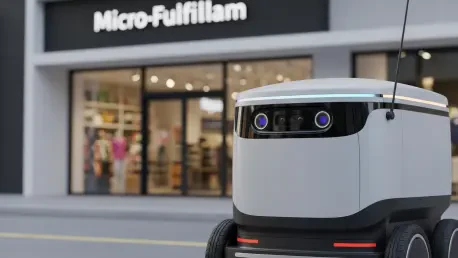

While the global technology discourse remains fixated on the high-stakes drama of passenger robotaxis, a quiet revolution in the form of compact, autonomous pods is fundamentally reshaping how retail goods and parcels navigate the complex urban landscape. This shift moves beyond experimental laboratory settings into the harsh reality of commercial logistics, where reliability is the only metric that truly matters. The current state of Level 4 automation demonstrates that the technology has finally matured enough to handle the chaotic nature of last-mile delivery without constant human intervention.
Evolution and Core Principles of Autonomous Delivery Systems
The transition from experimental prototypes to commercial fleets has been defined by the pursuit of Level 4 automation, where vehicles operate independently within geofenced urban zones. These systems rely on a sophisticated hardware stack comprising high-resolution LiDAR, multi-angle cameras, and powerful on-board computing units. By automating the final leg of the supply chain, these vehicles address the “last-mile” bottleneck, which has historically been the most expensive and inefficient segment of global logistics.
This modernization effort is not merely about replacing human drivers but about creating a new infrastructure for 24-hour retail. Unlike earlier versions that required constant monitoring, today’s hardware is built for durability and continuous operation in varied urban terrains. This shift has allowed logistics providers to move away from expensive, large-scale delivery vans toward a decentralized network of smaller, agile pods that reduce traffic congestion and carbon emissions simultaneously.
Technical Architectures for High-Volume Logistics
Mapless Navigation and the Neolix-VA Foundation Model
The most significant technical leap in this sector is the move toward mapless navigation through proprietary visual-action foundation models like Neolix-VA. Traditional autonomous systems often fail because they rely on fragile, high-definition maps that become obsolete the moment a road is closed or a sidewalk is modified. In contrast, this new model allows the vehicle to “perceive” and “decide” in real-time, much like a human driver, by processing visual cues and environmental context without pre-existing spatial data.
Large-Scale Data Utilization and Sensor Fusion
To achieve this level of autonomy, systems must process millions of kilometers of driving data to prepare for rare “edge cases” in traffic. Sensor fusion plays a critical role here, merging data from LiDAR and cameras to create a redundant safety layer. While cameras provide semantic understanding of signs and signals, LiDAR ensures precise distance measurements, allowing the vehicle to navigate safely through dense pedestrian crowds or unpredictable intersections.
Shifting Trends From Technical Feasibility to Unit Economics
The industry has reached a pivotal threshold where the focus has moved from “can it work” to “is it profitable.” For large-scale enterprises, the testing phase has ended, giving way to a procurement phase where the primary concern is the cost per delivery. This shift indicates a maturing market that prioritizes measurable efficiency gains and total cost of ownership over the initial novelty of self-driving technology.
Real-World Applications in International Retail Markets
The strategic expansion of autonomous fleets into the European market highlights the practical utility of these systems in diverse regulatory environments. Partnerships with automotive giants, such as the Salvador Caetano Group, have integrated these pods into existing logistics networks, proving that they can coexist with traditional transportation. This integration is particularly evident in modern retail infrastructure, where autonomous pods serve as mobile vending units or rapid delivery couriers for urban centers.
Technical, Regulatory, and Market Challenges
Despite the rapid progress, significant hurdles remain, particularly regarding European E-MARK and TÜV Rheinland certifications. Navigating the legal complexities of the European Union requires strict data residency protocols and high safety standards that differ from other global markets. Furthermore, unpredictable weather conditions and localized traffic behavior continue to test the limits of even the most advanced sensor suites, requiring ongoing refinement of AI models.
The Future of Autonomous Retail Infrastructure
The trajectory of this technology points toward the total integration of AI-driven delivery into urban planning. Future developments will likely see autonomous vehicles operating as part of a seamless, automated loop between micro-fulfillment centers and consumer doorsteps. This scalability will fundamentally alter consumer behavior, making instant, low-cost delivery a standard expectation rather than a premium service, while significantly boosting the profitability of the retail sector.
Summary and Final Assessment of Autonomous Logistics
The era of autonomous logistics successfully shifted from technical speculation to a robust economic framework where reliability outweighed novelty. Neolix demonstrated that the path to global adoption required a delicate balance between advanced AI foundations and strict adherence to regional safety standards. Industry leaders realized that the technology served as the backbone for a new retail infrastructure, moving beyond simple delivery to become an essential tool for urban resilience. The transition to Western markets was finalized by proving that autonomous fleets could navigate complex regulatory landscapes while maintaining a lower cost per mile than traditional methods. Professionals in the sector recognized that the future of commerce was no longer dependent on human endurance but on the seamless execution of decentralized machine intelligence.