


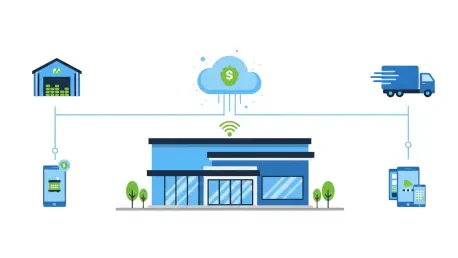

Salling Group is proving that a century-old retail legacy can effectively pivot into the digital age by processing billions of data points to serve millions of customers every single week. Northern Europe’s retail environment currently undergoes a radical shift where traditional physical commerce must blend seamlessly with cloud-based intelligence. Managing a massive twelve billion euro revenue stream requires more than just shelf space; it demands a sophisticated digital backbone capable of handling fifteen million weekly transactions across thousands of locations. SAP serves as the primary engine for this modernization, allowing the conglomerate to move away from fragmented legacy systems toward a unified, data-centric architecture.
Emerging Trends and Market Dynamics Shaping the Future of Commerce
Harnessing the Power of the Autonomous Enterprise to Redefine Retail Operations
The industry is moving toward the era of the autonomous enterprise, where artificial intelligence transitions from a conceptual novelty into a driver of measurable business outcomes. Salling Group leverages the RISE with SAP program to facilitate this shift, utilizing S/4HANA Cloud to create a foundation for automated decision-making. By offloading complex calculations to AI, the organization can respond to market fluctuations in real time. This strategy ensures that high-volume operations remain agile, allowing technology to manage the heavy lifting of inventory and pricing strategies.
Evaluating the Growth Metrics and Scalability of Cloud-Based Retail Models
Scaling a retail empire across 2,100 locations requires a logistical precision that manual processes simply cannot achieve. Through the implementation of SAP Extended Warehouse Management, the company oversees twenty-nine distribution centers with unprecedented visibility. Data shows that integrating cloud-based warehouse processes significantly reduces friction in the global supply chain. These digital tools provide the necessary infrastructure to maintain market share while driving sustainable growth, ensuring that product availability remains consistent despite international economic pressures.
Overcoming the Complexities of Large-Scale Digital Integration
Modernizing a legacy that spans over a hundred years presents unique hurdles, particularly when dealing with technical debt and disconnected software layers. Fragmented systems often create silos that hinder the flow of information across the supply chain, making synchronization a top priority for leadership. Addressing these obstacles involves replacing outdated frameworks with intuitive digital tools that simplify workflows for store employees. By streamlining end-to-end operations, the group minimizes operational friction and ensures that staff can focus on customer service rather than administrative bottlenecks.
Navigating Regulatory Compliance and Data Governance in a Cloud-First Environment
Operating within the European market necessitates a rigorous commitment to data protection standards like GDPR, especially when managing vast customer datasets. A cloud-first strategy provides the necessary framework to maintain transparency while securing sensitive information against modern cyber threats. These platforms allow the group to build risk-resilient operations that satisfy both governmental regulations and consumer expectations for privacy. Beyond security, cloud environments enable better tracking of sustainability metrics, helping the company meet its environmental goals through precise data monitoring.
The Road Ahead: Forecasting the Next Wave of Retail Innovation
The next evolution of commerce will likely see a push toward predictive supply chain management and hyper-personalized consumer experiences. AI will increasingly minimize human intervention in logistics, allowing for self-correcting inventory systems that anticipate demand before it peaks. As global economic conditions continue to fluctuate, the demand for high-efficiency retail ecosystems will grow. Future innovations may include advanced biometric payments and augmented reality shopping interfaces that further bridge the gap between digital convenience and physical retail presence.
Synthesizing the Impact of AI on the Global Retail Value Chain
The partnership between Salling Group and SAP established a clear blueprint for how traditional retailers adapted to the digital age. By prioritizing the integration of autonomous infrastructure, the organization successfully enhanced the daily experiences of both employees and customers. Retailers who invested in scalable cloud solutions secured their long-term viability by turning data into a strategic asset. This transformation proved that AI was not merely a tool for efficiency but a fundamental shift in how businesses fulfilled their core purpose in a modern society. Moving forward, the industry prepared for a landscape where predictive algorithms dictated every step of the value chain.







