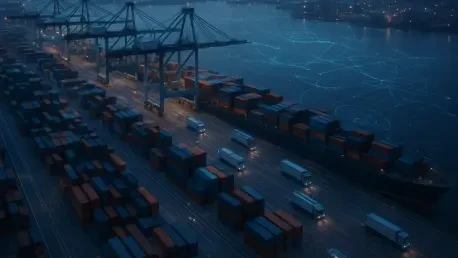

The traditional reliance on linear shipping lanes and predictable seasonal demand has completely dissolved, leaving global retailers to navigate a chaotic marketplace where a single maritime disruption can erase months of projected profit margins. This landscape is no longer defined by the occasional shock but by a state of perpetual volatility that has forced a fundamental rethink of how goods move from factory floors to consumer doorsteps. The era of just-in-time efficiency, which dominated the previous two decades, has officially been superseded by a focus on structural resilience. Retailers are now prioritizing the ability to absorb shocks over the singular pursuit of low-cost production, recognizing that a cheap supply chain is worthless if it is not a reliable one. This transition is being led by a sophisticated integration of Artificial Intelligence and digital modeling, turning what was once a backend logistics function into the most critical theater of corporate competition.
The current paradigm in global logistics is characterized by a shift toward high-velocity adaptation. Fast-moving consumer goods sectors are feeling the most acute pressure, as the speed of trend cycles now clashes with the physical limitations of maritime transport. Maritime logistics, the lifeblood of global trade, has become increasingly fragile due to geopolitical instability and environmental constraints. To combat this, industry leaders are deploying Agentic AI and Digital Twins to create living replicas of their entire operation. These digital systems allow companies to run millions of simulations per hour, testing how their networks would respond to a sudden port closure or a surge in fuel costs. By creating a virtual environment where every variable can be adjusted, retailers are moving away from reactive firefighting and toward a proactive model of predictive orchestration.
The margin squeeze facing global retailers in 2026 is intense, driven by a combination of high labor costs and the rising cost of capital. Every dollar tied up in stagnant inventory represents a significant opportunity cost, making the precision of supply chain execution a matter of financial survival. Major players like Walmart and Inditex have set the pace by embedding technology into the very fabric of their procurement and distribution models. These organizations are no longer just retailers; they are effectively technology firms that happen to sell physical goods. Their success has created a widening gap between the leaders and the laggards, where those who can leverage real-time data to optimize their logistics enjoy a massive advantage in pricing and availability. This technological shift is also being accelerated by a tightening of ESG regulations, which demand unprecedented transparency in how goods are sourced and transported.
The Current Paradigm of Perpetual Volatility in Global Logistics
The shift from just-in-time efficiency to a model of structural resilience marks the most significant change in supply chain philosophy since the introduction of containerization. In the post-pandemic economy, the vulnerabilities of lean inventory models were exposed with devastating clarity, leading to a massive move toward diversified sourcing. Retailers have realized that the hidden costs of a fragile network—such as lost sales, brand damage, and emergency air-freight charges—far outweigh the savings of a hyper-optimized, single-source strategy. Consequently, the focus has shifted toward building a buffer into the system, not through mindless stockpiling, but through intelligent inventory placement. This involves using advanced analytics to determine exactly where products should be held across a global network to ensure they remain accessible even when primary transport lanes are blocked.
In the fast-moving consumer goods segment, the demand for agility has never been higher. Consumers now expect immediate fulfillment, even as the global infrastructure used to deliver those goods faces unprecedented strain. This has elevated the importance of Agentic AI, which differs from traditional automation by its ability to make autonomous decisions within a set of predefined parameters. For example, if an AI agent detects a delay in a maritime shipment, it can independently negotiate space on a different carrier or initiate a warehouse transfer from a secondary location without waiting for human intervention. This speed of response is critical in an environment where a delay of even a few days can lead to a total stockout of high-demand items.
Furthermore, the rising cost of capital has placed a premium on asset utilization. Retailers can no longer afford to have underperforming assets in their supply chain, whether that means half-empty containers or warehouses located in the wrong geographic regions. The influence of Digital Twins has become paramount here, as these systems provide a granular view of every asset in the network. By visualizing the entire supply chain in a digital space, companies can identify inefficiencies that were previously invisible. This level of visibility is essential for navigating the current margin squeeze, where inflationary pressures on raw materials and labor continue to threaten the bottom line of even the most established global brands.
Navigating the Tech-Driven Evolution of Global Trade
Emerging Forces Reshaping Supply Chain Strategy
The move toward probabilistic planning represents a total departure from the deterministic models of the past. Instead of trying to predict a single likely outcome, retailers now prepare for a spectrum of possibilities. This shift is supported by the adoption of just-in-case inventory strategies that are managed by complex algorithms to prevent the overstocking issues that plagued the industry in previous years. These algorithms analyze hundreds of external signals, from weather patterns to political unrest, to determine the optimal safety stock levels for every individual product in every individual location. This nuanced approach ensures that the supply chain is prepared for the unexpected without becoming bloated and inefficient, maintaining the delicate balance between availability and profitability.
Technological advancements such as Graph Neural Networks are providing the multi-tier visibility that was once thought impossible. Most retailers traditionally only had visibility into their direct suppliers, leaving them blind to the risks buried deep in the lower tiers of their network. Graph Neural Networks change this by mapping out the complex web of relationships between thousands of different entities, allowing companies to see how a disruption at a small component manufacturer in a distant country will eventually impact their final product. At the same time, the Industrial Metaverse is beginning to provide a collaborative space where different stakeholders in the supply chain can interact. This virtual environment allows for the testing of new warehouse layouts or distribution strategies before a single physical change is made, reducing the risk and cost associated with operational experimentation.
Evolving consumer behaviors are also playing a major role in how supply chain strategies are formulated. Inflation has made shoppers more price-sensitive, yet their demand for rapid and transparent fulfillment has not wavered. To address this contradiction, retailers are turning to AI-driven Revenue Growth Management. This technology allows for dynamic pricing and promotion strategies that are directly linked to real-time supply chain conditions. If a certain product is in oversupply due to a logistics error, the system can automatically trigger a promotion to clear the inventory. Conversely, if a product is becoming scarce, prices can be adjusted to manage demand and protect margins. Localized demand sensing has also become a critical tool, allowing retailers to tailor their inventory to the specific needs of individual neighborhoods, thereby reducing the need for expensive long-distance shipping.
Quantifying the Economic Impact of AI Integration
The financial justification for AI integration is becoming increasingly clear as data from 2026 highlights significant improvements across key performance indicators. Retailers that have successfully integrated AI into their logistics operations are seeing reductions in transportation costs of up to fifteen percent. These savings are achieved through more efficient route planning, better container utilization, and the reduction of empty miles. Moreover, inventory level optimizations are contributing to a twenty percent improvement in working capital, as companies are able to meet demand with less stock on hand. These numbers are not just incremental improvements; they represent a fundamental shift in the economic structure of the retail industry, where technology is the primary driver of cost reduction.
The growth projections for the Agentic AI software market are staggering, with estimates suggesting the market will reach $53 billion by 2030. This growth is fueled by the realization that manual planning processes are no longer capable of handling the complexity of modern global trade. The ability of AI to process vast amounts of data in real-time and provide actionable insights is becoming the standard by which all supply chain organizations are measured. Forecasting accuracy, once a hit-or-miss endeavor, has improved significantly, with some firms reporting a thirty percent reduction in errors. This leads to higher asset utilization, as warehouses and transport fleets are used more effectively, ensuring that every part of the supply chain is contributing to the overall profitability of the enterprise.
Looking ahead, the role of Quantum Computing is expected to move from the experimental phase to practical application by the end of 2026. This technology is uniquely suited to solving NP-hard logistics challenges, such as the global optimization of a thousand-vehicle delivery fleet or the complex scheduling of multi-modal transport networks. While traditional computers can take days to find an optimal solution for these problems, quantum systems can do so in seconds. This will unlock a new level of efficiency that was previously mathematically impossible, allowing retailers to achieve a global optimum in their operations. The integration of quantum-enhanced algorithms into the supply chain will likely be the next great frontier in the pursuit of a frictionless global trade environment.
Overcoming Structural Barriers and Macroeconomic Friction
Geopolitical choke points have become a constant feature of the global trade landscape, with disruptions in the Suez and Panama Canals frequently impacting spot rates and transit times. These physical bottlenecks are often beyond the control of any individual retailer, but their impact can be mitigated through proactive diversification. By using reinforcement learning models, companies can simulate various diversion strategies, such as shifting cargo from sea to rail or utilizing alternative ports that are less prone to congestion. These AI models can also account for the financial burden of war-risk insurance and fuel surcharges, helping logistics managers choose the most cost-effective path in a rapidly changing environment. The ability to pivot quickly in response to a canal closure or a regional conflict has become a defining characteristic of a resilient supply chain.
The challenge of Tier-1 Blindness continues to plague many organizations, as the complexity of hidden supplier networks makes it difficult to conduct comprehensive risk assessments. Even when a retailer has a strong relationship with its direct vendors, it may be completely unaware of the risks associated with the raw material suppliers those vendors rely on. AI-powered mapping tools are now being used to strip away this opacity, using public data, customs records, and financial reports to reconstruct the entire supply chain from the ground up. This allows for a more honest evaluation of the potential for disruption and enables companies to work more closely with their suppliers to build collective resilience. Without this deep visibility, any strategy for risk mitigation is essentially based on incomplete information.
Climate-induced infrastructure constraints are another major source of friction, as rising sea levels and extreme weather events threaten the stability of key logistics hubs. Port closures due to hurricanes or the drying up of inland waterways because of prolonged droughts are no longer rare occurrences. These events not only cause immediate delays but also drive up the long-term cost of operations through increased insurance premiums and the need for expensive infrastructure reinforcements. To manage these risks, retailers are increasingly using AI to monitor environmental conditions in real-time and predict when a facility might be at risk. This allows for the preemptive relocation of inventory and the rescheduling of shipments, minimizing the impact of climate-driven events on the overall flow of goods.
The Global Regulatory Framework and Compliance Standards
The regulatory landscape is shifting rapidly, with a particular focus on environmental accountability and the tracking of Scope 3 emissions. Retailers are now required to provide detailed reports on the carbon footprint of their entire supply chain, including the activities of their third-party logistics providers and raw material suppliers. This level of transparency is impossible to achieve without a digitized and integrated data environment. AI systems are being deployed to collect and analyze emission data across thousands of touchpoints, providing a verifiable record of a company’s environmental impact. This is not just a matter of compliance; it is becoming a critical part of brand reputation, as consumers increasingly hold retailers accountable for the ecological consequences of their business models.
In the realm of food safety and waste reduction, digitized quality standards are playing an essential role. Systems that are integrated with government standards, such as those provided by the USDA, use AI-powered vision systems to inspect produce and other perishable goods at various points in the supply chain. These systems can detect signs of spoilage or contamination that are invisible to the human eye, allowing for the early removal of tainted products and the rerouting of goods that are nearing their expiration date. This not only ensures consumer safety but also significantly reduces the amount of food that is wasted due to logistics delays. The ability to guarantee the quality of a product from the farm to the fork is becoming a major competitive differentiator in the grocery and FMCG sectors.
International trade policies and maritime security measures also continue to shape retail operating models. As governments implement new tariffs or trade restrictions, retailers must be able to adjust their sourcing strategies almost instantly to avoid excessive costs. AI-driven procurement platforms are being used to monitor changes in trade policy and suggest alternative suppliers in regions that are not affected by new regulations. Furthermore, the intersection of data security and AI ethics is becoming a primary concern as more procurement and contract execution processes become autonomous. Ensuring that these AI systems operate fairly and transparently is critical for maintaining trust between retailers and their global partners, as well as for complying with emerging laws regarding the use of AI in business.
The Future Landscape: Toward Autonomous and Quantum-Enhanced Retail
The shift from AI as a mere advisor to a system capable of autonomous execution marks the beginning of the era of Agentic AI. In this new landscape, the supply chain is no longer a series of manual handoffs but a continuous, self-orchestrating process. These autonomous agents can handle everything from the initial purchase order to the final delivery, making real-time adjustments as conditions change. This reduces the need for human intervention in routine tasks, allowing supply chain professionals to focus on higher-level strategic planning and relationship management. The result is a much more responsive and efficient system that can operate at the speed of data, rather than the speed of human decision-making.
Quantum computing is set to redefine what is possible in terms of global routing and fleet utilization. By processing the astronomical number of variables involved in a global logistics network, quantum algorithms can identify efficiencies that are completely invisible to classical computers. This could involve the perfect synchronization of thousands of different shipments across different modes of transport, ensuring that every container is full and every route is optimized for minimum fuel consumption. The rise of self-healing supply chains will also be a major trend, where the system can automatically correct for errors or disruptions using real-time telematics and multi-agent coordination. If a delivery truck breaks down, the system can instantly dispatch a replacement and update the delivery schedules for all affected customers without any manual input.
The Industrial Metaverse will continue to grow in importance, providing a persistent digital space where global stakeholders can collaborate in real-time. This will allow for a much more integrated approach to supply chain management, where retailers, manufacturers, and logistics providers can work together to solve complex problems in a shared virtual environment. This level of collaboration is essential for building a truly resilient global trade network, as it allows for the sharing of data and insights that were previously siloed within individual organizations. As we move toward a more interconnected and autonomous world, the ability to operate effectively within these virtual spaces will be a key requirement for any successful retail enterprise.
Strategic Outlook for an AI-Orchestrated Retail Ecosystem
The transition from manual, siloed operations to integrated and intelligent ecosystems has fundamentally altered the retail landscape. This evolution demonstrated that supply chain management was no longer a hidden cost center but the very foundation upon which successful business strategies were built. The findings of the past year highlighted that companies which embraced advanced AI and digital twins were significantly better equipped to handle the shocks of a volatile market than those that clung to traditional methods. The move toward structural resilience proved to be the most effective way to protect profit margins and maintain customer loyalty in an environment where disruption had become the norm. The industry reached a consensus that the pursuit of pure efficiency was a high-risk strategy that offered little defense against the complexities of modern global trade.
Investment in sophisticated technologies like Graph Neural Networks and predictive quality management became the standard response to the growing pressures of regulatory compliance and consumer expectations. These tools provided the transparency and agility needed to navigate a world where environmental impact and rapid fulfillment were equally important. The role of the supply chain professional transformed from a coordinator of logistics to a manager of complex, automated systems. This shift solidified the importance of data literacy and strategic thinking at every level of the organization. The integration of AI was not merely a technological upgrade but a complete reimagining of how value was created and delivered in the global marketplace.
The prospect of the autonomous enterprise became the definitive gold standard for organizations looking to thrive in the years beyond 2026. This vision of a self-healing, self-optimizing supply chain represented the culmination of years of technological progress and strategic planning. The ability to utilize quantum-enhanced algorithms and agentic AI allowed for a level of precision and speed that was once considered impossible. As the industry moved forward, the focus remained on refining these systems to ensure they remained ethical, transparent, and resilient. The transformation of the global retail supply chain showed that while volatility may be perpetual, the tools to manage it had become more powerful than ever before, ensuring that the movement of goods remained a reliable pillar of the global economy.