
The contemporary retail environment has evolved into a complex network where human intuition is no longer sufficient to manage the massive datasets generated by modern consumer behaviors. The shift toward AI-driven operations represents a fundamental restructuring of the retail value chain, moving away from the limitations of legacy systems. Historically, retailers functioned within a reactive framework, identifying shortages or surplus stock only after the financial impact was already felt. By integrating artificial intelligence into the core operational layer, businesses are now transitioning toward a proactive intelligence model. This evolution is characterized by the use of machine learning algorithms that don’t merely report on the past but actively simulate various future scenarios to guide decision-making.
The relevance of this technology in the current technological landscape cannot be overstated, as it bridges the gap between digital data and physical storefront execution. Intelligence today is defined by the ability to process unstructured data—social media trends, local weather patterns, and global economic shifts—into a coherent operational strategy. This has moved the industry from basic automation, which follows set rules, to adaptive systems that learn from every transaction. As a result, the retail ecosystem has become more fluid, allowing organizations to maintain a state of constant readiness rather than being caught off guard by the volatility of global markets.
The Evolution of AI-Driven Retail Ecosystems
Modern retail systems have undergone a significant transformation, evolving from simple record-keeping databases to sophisticated neural networks that govern every aspect of the business. This technology emerged from the need to solve the “data silos” problem, where information about inventory, sales, and logistics existed in isolation. By unifying these components under a single AI-driven umbrella, retailers created a “digital twin” of their entire operation. This allows for a level of coordination that ensures every department—from procurement to the checkout lane—operates with the same set of real-time insights.
Furthermore, the implementation of these ecosystems marks a departure from deterministic programming. Unlike traditional software that requires explicit instructions for every possible outcome, AI-integrated platforms utilize probabilistic modeling to identify the most likely path to success. This nuance is critical because it allows the system to account for ambiguity and unpredictability. Consequently, the technology has become an essential pillar for sustainability, as it provides the analytical depth required to navigate an era of rapid consumption and shifting brand loyalties.
Critical Components of AI-Integrated Retail Management
Advanced Inventory Control and Precision Forecasting
Precision forecasting represents the most significant breakthrough in capital preservation for the retail sector. AI evaluates historical sales cycles alongside real-time demand signals to optimize stock levels with surgical accuracy. This goes beyond simple reordering; it involves predicting the “velocity” of a product based on hyper-local variables. By maintaining leaner inventory levels without risking stockouts, retailers effectively reduce their holding costs and free up liquid capital for other strategic investments. This precision ensures that the right product is in the right location at the exact moment a consumer seeks it.
Moreover, the reduction of waste through AI-driven control has profound implications for financial margins. Traditional inventory management often leads to aggressive markdowns or the physical disposal of unsold goods, both of which erode profitability. Artificial intelligence mitigates these issues by identifying slow-moving items early in the season, suggesting targeted promotions to clear stock before it becomes a liability. This synergy between predictive data and store-level execution creates a more disciplined financial environment, where every square foot of shelf space is maximized for efficiency.
End-to-End Supply Chain Visibility and Coordination
Operational stability is heavily dependent on the visibility of the supply chain, a factor that AI has enhanced through real-time shipment monitoring and predictive bottleneck identification. By integrating IoT sensors and GPS tracking into the logistics framework, AI provides a transparent view of the movement of goods across the globe. When a disruption occurs, such as a port delay or a transportation strike, the system automatically identifies the threat to the timeline. This level of oversight allows for a level of transparency that was previously impossible, transforming the supply chain from a black box into a manageable asset.
The technical superiority of these systems lies in their ability to perform dynamic routing. Instead of sticking to a rigid delivery schedule, AI can reroute shipments in transit to bypass congested areas or prioritize high-demand regions. This coordination ensures that product availability remains consistent even during periods of logistical instability. Furthermore, by analyzing supplier performance metrics, AI helps retailers identify which partners are consistently reliable, fostering a more resilient network of contributors. This proactive coordination is what separates modern “intelligent” supply chains from the brittle logistics models of the past.
Emerging Trends and Technological Innovations in Retail
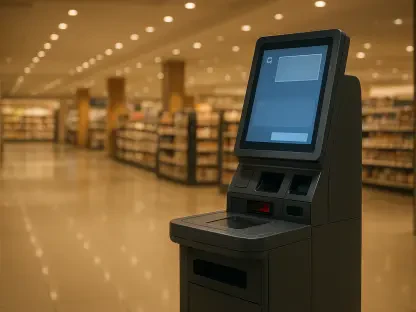
The current trajectory of retail technology is defined by a shift toward operational resilience, moving beyond basic cost-cutting measures. Intelligent retail systems are now being designed to handle “edge cases” or sudden spikes in demand that would typically crash traditional systems. We are seeing a transition from basic automation—such as self-checkout kiosks—to cognitive systems that can manage entire store layouts based on heat maps of customer movement. This shift reflects a deeper understanding that technology must be as dynamic as the humans it serves.
Economic volatility and shifting consumer behaviors are also driving the adoption of more agile infrastructures. As shoppers move between online and offline channels with increasing frequency, AI provides the “omnichannel” glue that holds these experiences together. The latest developments focus on creating a frictionless loop where a customer’s online preferences inform their in-store experience. This trend is not just about convenience; it is a response to the reality that in a saturated market, the only way to retain a customer is to provide a perfectly tailored, reliable interaction every single time.
Practical Applications Across the Retail Landscape
In the physical store environment, AI has revolutionized precision staffing by analyzing foot traffic patterns to ensure labor is allocated where it provides the most value. By predicting peak hours with high accuracy, store managers can avoid both the costs of overstaffing and the lost revenue associated with understaffing. This data-driven approach to labor management improves employee satisfaction by reducing burnout and ensures that customers receive timely assistance when they are most likely to make a purchase.
Personalized customer engagement strategies have also become more sophisticated through the use of automated service tools. These systems handle routine inquiries and transactions, which frees human personnel to focus on complex customer needs that require empathy and problem-solving skills. For example, AI can identify a frustrated customer in real-time and alert a human associate to intervene, blending technological speed with human intuition. This unique use case demonstrates that AI is a tool for empowerment rather than just a replacement for manual labor.
Addressing Structural Challenges and Implementation Barriers
Despite the clear benefits, the transition to AI-centric models is often hindered by technical hurdles like data integration and legacy debt. Many retailers are attempting to layer advanced algorithms on top of antiquated database architectures, leading to “data gravity” where information is too heavy or fragmented to be used effectively. Regulatory issues concerning data privacy also present a significant barrier, as organizations must balance the need for personalized insights with the legal requirement to protect consumer information.
There is also a notable organizational friction between corporate strategy and local store execution. While headquarters may see the value in an AI-driven markdown strategy, local managers may be hesitant to trust an algorithm over their years of experience. Ongoing development efforts are focused on making AI “explainable,” providing the reasoning behind every suggestion to gain the trust of those on the front lines. Streamlining this transition requires not just technological upgrades, but a cultural shift toward data literacy across the entire organization.
Future Projections for Autonomous Retail Operations
The horizon of retail points toward fully resilient and autonomous infrastructures that require minimal human intervention for routine maintenance. We can anticipate the rise of “self-healing” supply chains that automatically reorder and reroute supplies based on fluctuating market signals. This long-term development will likely contribute to global market stability by reducing the “bullwhip effect,” where small changes in consumer demand lead to massive overcorrections in manufacturing.
Future developments will also focus on resource efficiency, where AI manages the energy consumption and carbon footprint of retail buildings. By optimizing lighting, heating, and cooling based on real-time occupancy, retail operations will become more sustainable in the environmental sense. The disciplined management of resources through AI will eventually become a standard requirement for any brand looking to maintain its social license to operate. This evolution suggests that the future of retail is one where efficiency and responsibility are inextricably linked through technology.
Comprehensive Assessment of AI’s Impact on Retail
The integration of AI into retail operations proved to be the most significant advancement of the current decade, resulting in a measurable reduction in operational waste and a marked improvement in financial margins. The review indicated that organizations which embraced these systems early were far better equipped to handle market disruptions than those relying on traditional methods. It became evident that the technology’s true power lay in its ability to synchronize disparate data points into a single, actionable narrative. This coherence allowed for a level of precision that protected both the bottom line and the customer experience.
The verdict on AI’s current state was that it transitioned from an optional enhancement to a core necessity for 21st-century sustainability. The review highlighted that while the initial implementation costs were high, the long-term gains in resource efficiency and brand loyalty far outweighed the investment. For future breakthroughs, the focus should shift toward standardizing data protocols and improving the interoperability of different AI platforms. Ultimately, the successful deployment of these technologies defined a new era of retail management, where data served as the foundation for a more resilient and responsive global marketplace.