
The intersection of high-stakes fintech acquisitions and unpredictable global politics has created a fascinating case study in Shift4 Payments. By integrating the Swiss giant Global Blue, the company aimed to dominate the European tax-free luxury market, but regional conflicts have significantly shifted the landscape. To unpack how these macro-pressures are reshaping payment strategies and whether the gamble on luxury retail still holds weight, I am joined by Zainab Hussain, an e-commerce strategist who specializes in the delicate balance of customer engagement and international operational scale.
The luxury retail sector in Europe has long relied on high-spending international travelers, yet recent regional turmoil in the Middle East has clearly disrupted those patterns. How significant has the impact been on tourist traffic from key regions like Southeast Asia, and what does this mean for payment providers tied to those luxury hubs?
The impact is quite palpable when you look at the recent financial disclosures, which show a direct $20 million hit in the second quarter alone due to the conflict. This instability has created a chilling effect on travel corridors that Global Blue relies on, specifically those connecting Southeast Asia and the Middle East to European shopping capitals. These regions are the lifeblood of the tax-free shopping ecosystem, which currently accounts for roughly 20% of Shift4’s total revenue. While the desire for luxury remains, the physical movement of these high-net-worth “customer cohorts” has slowed, forcing providers to lower their sales and income guidance for the remainder of 2026. However, it is worth noting that this specific demographic is historically resilient; they tend to resume their travel habits almost immediately once geopolitical tensions subside, making this a period of temporary endurance rather than a permanent market shift.
Shift4 spent eight years studying Global Blue before committing to a $2.5 billion acquisition, yet the timing has coincided with these severe disruptions. In your view, does the long-term potential of this “beachhead” in 75 countries still outweigh the immediate financial strain of the debt and the war-related setbacks?
The strategic value of a “beachhead” in 75 new markets is immense, especially when you consider that it gives a Pennsylvania-based firm instant access to the inner sanctums of brands like Louis Vuitton, Hermes, and Prada. Even with the $1 billion in debt taken on to finalize the deal, the acquisition allows them to cross-sell an entire suite of products—ranging from restaurant software to hotel payment systems—to merchants who previously only used a single tax-refund tool. The 34% increase in revenue to $1.3 billion suggests that the underlying engine is still very powerful despite the net income taking a visible hit. Executives seem “incredibly happy” with the move because they aren’t just buying a tax-free service; they are buying the infrastructure to process payments in high-end boutiques across the globe. This isn’t just about surviving a bad quarter; it’s about having the pipes in place when the luxury market inevitably bounces back.
We’ve seen the launch of the Shift4 One device, which attempts to automate the tax-refund conversation at the point of sale. How does this kind of technology bridge the gap for smaller merchants who might otherwise lose out on these high-value transactions?
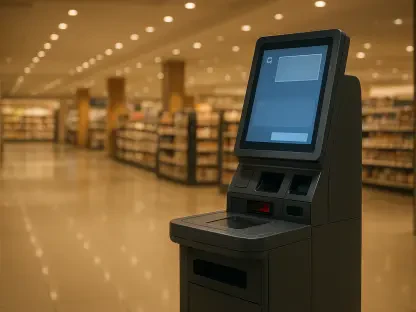
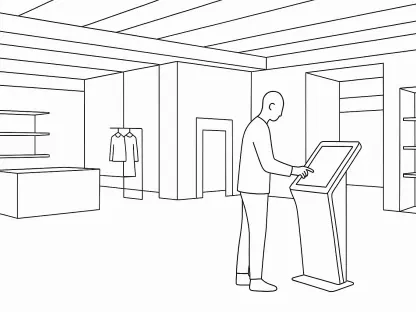
This device is a game-changer because it takes the guesswork out of the value-added tax refund process, which is often too complex for a small pharmacy or a local boutique to handle manually. When a traveler taps their foreign card, the handheld device identifies their eligibility and triggers a “digital journey” that simplifies the refund for the customer while ensuring the merchant captures the sale. We are already seeing this deployed across a dozen European countries, with plans to add three more by the end of this year. By “forcing the conversation” at the point of sale, retailers have seen the actual number of transactions grow tremendously because the incentive to buy is presented right there in their hands. It effectively democratizes the luxury shopping experience, allowing a small watch boutique to offer the same seamless financial perks as a flagship store on the Champs-Élysées.
Despite the revenue growth you mentioned, the company saw a 41% drop in net income to $24 million this past quarter. What do these contrasting figures tell us about the cost of managing a global expansion during a period of currency volatility and geopolitical stress?
These figures highlight a classic struggle: a company that is growing its footprint and top-line revenue but is being squeezed by factors it simply cannot control, such as a $20 million drag from unfavorable currency exchange rates. Managing a global payments firm in 2026 requires an ability to absorb these shocks, as evidenced by the $25 million impact expected for the tax-free shopping business in the third quarter. While they are successfully selling more POS hardware and software, the overhead of the Global Blue integration and the reduced activity in European retail are weighing heavily on the bottom line. It shows that while you can manage the impact of a regional war, you cannot entirely outrun it when a fifth of your business is tied to international tourism. The drop in net income is the price of admission for playing on a global stage where exchange rates and geopolitical borders are constantly shifting.
While Europe faces these headwinds, the U.S. market seems to be buoyed by what is being called the “experience economy.” Why is the demand for in-person payments at events and restaurants proving so resilient against inflationary pressures?
There has been a fundamental shift in consumer psychology where the “selfie” or the memory of an event has become far more valuable than a physical item, and Shift4 has positioned itself perfectly to capture that spend. Whether it is at major sports stadiums or high-end restaurants, U.S. consumers are showing a “resilient” appetite for experiences despite higher costs at the gas pump or general inflation. This “experience economy” is driven by a desire for in-person connection, and the demand for seamless payment processing in these environments remains robust. Shift4 has successfully diversified into these sectors, which acts as a vital hedge against the volatility we are seeing in the European luxury retail market. Essentially, when people stop flying to Paris to buy a handbag, they are still going to a local stadium or a high-end hotel, and that keeps the transaction volume flowing.
What is your forecast for the recovery of the European tax-free shopping market as we look toward 2027?
I anticipate a significant upside starting in 2027, provided the disruption in the Middle East begins to normalize and the “all-in-one” terminal strategy continues to gain traction among smaller European merchants. We are likely to see Shift4 adding thousands of new merchants per month through the Global Blue network, which will eventually offset the current losses from reduced tourist traffic. If the financial results remain under pressure through next year, we might even see a strategic buyer step in to capitalize on that massive 75-country footprint. However, the most likely scenario is a slow but steady climb as the “Shift4 One” device becomes the standard for European retail, turning every foreign card tap into a streamlined revenue opportunity. The infrastructure is being built now; the payoff depends on the world becoming just a little bit more stable by next year.