
Retailers across the United Kingdom are currently grappling with a staggering financial paradox where customer engagement reaches record levels while actual commercial profitability continues to leak through operational gaps. This disconnect represents a critical loyalty execution crisis that threatens to undermine even the most established brands. While the vast majority of shoppers carry digital or physical loyalty cards, the transition from simple participation to tangible gross margin remains elusive for many of the nation’s largest organizations.
The £800 Million Loyalty Gap: A Critical Analysis of the UK Retail Landscape
The state of modern loyalty is characterized by a high volume of sign-ups but stagnating commercial returns. A detailed study involving 51 major UK retailers has identified a significant execution crisis, where the sheer scale of the consumer base is not being translated into financial growth. Instead of loyalty programs functioning as profit engines, they often serve as expensive discounting mechanisms that fail to alter long-term consumer behavior in a way that benefits the bottom line.
Technological and market shifts have moved the industry from traditional mass discounting toward data-driven engagement, redefining the significance of the retail-customer relationship. This evolution requires a more sophisticated approach than the legacy models of the past decade. The competitive environment now demands that retailers convert their high participation rates into tangible gross margin to survive in a market where margins are constantly being squeezed by external economic pressures.
Establishing a loyal customer base is no longer about the number of names in a database but the quality of the interaction and the accuracy of the rewards provided. Major market players are discovering that without a bridge between data collection and point-of-sale execution, the loyalty program remains a hollow shell. Converting this untapped potential into actual revenue requires a fundamental overhaul of how value is calculated and distributed across the customer journey.
Shifting Consumer Behaviors and the Economics of Engagement
Trends Driving the Next Generation of Retail Loyalty
The demand for intelligent personalization has reached a boiling point, with statistics showing that 79 percent of consumers actively seek offers tailored specifically to their past behaviors and preferences. This trend indicates that brand affinity is no longer bought with generic vouchers but earned through relevant communication. When a retailer fails to provide this level of customization, they risk alienating the digital-first shopper who expects a seamless experience across all platforms.
The rise of the digital-first shopper has placed an immense burden on technical execution, particularly in mobile-centric loyalty environments. Consumers now expect their loyalty status and available rewards to be updated in real-time and accessible with a single tap. Furthermore, there is a growing acceptance of advanced technology, as 69 percent of shoppers are comfortable with artificial intelligence driving their personalization to enhance the shopping journey.
Quantifying the Untapped Value and Growth Projections
The scale of the financial shortfall is immense, with a collective 806.9 million pounds in annual gross margin lost across the analyzed retailers. This averages out to a 15.8 million pound loss for each individual company, representing a significant missed opportunity for reinvestment and growth. This billion-dollar shortfall is not the result of a lack of interest but a failure to capture the value that is already present within existing customer networks.
Sector-specific performance reveals that the Grocery and Sports Retail sectors represent the highest concentrations of this untapped value. In grocery, the frequency of transactions creates a massive data pool that is often underutilized, while sports retail benefits from high brand devotion that is rarely maximized through intelligent cross-selling. Future forecasts suggest that margin recovery is entirely possible through the implementation of advanced data science and personalization strategies that move beyond the basic coupon.
Identifying the Strategic Hurdles to Commercial Success
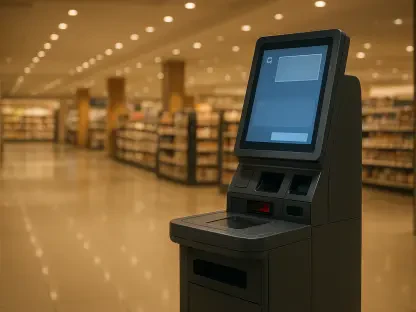
Redemption friction remains one of the primary obstacles to commercial success, as complexities at the point of sale often prevent customers from actually utilizing their rewards. If a customer cannot easily apply a discount or earn points during a transaction, the psychological value of the program evaporates instantly. This friction often results from antiquated point-of-sale systems that cannot talk to modern cloud-based loyalty platforms in real-time.
Value erosion is another critical failure mode where stagnant reward programs fail to make customers feel uniquely recognized over time. When rewards become predictable or generic, they lose their power to influence incremental spending. Moreover, technical stability and app performance are paramount, as glitches at peak engagement moments—such as a holiday sale—can permanently damage consumer trust and push shoppers toward more reliable competitors.
Navigating the Regulatory and Security Landscape of Consumer Data
Compliance in the age of personalization requires a delicate balance between extracting deep customer insights and adhering to UK GDPR standards. Retailers must ensure that their data collection methods are transparent and that they are only using information that directly benefits the customer experience. Failure to maintain this balance can lead to severe financial penalties and a total loss of brand reputation in an era where data privacy is a top concern.
Securing the loyalty ecosystem involves more than just meeting legal requirements; it requires robust cybersecurity measures to protect sensitive consumer financial data. As loyalty apps become more integrated with payment systems, they become more attractive targets for malicious actors. Maintaining the integrity of these apps is essential for ensuring that the loyalty program remains a safe environment for consumers to engage with their favorite brands.
The Future of Retail: Innovation, AI, and Economic Resilience
The strategic role of artificial intelligence is evolving from a back-office tool to a front-end driver of consumer behavior. AI-driven insights allow retailers to reward current behaviors while simultaneously introducing shoppers to new product categories they are likely to enjoy. This proactive approach helps build a more diversified basket and increases the lifetime value of each customer.
Loyalty also serves as a vital economic buffer during downturns, as 44 percent of shoppers remain brand-loyal when provided with genuinely worthwhile rewards. This resilience is key to maintaining market share when consumer spending is restricted. Market disruptors and innovative tech providers are now solving the retailer problem fit by providing the technical novelty required to bridge the execution gap and turn data into a defensive asset against economic volatility.
Synthesis of Findings: Recovering Lost Margins Through Execution
The analysis of the loyalty execution crisis revealed that UK retailers faced a significant turning point in how they managed customer relationships. It was clear that moving beyond the one-size-fits-all discount model was the only way to recover the hundreds of millions of pounds that leaked from the sector. The retailers who succeeded were those who stopped viewing loyalty as a separate marketing silo and began integrating it into the core of their operational strategy.
Stakeholders were encouraged to prioritize the elimination of technical friction and the adoption of AI-driven strategies to secure a competitive advantage in a crowded marketplace. The findings suggested that the focus shifted from acquiring new members to maximizing the value of existing ones through precision and reliability. By addressing the failure modes of redemption friction and app instability, organizations began to see a measurable improvement in their gross margin performance.
The path forward for the industry relied on the creation of seamless earning and redeeming mechanics that felt natural to the shopper. Long-term retail viability was linked to the ability of a brand to prove it understood the individual needs of its customers. Ultimately, the transition toward intelligent personalization and technical excellence provided the necessary foundation for retailers to finally capture the massive value that had been overlooked for years.