
Manufacturer-funded initiatives in the tobacco category provide a critical financial foundation for loyalty programs by offsetting promotional costs while driving repeated visits. In the current retail environment, convenience stores have moved far beyond being mere transaction points; they are now sophisticated centers of consumer engagement where data determines every shelf placement and promotion. This shift is essential because current research indicates that roughly 72% of shoppers arrive with a specific, mission-driven purchase in mind, often bypassing other categories entirely. To disrupt this quick-trip habit, retailers are utilizing segmented, vendor-funded incentives that encourage incremental spending without eroding profit margins. The goal is to move away from blanket discounts that reward existing behavior and instead focus on highly targeted offers that trigger new actions. By identifying the minimum discount necessary to change a specific customer’s routine, businesses are successfully protecting their bottom line while meeting the consumer’s demand for affordability and value.
Precision Engineering for Consumer Behavior
Behavioral Campaigns: The Art of Progressive Engagement
Modern loyalty success is currently defined by the ability to engineer specific consumer habits through tiered reward structures known as waterfall campaigns. These progressive systems work by unlocking a more valuable incentive only after a customer has redeemed a prior offer, creating a sense of momentum and achievement. For example, a customer might receive a small discount on a beverage, which then triggers a larger reward for a high-margin foodservice item upon their next visit. This structure is designed to build long-term habituation rather than providing a one-time, disconnected price cut. By using these tiers, retailers ensure that they are not over-discounting for shoppers who would have made a purchase regardless. Instead, the incentives are strategically placed to pull the customer deeper into the store’s ecosystem, increasing visit frequency and the variety of items in their basket. This behavioral engineering allows for a more sustainable promotional model that relies on psychology as much as price.
Strategic Funding: Maximizing Category Profitability
A sustainable loyalty framework relies heavily on manufacturer-funded offers to provide depth without draining the retailer’s internal resources. This is particularly evident in the tobacco and nicotine categories, where price sensitivity is high but brand loyalty is often established. By qualifying for the highest tiers of manufacturer rebates, retailers can offer competitive pricing that is fully subsidized by the vendor. This same principle is being applied to the rapid growth of foodservice, where targeted promotions for a core item often create a halo effect on associated sales. When a shopper is incentivized to try a premium sandwich through a loyalty offer, data shows that associated sales of side items and beverages rise by approximately 60%. This results in a substantial increase in total transaction value even when the primary item is discounted. By leveraging third-party funding to drive internal growth, retailers are effectively using vendor dollars to build their own customer base and increase overall basket counts.
Technology and the Frictionless Future
Digital Evolution: Bridging the Accessibility Gap
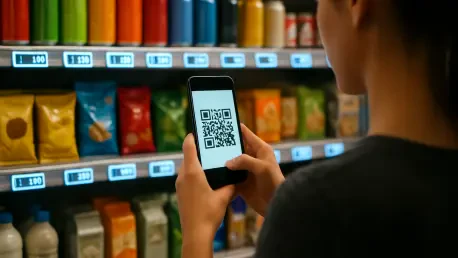
One of the most significant challenges in the current landscape is the app gap, where nearly 69% of a retailer’s most frequent customers may not have the brand’s official mobile application installed. To overcome this hurdle, the most successful strategies now focus on a frictionless web-based approach that complements the traditional app. By using localized QR codes at the fuel pump or digital signage at the point of sale, retailers can deliver personalized loyalty feeds directly to a customer’s smartphone browser. This eliminates the barrier of a mandatory download, allowing for immediate engagement with shoppers who are in a hurry. These “app-like” web feeds can be hyper-localized, showing different offers to a customer at one pump versus another based on the time of day and purchase history. This level of accessibility ensures that the benefits of the loyalty program are available to the widest possible audience, driving higher participation rates and more comprehensive data collection across the entire customer base.
Implementation Frameworks: Driving Long-Term Operational Excellence
Executing a successful loyalty strategy requires a systematic framework that begins with clearly defined objectives, such as trial, frequency, or retention. Once the goal is established, retailers segment their audience to ensure that promotions are only delivered to those whose behavior has the potential to change. This precision prevents the “giveaway” of margins to customers who are already loyal or insensitive to price changes. Finding the discount floor—the smallest incentive that triggers the desired action—remains the most critical step in maintaining profitability. After the campaign is launched, the focus shifts to ensuring the redemption process is entirely frictionless for both the consumer and the staff at the register. Continuous measurement of engagement data allows for rapid iteration, ensuring that every marketing dollar is optimized for the highest possible return. This logical approach transforms loyalty from a static discount program into a dynamic engine for business growth and operational efficiency.
Strategic Evolution of Value and Retention
The successful integration of these loyalty strategies depended on a transition from reactive discounting to proactive behavior modification. Retailers achieved this by prioritizing manufacturer funding, which allowed them to protect their internal margins while offering the aggressive pricing that consumers required. The focus shifted toward eliminating friction in the digital experience, ensuring that high-value customers could access rewards without the hurdle of mandatory application downloads. Managers utilized sophisticated data sets to identify the specific discount floors for different segments, preventing unnecessary profit loss. This framework effectively moved the industry away from a one-size-fits-all model and toward a personalized, tiered approach that rewarded specific, profitable behaviors. Ultimately, the programs that thrived were those that balanced technical backend sophistication with a seamless, intuitive experience for the end user, turning every mission-driven visit into an opportunity for an incremental sale.