
In the rapidly evolving landscape of marketing technology, the physical store is no longer just a place for transactions; it has become a high-value media channel. Our retail expert, Zainab Hussain, brings her extensive background in e-commerce strategy and operations management to explore how major players like Smart & Final and Quad are redefining the in-store experience. By integrating digital screens into warehouse-style environments, retailers are now able to bridge the gap between traditional print media and real-time digital engagement. This interview explores the logistical hurdles of large-scale tech deployments, the shifting dynamics between vendors and retailers, and the strategic balance required to maintain customer loyalty while driving new advertising revenue streams.
With the expansion of digital screens into warehouse-style grocery environments, how do you tailor content to engage both household shoppers and small-business owners? What specific metrics or behavioral shifts indicate that point-of-purchase digital media is effectively influencing these two distinct customer segments?
In a warehouse environment like the 25 Smart & Final stores in California, tailoring content requires a deep understanding of two very different missions: the parent looking for dinner and the restaurant owner stocking a pantry. We use day-parting strategies where the digital screens might display bulk deals on professional-grade cleaning supplies during early morning hours when business owners dominate the aisles, then shift to family-sized meal solutions in the late afternoon. To measure success, we look beyond simple sales lifts; we track “dwell time” increases and the “halo effect” where a digital ad for one brand increases the category’s overall performance by 5% to 10%. When a small-business owner pauses their cart to look at a high-definition screen showing a new bulk-buy product they hadn’t considered, that physical hesitation is a behavioral signal that our digital intervention is working.
Transitioning from traditional print circulars to integrated digital retail media networks requires significant infrastructure. What are the primary logistical challenges when deploying digital signage across multiple high-traffic locations, and what step-by-step strategies ensure that the technology enhances rather than disrupts the physical shopping experience?
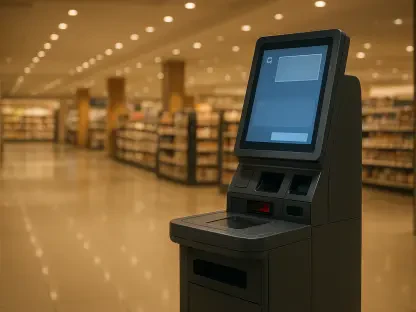
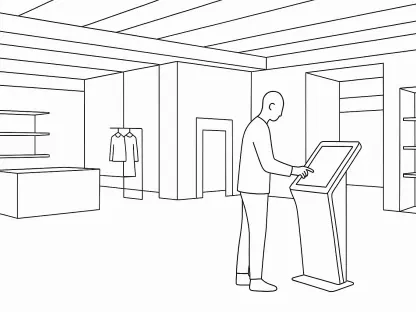
The primary logistical challenge is ensuring that the physical installation doesn’t interfere with the heavy foot traffic and pallet-loading typical of a warehouse-style store. You have to coordinate the wiring, connectivity, and screen mounting without blocking the “Golden Zone” of the shopper’s eye level or creating bottlenecks in busy aisles. Our strategy involves a three-step rollout: first, conducting a site audit to identify “high-value purchase moments,” then testing the screen brightness to ensure it’s vibrant enough to cut through fluorescent lighting without causing eye strain, and finally, syncing the digital content with the existing weekly circulars. By having a partner like Quad manage the end-to-end execution—from tech to store implementation—we ensure the screens feel like a helpful assistant rather than a distracting bright light.
Physical stores are increasingly being viewed as high-value media assets for consumer packaged goods brands. How does this shift change the collaborative relationship between retailers and vendors, and can you provide an anecdote illustrating how real-time digital content creates a measurable advantage over static in-store displays?
The relationship is shifting from a simple buyer-seller dynamic to a sophisticated media partnership where retailers like Chedraui USA act as broadcasters and CPG brands are the content creators. Vendors are now willing to invest more heavily in “In-Store Connect” because it offers the transparency of digital reporting that old-school static cardboard displays simply cannot provide. I remember a case where a beverage brand noticed a sudden heatwave was predicted; within hours, they updated their digital creative to highlight ice-cold refreshments, something that would have taken weeks to change with traditional print signage. This real-time agility allowed them to capture an immediate surge in demand, proving that digital media assets can respond to the shopper’s environment in ways a static poster never could.
Value-oriented retailers often have a very loyal, diverse customer base. How do you balance the need for new advertising revenue with the goal of providing a timely, relevant shopping experience, and what practical steps are taken to ensure that digital interventions remain helpful to the consumer?
Maintaining the trust of a loyal customer base means that every piece of digital content must pass the “utility test”—it must either save the customer money, save them time, or provide inspiration. We avoid the “Times Square effect” of over-saturation by limiting the frequency of ads and focusing on timely, relevant content that reflects the store’s value-driven mission. For example, screens can be used to display “Scan for Recipe” QR codes that help a shopper find budget-friendly ways to use a bulk ingredient they just picked up. By keeping the messaging focused on helpfulness, we create a premium media environment that brands want to be part of without alienating the shoppers who rely on Smart & Final for their daily needs.
Integrating content, technology, and store execution into a single solution is a complex marketing challenge. How does having an integrated end-to-end provider impact the speed of campaign deployment, and what specific advice would you give to brands looking to synchronize their digital retail media with existing print programs?
Having an integrated provider like Quad significantly cuts down the lead time from idea to aisle, often reducing deployment windows from several months to just a few weeks. When the same entity handles both the weekly print circulars and the digital screens, it ensures a unified brand voice; the shopper sees a deal in their mailbox and then encounters the same visual “nudge” on a 4K screen at the point of purchase. My advice for brands is to treat digital as the “closing argument” to the print circular’s “opening statement.” Use the print medium to drive the initial intent and use the in-store digital network to provide that final emotional or visual spark that triggers the “add to cart” action.
What is your forecast for the evolution of in-store retail media networks?
From 2026 to 2031, I predict that in-store retail media will move toward hyper-personalization where screens react to the specific contents of a shopper’s smart-cart or mobile app triggers. We will see the physical store become the most powerful part of the “omnichannel” funnel, with retailers using AI to predict which digital creative will most likely convert a specific demographic at 2:00 PM on a Tuesday. The “In-Store Connect” model will likely expand beyond the 25 stores we see today, becoming a standard requirement for any retailer that wants to remain competitive in a world where the shelf edge is the new front line of digital advertising. The future is one where the digital and physical worlds are so tightly woven that the shopper doesn’t see “an ad”—they just see a more helpful, intuitive store.