
The moment a customer initiates a support request, they are effectively handing over documented evidence that a specific business process or product feature has failed to meet their expectations. For decades, companies have treated these tickets as bureaucratic items to be managed, routed, and eventually filed away, rather than viewing them as systemic problems that require a permanent fix at the root level. The traditional contact center was originally designed to function as a organizational buffer, a defensive perimeter meant to shield the rest of the company from the friction of its own making. However, as customer expectations have transitioned from a desire for quick responses to a demand for total, immediate resolutions, the historical walls surrounding the contact center are finally crumbling. The industry is witnessing the end of support as an isolated department and the rise of a comprehensive “Operations Layer,” where the primary objective is not to talk to the customer, but to fix the underlying issues in real-time.
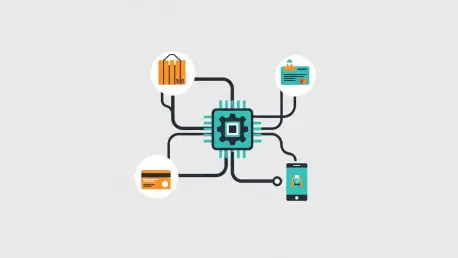
This shift represents a fundamental transformation in how enterprises view the customer experience lifecycle. In the previous era, the success of a service desk was measured by its ability to process a high volume of complaints with minimal overhead. Today, that model is obsolete because it fails to address the inherent inefficiencies of the modern business structure. The Operations Layer functions as a nervous system for the enterprise, connecting previously siloed data streams to ensure that every interaction leads to a tangible result. By moving away from simple interaction management and toward a model of active business execution, companies are effectively turning their customer service functions into a core operational engine that drives efficiency across every department, from logistics to product development.
Moving Beyond the Receipt of Failure
For the better part of the last forty years, the contact center has operated on the premise that a documented “ticket” is a successful unit of work. This philosophy ignores the reality that a ticket is actually a formalized record of a customer’s frustration and a business’s operational gap. When a company prioritizes the management of these receipts over the resolution of the problems they represent, they create a cycle of perpetual support where the same issues are addressed repeatedly without ever being solved. The traditional approach encouraged agents to focus on the symptoms of a problem—such as a delayed shipment or a billing error—rather than empowering them to access the systems required to prevent that error from recurring for the next thousand customers.
The modern business environment no longer allows for this level of disconnectedness because the cost of customer acquisition has skyrocketed, making retention the most critical metric for long-term viability. As organizations move toward an Operations Layer, the focus shifts toward “root-cause elimination.” Instead of just apologizing for a faulty process, the integrated systems of the 2020s allow for the automatic identification of patterns in customer friction. This intelligence is then fed directly back into the operational core of the company. The goal is to reach a state where the support function eventually shrinks because the company has become proficient at identifying and repairing its own procedural flaws before the customer even notices them.
The Structural Collapse of the Traditional Support Silo
The transition toward an integrated Operations Layer is necessitated by the fact that the “best-of-breed” software era has left most large enterprises with a fragmented mess of disconnected tools. In the past, a service desk only required a basic interface to record a complaint and perhaps a link to a customer’s purchase history. Today, an AI agent or a high-level support professional must be able to reach into complex billing systems, check real-time warehouse inventory, verify shipping logistics with third-party carriers, and update the CRM simultaneously to provide a meaningful response. When these disparate systems fail to communicate, the customer is forced to experience the internal friction of the company, leading to a breakdown in trust and satisfaction.
The market is currently moving away from software vendors who simply capture and store data in favor of comprehensive platforms that can execute complex business workflows across the entire company infrastructure. This architectural shift is turning customer service from a costly secondary function into a primary operational pillar. Integrated platforms like Salesforce have regained dominance because they provide the deep context required for modern problem-solving. In a world where every department has its own specialized tool, the support agent often becomes the only person who sees the customer’s entire journey. By empowering these agents with tools that transcend departmental silos, companies can transform the contact center from a cost center into a strategic asset that monitors the health of the entire enterprise.
Deconstructing the Shift: Interaction Management to Business Execution
The move toward an Operations Layer is defined by three fundamental shifts in how businesses handle customer friction, starting with a pivot from “Average Handle Time” to “Total Resolution Rate.” In the old model, getting a customer off the phone quickly was celebrated as a victory for efficiency. In the new model, a victory is only recorded when the customer never has to contact the company again for that specific issue. This requires a level of deep-tissue integration that traditional contact centers lacked, as agents now need the authority and the technical capability to perform tasks like issuing full refunds, rerouting shipments in transit, or adjusting subscription parameters without transferring the caller to another department.
Moreover, the industry is witnessing a significant “return to the suite” as organizations realize that point solutions often create more problems than they solve. While individual tools for chat, voice, and email were popular for years, the need for cohesive data context has made integrated ecosystems more attractive than ever before. An AI cannot effectively solve a double-billing issue if it has to jump across five different API bridges that are prone to breaking or lagging. Finally, the strategic focus has moved from “deflection”—the act of trying to stop the customer from talking to the company—to “automation of action.” This means that the technology is no longer just a wall to keep people out; it is a tool that actually performs the labor the customer requires, providing a seamless transition from a query to a completed task.
The Paradox of Artificial Intelligence and the Reality of Smelly Data
While artificial intelligence is the primary engine driving the development of the Operations Layer, experts like Cameron Marsh of Nucleus Research point out a glaring problem often described as “smelly data.” Many organizations are currently rushing to implement sophisticated Large Language Models on top of decades of unwashed, contradictory, and duplicate records. When a high-powered AI is pointed at a foundation of inaccurate or outdated data, the result is often a “confident artificial idiot” that generates more confusion and work for human employees rather than reducing the load. Success in this new era is not defined by who has the flashiest AI bot, but by which organization has completed the unglamorous work of normalizing their data models.
Furthermore, the human element remains the ultimate predictor of success in an automated world. The companies seeing the highest return on investment are those that treat their software vendors as strategic partners rather than simple tool providers. This collaborative approach allows for the design of complex workflows that AI requires to function correctly within a specific business context. Technology serves as the engine for the Operations Layer, but human expertise provides the steering. Without a clear understanding of how data flows through the organization, even the most advanced AI will struggle to navigate the nuances of human requests, leading to a cycle of failed automations that ultimately damage the brand’s reputation.
Strategic Mandates: Implementing an Operations Layer
Transitioning to an Operations Layer requires a significant shift in leadership strategy, moving away from surface-level metrics and toward a deep assessment of operational health. Decision-makers must begin by prioritizing resolution over deflection, which means moving past the vanity of chatbot engagement numbers. Instead, leadership should measure success by how many end-to-end workflows—such as a complete return process or a technical troubleshooting sequence—were finished without human intervention. This requires a cultural shift where the goal is to provide the customer with a result rather than a response.
Before investing in expensive AI agents, organizations must fix their data infrastructure under the philosophy of “cleaning the pipes before buying the pump.” This involves moving away from legacy on-premise servers and ensuring that all customer data is structured, accessible, and accurate across all touchpoints. Additionally, companies must account for the true cost of the “human-in-the-loop” model. While AI will likely reduce the need for entry-level support staff, it simultaneously increases the requirement for high-salaried experts such as data scientists and workflow managers. These professionals are necessary to monitor the AI for performance drift and audit it for errors, representing a strategic trade of high-volume headcount for high-cost specialized expertise.
The transformation of the traditional contact center into a modern Operations Layer was ultimately driven by the realization that service cannot exist in a vacuum. Organizations discovered that true efficiency came from breaking down the silos that once separated the support team from the rest of the business. By focusing on resolution rather than interaction, they effectively synchronized their data and their departments. This transition allowed businesses to stop merely managing customer frustration and start preventing it entirely. In the end, the companies that succeeded were the ones that viewed their data infrastructure as a living asset rather than a static archive. They recognized that the future of customer experience lay in the ability to execute tasks instantly, turning every service request into an opportunity for operational refinement. Through this structural evolution, the role of support was permanently elevated from a defensive necessity to a central driver of enterprise growth and stability.