
The modern consumer’s demand for instant gratification has created an intricate paradox where seamless delivery services collide head-on with the urgent global necessity for net-zero environmental targets. This tension defines the current state of commerce, where the push for speed often undermines the broader sustainability agenda. Decarbonization has moved from a peripheral concern to the absolute frontier of corporate strategy, specifically targeting the complexities of Scope 3 emissions. Companies now recognize that the environmental cost of the final leg of a journey requires more than just incremental changes; it demands a total strategic overhaul. The roadmap from 2026 to 2028 involves shifting away from expansive physical footprints toward high-efficiency digital ecosystems powered by a massive scale-up of renewable energy integration.
Quantifying the Carbon Footprint of the Last Mile
Data-Driven Insights and Emission Benchmarks
Recent analysis reveals that retail and last-mile logistics now account for approximately 8% of total corporate greenhouse gas footprints. Within the hierarchy of Scope 3 emissions, these activities frequently emerge as a top-three source, trailing only behind raw ingredient procurement and general transport. This data has forced a reevaluation of how brands perceive their environmental impact across the value chain.
While traditional retail storefronts contribute to emissions through lighting and climate control, the true carbon burden is found in the logistics of moving goods to the end user. Identifying these benchmarks allows organizations to move past vague sustainability claims and focus on the specific segments of the supply chain that generate the highest volume of greenhouse gases.
Comparative Efficiency in Distribution Models
Research indicates that digital commerce is three times less carbon-intensive per unit sold than traditional physical retail. This stark difference stems largely from consumer behavior, as nearly 73% of retail-related emissions originate from individual shoppers traveling to brick-and-mortar locations. In contrast, the e-commerce model utilizes centralized storage and consolidated delivery routes to streamline the process.
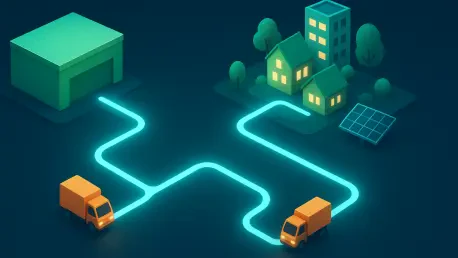
Centralization allows for better inventory management and significantly reduces the emissions associated with fragmented vehicle transit. By replacing hundreds of separate car trips with a single, optimized van route, the logistical advantage of digital commerce becomes a primary tool for meeting aggressive reduction targets. This consolidation represents a fundamental shift in how the final delivery stage is executed.
Expert Perspectives on Strategic Decarbonization
Industry specialists are advocating for a shift from generalized emission estimates to high-fidelity activity-based modeling. Advanced retail footprint calculators now enable firms to identify specific hot spots within their operations, such as suboptimal basket weights or inefficient transport formats. By analyzing these granular variables, logistics managers can implement targeted interventions that yield measurable reductions.
Furthermore, the adoption of Renewables Acceleration (RAcc) programs has become a cornerstone of neutralizing the massive electricity consumption inherent in distribution hubs. Experts suggest that purchasing renewable energy credits to cover a majority of electricity usage can eliminate hundreds of thousands of metric tons of CO2e. This strategic investment in green energy infrastructure is essential for offsetting the power-hungry nature of modern distribution networks.
The Future Landscape of Green Logistics
The integration of AI-driven shopping and automated logistics is set to further minimize the carbon intensity of the final delivery stage. As algorithms optimize routes in real-time and autonomous electric vehicles become the industry standard, the green last mile becomes more attainable for global retailers. However, achieving this requires unprecedented transparency and shared data protocols between retailers and manufacturers to ensure end-to-end accountability.
Addressing the 690 GWh energy demand of global retail infrastructure necessitates a collective transition to renewable sources across the entire value chain. Moving toward a circular and consolidated supply chain remains the primary strategy for hitting mid-century climate goals. Future efforts must focus on a holistic approach that integrates renewable energy, automated efficiency, and collaborative data sharing to create a truly resilient and low-impact distribution network.
The transition toward digital logistics demonstrated a clear path toward superior carbon efficiency compared to traditional consumer-led transit methods. Technological shifts provided a necessary baseline for improvement, but aggressive adoption of renewable energy and deep partner collaboration emerged as the true catalysts for systemic change. Stakeholders realized that a modernized approach required prioritizing transparent data sharing and structural efficiency. These efforts successfully protected the long-term viability of the global market while aligning commercial success with planetary health. The industry moved toward a circular model where every delivery served to reduce the total environmental burden through collective action.