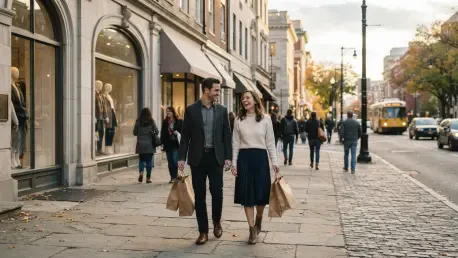

Data from the Center City District reveals that the urban core attracts five times more visitors from distant markets like Los Angeles and Austin than the King of Prussia Mall. This striking revelation underscores a broader trend where Philadelphia’s downtown retail sector is undergoing a significant transformation, positioning itself as a premier destination for national and international brands. Following a period of post-pandemic uncertainty that once cast shadows over urban environments, the Center City District is now leveraging a robust recovery to attract high-profile retailers back to the streets of the urban core. This resurgence is fueled by a strategic initiative to highlight the city’s unique economic strengths, proving that the downtown area offers a more sustainable and lucrative consumer base than many traditional suburban shopping environments. By focusing on high-quality demographic data, city advocates are successfully shifting the narrative surrounding urban retail.
Residential Density: The Rittenhouse Advantage
The primary driver of Philadelphia’s retail success is its extraordinary residential density, which provides a built-in consumer base that few cities can replicate. With approximately 211,000 residents, Greater Center City stands as the third-largest residential urban center in the United States, surpassed only by the massive populations of New York and Chicago. This high population density ensures consistent, daily foot traffic that remains independent of tourism cycles or office commuter patterns, offering retailers a level of stability rarely found in suburban markets. Unlike the sprawling landscapes of the surrounding counties, the urban core creates an environment where every block serves as a potential storefront with immediate access to thousands of shoppers. This density is not just a statistic but a functional economic engine that powers the district throughout the morning, afternoon, and evening, creating a 24-hour cycle of commercial activity.
The area surrounding Rittenhouse Square serves as the epicenter of this economic engine, boasting nearly 40,000 households within a short walk. When compared to high-profile districts like Boston’s Newbury Street or Washington, D.C.’s M Street, the Rittenhouse corridor contains a larger population with a higher concentration of collective wealth. This specific advantage makes the urban core a more attractive prospect than even the largest suburban malls, where the immediate residential count is significantly lower. Retailers are increasingly recognizing that the proximity of these residents translates into higher conversion rates and brand loyalty, as the convenience of local shopping outweighs the trek to suburban complexes. The concentration of residents also fosters a unique community-driven retail environment, where local boutiques and national chains coexist to serve a population that values walkability and accessibility above almost everything else in their daily lives.
High-Income Demographics: Fueling Local Demand
Financial indicators reinforce Center City’s status as a high-income enclave with significant discretionary spending power that continues to grow. Recent data reveals that half of the households near Rittenhouse Square earn over $100,000 annually, with a quarter of the population exceeding the $200,000 threshold. This concentration of affluent residents creates a massive untapped market for luxury and missing national brands that have yet to establish a presence in the district. Economic developers are using this wealth profile to debunk the myth that urban centers are riskier than their suburban counterparts. Instead, they present a picture of a resilient, high-spending demographic that is eager for premium retail options right outside their front doors. The sheer volume of disposable income available within a several-block radius provides a compelling argument for businesses that specialize in high-end goods, apparel, and specialized services that cater to an upscale lifestyle.
Consumer surveys indicate a strong local desire for specific retailers such as Zara, Nordstrom, and Bloomingdale’s, which have been absent from the immediate landscape. The push to bring back brands like Zara, which departed the city in 2019, is a top priority for economic developers who see a clear mismatch between what residents want and what is currently available. By presenting hard evidence of the local population’s purchasing power, the city is making a compelling case for these major international labels to capitalize on the high demand within the urban core. This gap in the market represents a major opportunity for expansion, as current residents often travel outside the city limits or shop online to satisfy their preferences for these specific brands. Bridging this gap is essential for capturing the full economic potential of the district and ensuring that the wealth generated within the city stays within the city’s commercial ecosystem through direct local spending.
National Connectivity: A Magnet for Visitors
Center City Philadelphia has proven to be a stronger magnet for national visitors than even the largest suburban shopping complexes, according to the latest mobile tracking analytics. Cell phone location data indicates that Rittenhouse Square attracts five times as many visitors from distant markets like Los Angeles and Austin compared to the King of Prussia Mall. This disparity highlights the city’s superior regional and national connectivity, supported by its proximity to the Philadelphia International Airport and the 30th Street Amtrak station. These transit hubs act as gateways that funnel a steady stream of high-value travelers directly into the heart of the retail district. Unlike isolated shopping centers that rely on local traffic, Center City benefits from its role as a regional capital, attracting people who are already in town for business, education, or specialized healthcare. This constant influx of newcomers provides a layer of economic diversity that protects the local market from localized downturns.
The influx of business travelers and tourists, combined with a permanent residential base and hotel guests, creates a multifaceted retail environment that functions differently from a standard mall. Unlike suburban complexes that rely almost exclusively on local residents arriving by car, Center City benefits from a diverse mix of shoppers who arrive by foot, train, and ride-share. This varied foot traffic provides a resilient ecosystem that allows retail businesses to thrive across different times of the day and days of the week. The presence of world-class hotels within walking distance of the primary shopping corridors further enhances this effect, as visitors often have higher per-trip spending averages than daily commuters. This synergy between hospitality and retail is a cornerstone of the urban recovery strategy, as it ensures that the district remains vibrant even when office workers are not present. The resulting ecosystem is one where high-end retail, dining, and entertainment work together.
Market Recovery: Surging Occupancy and Trends
The physical retail landscape in downtown Philadelphia is currently at its most robust point since 2019, with retail occupancy reaching 84.4% across the primary corridors. This year alone has seen the opening of over 130 new businesses, including 50 dining establishments and 36 traditional retailers, showcasing a healthy diversification of the streetscape. This wave of openings suggests that the retail apocalypse narrative has been firmly replaced by a story of urban renewal and aggressive commercial growth. Service-oriented businesses, such as boutique fitness centers and high-end salons, are also filling gaps, creating a more comprehensive urban experience that addresses the holistic needs of the modern city dweller. The speed at which these new leases are being signed indicates a high level of confidence among entrepreneurs and corporate real estate teams who view the Philadelphia market as a stable and growing environment. This momentum is creating a virtuous cycle where new openings attract more foot traffic.
The recovery is most visible along West Walnut Street, where occupancy has climbed to a staggering 93%, effectively nearing its maximum capacity. This high demand has left very few ground-floor vacancies, prompting established brands to expand their existing footprints or seek larger spaces nearby to accommodate their growing customer bases. As space on Walnut Street becomes increasingly scarce, the momentum of the retail market is naturally beginning to spill over into adjacent corridors, signaling a broader expansion of the downtown shopping district. This spillover effect is a positive indicator of market health, as it forces the revitalization of blocks that were previously overlooked. National brands that once insisted on a Walnut Street address are now exploring options on nearby streets, recognizing that the density of the entire Rittenhouse area provides ample opportunity for success regardless of the exact block. This expansion is essential for the long-term scalability of the city’s retail sector.
Strategic Growth: Expanding to Chestnut and Market Streets
With the Rittenhouse area nearing capacity, the Center City District is shifting its strategic focus toward Chestnut and Market streets to capture the next wave of investment. These corridors offer larger storefront footprints that are ideal for anchor retailers such as HomeGoods or regional grocery chains that require more square footage than a typical boutique. The goal is to fill these larger vacancies to create a more cohesive and seamless urban shopping experience that stretches across the entire downtown area from the river to the office towers. By targeting these specific streets, economic developers are working to eliminate the dead zones that once separated the different pockets of activity in the city. This approach not only provides space for larger format stores but also improves the overall walkability of the city, making it easier for shoppers to navigate between different shopping zones without encountering empty storefronts or neglected sections of the sidewalk.
By connecting the luxury Rittenhouse area with the West Market office district, city developers are effectively stabilizing the broader economic foundation of the downtown core. This expansion is designed to turn previously underutilized blocks into vibrant commercial hubs, catering to both high-end shoppers and the everyday needs of the growing residential population. Moving forward, the focus must remain on maintaining this momentum by simplifying the permitting process for new businesses and investing in public safety and street cleaning. The data-driven pitch used by city boosters proved that the future of retail lies in walkable, high-density environments rather than isolated suburban islands. Actionable steps for the coming months include targeted outreach to global brands that are underrepresented in the Northeast, ensuring that Philadelphia remains at the top of their expansion lists. Through persistent urban planning and aggressive marketing, the city demonstrated that its core is not just recovered but completely redefined.