
The Romanian retail landscape has undergone a seismic shift, moving from fragmented local shops to a highly sophisticated, integrated market. At the heart of this transformation is Optical Investment Group, a company that has evolved through several high-stakes ownership phases to become a cornerstone of the regional eyecare industry. By merging the distinct identities of OPTIblu and Optiplaza, the group created a platform for scale that eventually caught the eye of the world’s most dominant player in eyewear, EssilorLuxottica. This transition marks more than just a change in letterhead; it represents a fundamental pivot in how vision services are delivered to the public. As the market moves away from simple transactions toward a holistic “eyecare ecosystem,” the strategy now emphasizes technology, long-term patient relationships, and a refined physical presence.
The following discussion explores the strategic logic behind these shifts, delving into the nuances of network consolidation and the elevation of retail standards. We examine how the group is balancing global innovation with local market intimacy, the role of 2026 as a pivotal year for infrastructure modernization, and why the future of competition lies in the depth of professional expertise rather than just the price tag on a frame.
The journey of Optical Investment Group has been defined by significant shifts in ownership and scale. Looking back at the evolution from local networks to becoming part of a global leader, what were the defining stages of this transformation and how did different shareholders influence the company’s trajectory?
The story of the group is really a masterclass in disciplined growth and strategic consolidation. It began with the entrepreneurial phase, where OPTIblu and Optiplaza were independent entities building deep, localized trust with Romanian consumers. They weren’t just shops; they were recognizable brands that understood the specific nuances of the local shopper. A massive turning point occurred in 2019 when Innova Capital stepped in to acquire both businesses, folding them into what we now know as Optical Investment Group. This was the moment the organization shifted from a collection of stores into a structured, scalable national platform. Innova focused on creating common processes and strengthening management, which effectively prepared the company for the international stage. The most recent chapter opened in July 2024 with the agreement to join EssilorLuxottica, a transition that was fully completed in March 2025. Now, in 2026, we see the fruits of that integration. Being part of a global ecosystem means the definition of growth has fundamentally expanded. It’s no longer just about the number of doors we can open; it’s about the depth of innovation, the quality of lenses, and the sheer level of expertise we can bring to a single customer interaction.
With the network now fully consolidated, the focus seems to have shifted from rapid expansion to a more nuanced development strategy. How are you prioritizing store modernization and customer relationships in this current cycle of growth?
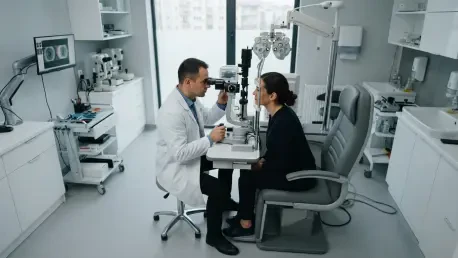
In 2026, we have moved beyond the idea that expansion is simply a matter of adding more pins to a map. We’ve entered a phase where the quality and value of what happens inside our existing locations are the primary drivers of success. We are currently seeing an acceleration in modernization efforts across the entire network, which involves a mix of redesigning current spaces and relocating others to higher-traffic, more strategic positions. A perfect example of this is the recent reopening of the OPTIblu Feeria in Băneasa Shopping City. It isn’t just a store; it’s a high-tech hub featuring a completely new retail concept and two dedicated Vision Center optometry rooms. This reflects our broader goal of turning every location into a destination for ongoing vision care rather than a one-off retail stop. We want to build relationships that extend far beyond the initial purchase of a pair of glasses. When a customer walks into one of our modernized stores, they should feel the precision of the technology and the warmth of a long-term care provider. By focusing on these deeper interactions and improving the service environment, we create a cycle where growth is measured by customer loyalty and the sophistication of the care we provide.
There has been a lot of discussion regarding the transition toward an “integrated eyecare ecosystem.” From a strategic standpoint, what is the actual business opportunity in moving away from a transactional retail model?
The real opportunity lies in moving from a series of disconnected sales to a lifetime relationship centered on vision health. In the past, optical retail was often very transactional—you realize you can’t see the signs on the road, you go in, you buy frames, and you leave. An integrated ecosystem changes that by connecting every single point of the journey: the initial assessment, the professional advice from an optometrist, the precise selection of a product, and the follow-up care. From a business perspective, this creates a much more sustainable and predictable revenue stream because the customer isn’t just looking for a product; they are looking for a partner in their visual well-being. It simplifies the experience for the consumer, making eyecare a coherent, stress-free part of their life. We believe that loyalty shouldn’t be something you try to force with coupons or marketing gimmicks. Instead, it should be the natural byproduct of being consistently useful. When a customer knows they can return for adjustments, or that their previous exam data is part of a holistic history that informs their next lens prescription, the trust is built automatically. That trust is the most valuable asset we have in a competitive market.
In an era where consumers can compare prices and styles instantly on their phones, how do you create a competitive advantage that isn’t easily replicated by online-only players or discounters?
A beautiful store or a low price point is no longer enough to win in this industry because those things are easily copied. The true, sustainable advantage comes from the intersection of technology, human expertise, and consumer education. A sleek, modern retail space without a knowledgeable optometrist is just a showroom; technology that isn’t handled by an expert doesn’t inspire trust. Our advantage is bringing all these things together at scale. When our consultants and optometrists use cutting-edge diagnostic tools, they aren’t just giving a prescription; they are providing a personalized visual solution based on how that specific individual lives, works, and moves. We deal with something incredibly personal—how people see and experience the world every day. That’s a sensory and emotional connection that a price-comparison website simply cannot replicate. By educating the customer throughout the process, we empower them to understand why a specific lens technology is better for their digital-heavy lifestyle or why a certain frame fit matters for their comfort. That level of integrated value makes the experience much harder to replace through product or price alone.
The Romanian market is evolving rapidly. Where do you see the most significant potential for development—is it about finding new customers, or is it more about changing the behavior of the customers you already have?
It’s really a combination of both, as these directions tend to feed into one another. One of our biggest opportunities is shifting the public’s mindset from “correction” to “prevention.” We want to encourage people to pay regular attention to their eyes before a problem becomes debilitating. Frequent eye examinations create a baseline of awareness, and once a customer is aware of their needs, they are much more likely to seek out high-quality, specialized solutions. Our lifestyles have changed so much lately; we are constantly switching between high-resolution digital screens and physical environments, often in the same hour. This creates complex visual needs that a one-size-fits-all solution just can’t meet. So, we see growth coming from two sides: bringing new categories of people into the professional eyecare world and increasing the quality of the solutions we provide to those who are already there. By offering more relevant, individualized products—like lenses specifically tuned for driving or heavy device use—we are growing the market’s maturity while improving the lives of our customers.
Being part of a global giant like EssilorLuxottica obviously provides immense resources, but how do you ensure that the global strategy doesn’t lose touch with the specific needs of the Romanian consumer?
This is exactly where our strength lies—it’s the “best of both worlds” approach. EssilorLuxottica provides us with an incredible global ecosystem that includes the latest in lens research, frames, and retail technology. We have access to innovation at a scale that would be impossible to achieve as an independent local player. However, our team on the ground has spent years studying the habits and expectations of Romanian shoppers. We know what they value, how they prefer to be greeted, and what their specific purchasing behaviors look like. Our job isn’t to simply copy-paste a global model into the Romanian market. Instead, we act as a filter, identifying which global innovations will truly resonate here and improve the local experience. This mix allows us to be both a global powerhouse in terms of technology and a local neighbor in terms of accessibility and market understanding. It’s a very powerful combination that ensures we stay at the cutting edge without losing the personal touch that built our brands in the first place.
The group manages three distinct brands: OPTIblu, Optiplaza, and O51. What is the strategic logic behind maintaining a multi-brand portfolio, and how do you differentiate them without creating internal competition?
A multi-brand portfolio only works if every brand has a distinct, clear reason to exist for the customer. We’ve been very intentional about sharpening the relevance of each proposition. OPTIblu, Optiplaza, and O51 all have different histories and cater to different customer profiles, price points, and shopping occasions. One might focus more on accessibility and broad appeal, while another might lean into premium luxury or specific fashion-forward assortments. Differentiation happens through the store environment, the communication style, and the specific brands of frames we choose to showcase in each. However, there are certain non-negotiable standards that apply across the board, regardless of the name on the door. Whether you walk into an OPTIblu or an O51, you should receive the same high level of professional advice, the same product quality, and the same access to top-tier eyecare. The brands can look and feel different to match the customer’s personality, but the underlying trust and expertise must be identical. This allows us to cover more of the market while maintaining a cohesive operational standard.
You’ve mentioned that the goal of the first interaction with a customer needs to change. How do you practically turn a single purchase into a decades-long relationship?
It starts by redefining what success looks like at the moment of the first interaction. If the staff’s only goal is to close a sale, then the relationship effectively dies the moment the receipt is printed. But if the goal is to truly understand a customer’s visual life, the sale becomes just one small step in a much longer journey. This continuity begins in the exam room. When an optometrist makes a recommendation based on a thorough assessment, and the retail team follows up with a precise fitting, we are laying the groundwork for trust. We make it very clear to our customers that our doors are always open for adjustments, maintenance, and future check-ups. People’s eyes change, their prescriptions change, and their styles change. By being a constant, useful presence—rather than just a source of commercial messages—we become a fixture in their lives. The strongest relationships aren’t built on the frequency of your advertisements, but on your utility at the exact moment the customer needs you. Whether they need a screw tightened or a new exam because they’ve started a new job with more screen time, we want to be the automatic choice.
Technology is a major part of your investment strategy, but there is always a risk that it can feel cold or impersonal. How do you select tech investments that actually enhance the human element of your service?
We have a very strict filter for technology: it must never be for its own sake. We always ask ourselves if a new piece of equipment actually makes the customer’s life better, if it helps our experts make more accurate decisions, or if it makes our operations more efficient without losing the human touch. Some of the most impactful technology is actually invisible to the customer—it’s the software that gives our teams better access to information or simplifies administrative tasks. One of my favorite benchmarks for successful technology is whether it gives time back to our people. If a digital tool can handle a repetitive measurement or an administrative filing, it allows our specialists to spend more meaningful, focused time talking to the customer. When technology is used responsibly, it doesn’t replace the expert; it strengthens them. It allows for a level of personalization that was previously impossible, ensuring that the recommendation we make is backed by hard data as well as professional intuition.
Education is often cited as a key pillar for your growth. Why is informing the consumer so critical for the development of the Romanian optical market?
Education is the foundation of a mature market. Many people still view eyecare as something you only think about when you’re squinting to read a menu. We want to move that conversation toward prevention and regular maintenance. When we educate consumers, we are helping them understand that not all optical solutions are the same. A lens isn’t just a piece of plastic; it’s a piece of high-precision technology that can drastically improve your quality of life depending on your daily habits. For us, an informed consumer is the best kind of customer. They can see the value in professional advice and high-quality products, which means they are less likely to make decisions based solely on the lowest price. We see this education as both a responsibility and a strategic investment. By helping the public understand when to get checked and what questions to ask, we are helping the entire industry move toward a more professional, customer-centric model. Our goal is to make professional eyecare and information as accessible as possible to everyone in Romania.
What is your forecast for the Romanian optical market and how will Optical Investment Group define leadership in this new era?
My forecast is that we will see a significant “flight to quality” as the market continues to professionalize. Consumers are becoming much more discerning; they are no longer satisfied with just buying a product—they want an experience that provides peace of mind and health benefits. Over the next few years, I expect to see the “eyecare ecosystem” model become the standard, with physical stores acting as high-tech service hubs rather than just retail outlets. For Optical Investment Group, leadership won’t just be measured by having the most stores or the highest turnover. Instead, we will define success by how much we’ve managed to raise the standard of what a Romanian consumer expects from their eyecare provider. If we can drive the market to be more attentive to prevention, more focused on expertise, and more innovative in its service delivery, then we have truly succeeded. Leadership is earned by raising expectations, and that is exactly what we intend to do through better stores, stronger teams, and a relentless focus on the customer experience.