
In the rapidly shifting landscape of wholesale food distribution, few companies have integrated technology as aggressively as those managing global supply chains. Zainab Hussain, an e-commerce strategist and customer engagement expert, joins us to break down how data-driven tools are reshaping the industry. We discuss the paradox of rising sales alongside falling operating income, the tactical execution of AI on the warehouse floor, and the strategic roadmap following a massive $29.1 billion acquisition. Our conversation explores how digital shifts are designed to capture the “incremental case” and drive multi-million dollar synergies across a growing distribution footprint.
AI platforms are now used to boost sales team retention and productivity by using data to determine exactly what should be on a delivery truck. How does this intelligence improve penetration performance, and can you walk us through the workflow a rep uses to apply these insights?
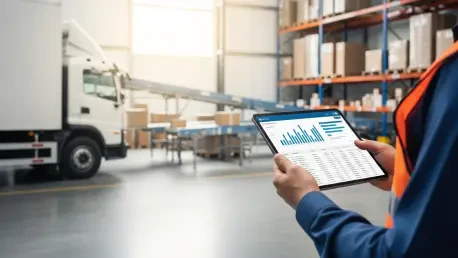
The AI360 platform acts as a digital co-pilot for sales colleagues, effectively removing the guesswork from their daily routines by identifying exactly what customers should be buying. By analyzing vast amounts of historical data, the system identifies gaps in a customer’s order—essentially pinpointing items that belong on the truck but are currently missing. This intelligence led to the strongest penetration performance in recent history during the third quarter, which saw sales rise 4.7% to $20.5 billion. For the sales rep, the workflow is seamless: the AI provides a list of high-probability recommendations and pre-authorizes specific deals to offer the client right there on the spot. This not only makes the rep more productive but also improves retention by giving them the tools to hit their targets more consistently and reduce the frustration of pitching products that do not fit the client’s needs.
Sales growth of 4.7% can coexist with a 9.1% drop in operating income. What specific pressures usually lead to this divergence, and what metrics should leadership monitor to ensure that rising gross profits eventually translate into higher bottom-line income?
This divergence is a classic challenge in large-scale logistics where growth often comes with upfront implementation or integration costs that squeeze the immediate bottom line. While gross profit climbed by 6.5% to $3.8 billion, the 9.1% dip in operating income to $619 million suggests that expenses, possibly related to technology rollouts or administrative adjustments, are momentarily outpacing that margin growth. To correct this, leadership must keep a close watch on the “loss rate” of sales talent and the efficiency of their delivery routes. The goal is to ensure that the efficiency gained from AI tools eventually absorbs the overhead associated with expanding the footprint. If they can maintain the momentum in gross profit while stabilizing internal operational costs, the bottom-line income will eventually reflect the success of their massive revenue stream.
Pre-authorizing customer deals allows sales teams to capture incremental truck cases at existing stops. Why is the incremental case considered the most profitable unit, and what specific steps does a sales colleague take to convert these data-backed suggestions into a closed sale?
In distribution, the heaviest costs are often the “last mile”—the fuel, the driver’s wages, and the maintenance required to get a truck to a specific location. Once that truck is already parked at a customer’s dock, every additional case loaded onto it is essentially high-margin profit because the fixed costs of the trip have already been paid. This is why the incremental case is considered the most profitable unit in the entire business model. To close these sales, a colleague uses AI insights to approach a customer with a deal that is already cleared by management, meaning they do not have to wait for corporate approval to offer a discount. They present the data-backed suggestion, show the immediate cost benefit to the restaurant owner, and finalize the add-on to the current delivery schedule.
Merchandising synergies from large-scale acquisitions often aim for hundreds of millions of dollars in savings. How do you practically compare product portfolios across different business units to gain leverage with suppliers, and what role does fulfillment flexibility play in these post-acquisition strategies?
The strategy following the $29.1 billion Restaurant Depot acquisition is focused on achieving $250 million in net cost synergies through massive purchasing power. Practically, this involves a deep dive into the product catalogs of both entities to identify overlap and then leveraging that combined volume to negotiate better pricing from mutual suppliers. It is a process of taking the products bought today, comparing them across the combined organization, and working with suppliers to secure increased merchandising benefits. Beyond just purchasing power, fulfillment flexibility is a major component; by integrating these different business units, the company can offer customers more ways to get their products. This flexibility makes the combined entity a more resilient “one-stop shop” for a broader range of clients, from small local diners to large institutions.
Expanding a distribution footprint by over 100 new locations requires balancing growth with updated cybersecurity and compliance standards. What are the biggest hurdles in standardizing digital security across a combined entity, and how does this expansion lower costs for tens of thousands of local restaurants?
Opening 125 new “doors” is an ambitious expansion that necessitates a complete overhaul of digital infrastructure to ensure it meets modern standards. The biggest hurdle is often the lack of uniformity; acquired entities often have legacy systems that do not speak the same language as the parent company’s cybersecurity protocols, requiring a significant investment in compliance. By standardizing these systems, the company can mitigate risk while streamlining operations, which is essential when serving a massive customer base. This expanded footprint actually drives down costs for those small businesses by creating a “low-cost leader” environment in more communities. When a distributor can operate more efficiently at scale with lower overhead per location, they can pass those savings directly to the tens of thousands of restaurants struggling with food-cost inflation.
What is your forecast for the role of AI in wholesale food distribution?
I expect AI to move beyond just sales recommendations and into the realm of fully autonomous supply chain management and predictive replenishment. We have already seen tools boost sales to $20.5 billion by helping reps “sell better and serve better,” but the next phase will involve AI proactively managing inventory levels to prevent stockouts before they happen. Within the next few years, I anticipate that AI will be the primary driver behind reducing food waste in the distribution chain, which will be a significant contributor to achieving high-value cost synergy targets. The distributors who can most effectively marry real-time customer data with back-end logistics will emerge as the dominant force in the B2B food commerce space.