
The 2026 Golden Week holiday in China shattered previous tourism records with 826 million domestic trips, yet the most significant revelation was the staggering revenue disparity between autonomous robot stores and traditional human-operated convenience chains. This massive surge in travel, which generated over 738 billion yuan in expenditure, acted as the ultimate stress test for a retail industry caught between two eras. While iconic names like 7-Eleven and FamilyMart have long defined the neighborhood shopping experience, a new breed of “intelligent capsules” powered by embodied intelligence has begun to redefine what it means to be convenient. This shift is not just about replacing a cashier with a screen; it represents a fundamental change in how goods are distributed and consumed in high-pressure environments. As traditional retail faces a structural identity crisis, the rise of companies like Galbot and CrossVerse Intelligence suggests that the future of the store may no longer be a building, but a mobile, robotic entity.
The Evolution of Retail: From Human Clerks to Embodied Intelligence
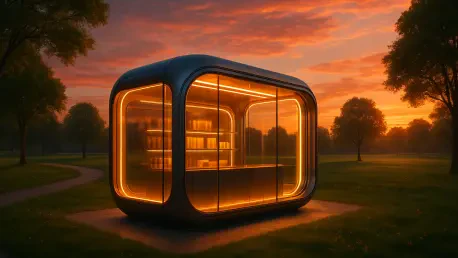
The retail landscape is currently navigating a profound transition, moving away from the static brick-and-mortar model toward a more dynamic, autonomous framework. This evolution has reached a peak as high-traffic tourist destinations across China became the primary testing grounds for a new retail paradigm. These “intelligent capsules” are more than mere vending machines; they are sophisticated environments where robots manage the entire lifecycle of a transaction. During the 2026 Golden Week, these units were deployed in unprecedented numbers, signaling that the era of the human clerk is being challenged by a system that requires no breaks, no training, and no physical storefront in the traditional sense.
Traditional brands such as 7-Eleven and FamilyMart are currently struggling with a structural identity crisis. For decades, their value proposition was built on geographical density and the reliability of a human presence. However, robotic innovators like Galbot, featuring the G1 humanoid, and Hefei Zero Power, known for its Xiaomai and Shaomai Go units, are offering a different path. These companies utilize embodied intelligence—the ability of a machine to perceive and interact with its physical environment in real time—to provide 24/7 service without the need for human labor. By deploying these systems in scenic spots and office buildings, these innovators are capturing a market that demands instant gratification without the overhead of a traditional lease.
While traditional stores still focus on localized density to win customers, robot stores leverage their mobility and specialized nature. These autonomous systems are being applied in high-traffic scenic spots, major transit hubs, and even as integrated digital assistants within existing store infrastructures. The goal is no longer just to have a shop on every corner, but to have a service point exactly where the foot traffic is heaviest. This flexibility allows operators to bypass the long-term commitments of traditional real estate, instead placing robotic pods in locations like the Summer Palace or West Lake during peak seasons to maximize exposure and sales.
Performance, Efficiency, and the Redefinition of Convenience
The metrics of retail success have shifted dramatically as autonomous systems prove their ability to handle extreme volume. In the current retail environment, the definition of convenience is being split into two distinct categories: transactional speed for daily needs and experiential interaction for leisure. Robotic stores have found their footing by excelling in the latter while maintaining a pace that rivals or exceeds human-operated counters. The efficiency of these machines is not just a technological curiosity; it is a measurable economic advantage that is currently reshaping the financial expectations of retail stakeholders.
Revenue Generation and High-Traffic Performance
Comparative data from the 2026 holiday period provides a clear picture of the economic divide. A single benchmark “Galaxy Capsule” robot store, operated by Galbot, generated an impressive 150,000 yuan in just seven days. This performance was not an isolated incident but a reflection of how effectively these units can capture high-density traffic. The ability to maintain a steady flow of transactions without the slowdowns associated with human fatigue or shift changes allows these capsules to operate at a peak efficiency that traditional models simply cannot match during holiday surges.
In contrast, the performance metrics for traditional convenience stores tell a different story. Average stores in the same market saw daily revenues of approximately 4,453 yuan, leading to a weekly total of roughly 30,000 yuan. This means that in peak scenarios, the robotic model outperformed the human-led model by a factor of five. Volume handling has also become a major differentiator; specialized units like the Shaomai Go have achieved processing speeds of 15 seconds per order. By handling 400 orders daily and showing 25-fold increases in transaction volume during peak seasons, these robots are proving that they can scale to meet demand in a way that traditional staffing models cannot.
The Shift in Consumer Value: Speed vs. Experience
The perception of convenience is highly situational. In routine environments like office buildings, efficiency is the ultimate metric. Here, traditional vending machines or 30-minute delivery apps often win because they are immediate. A robot that takes 60 to 90 seconds to retrieve an item may be perceived as slower than a human clerk or a dark store delivery. In this “speed-first” economy, the robot must prove its worth by offering a reliability and consistency that justifies the wait, or by integrating more seamlessly into the consumer’s existing digital workflow.
However, in the “newbie villages” of retail—high-traffic tourist locations like the Summer Palace or Dunhuang—the robot serves as a powerful attraction. The act of a dual-arm humanoid, such as the Galbot G1, carefully handing over a bottle of water or a snack becomes a “check-in” experience. For these consumers, the purchase is secondary to the interaction. This novelty factor drives consumption through curiosity rather than necessity, turning a simple transaction into a memorable event. Modern convenience is no longer just proximity; it is “fluid.” Consumers prioritize delivery apps for home needs but gravitate toward the interactive, autonomous service of a capsule when they are on leisure trips.
Labor Dynamics and Operational Continuity
One of the most persistent pain points for traditional retail is the difficulty of managing night shifts and high staff turnover. Training and retaining employees for 24-hour operations is increasingly expensive and logistically complex. In 2026, over 60% of traditional convenience enterprises reported contracting net profits due to rising overhead costs and labor shortages. The traditional model is heavily dependent on a human resource pool that is becoming more difficult to maintain, leading to reduced service quality and increased operational risks during late-night hours.
Autonomous robots offer a significant advantage by operating 24/7 without fatigue, human resource management, or the need for consistent training. These machines provide an elastic form of capital expenditure. Operators can deploy or redeploy units based on seasonal traffic data without the headache of peak-season hiring or the financial drain of off-season layoffs. This continuity ensures that the store is always ready to serve, regardless of the time of day or the availability of human staff. The robotic model effectively removes the variable of human labor from the profitability equation, allowing for a more stable and predictable business operation.
Challenges and Structural Limitations of Modern Retail
Despite the success of autonomous units, a significant sustainability gap remains. While robot stores thrive during high-traffic holidays, their long-term viability depends on maintaining performance during the 300 or more non-holiday days of the year. Traditional convenience stores have a proven track record of sustaining daily operations over decades, a metric that the robotic sector has yet to demonstrate at scale. The infrastructure of a neighborhood 7-Eleven or FamilyMart provides more than just snacks; it offers a logistical anchor for the community that a mobile capsule cannot yet fully replicate.
Furthermore, traditional convenience stores are currently under siege from multiple fronts. Discount snack stores are pricing goods below the wholesale costs of standard convenience chains, while instant retail platforms offer high-speed delivery from “dark stores” with minimal fees. This pincer movement has eroded the traditional store’s lead in both price and proximity. Technical and safety constraints also remain a factor for the robotic sector. Implementing embodied intelligence in complex, unpredictable environments is difficult. Current robotic success is largely limited to “newbie villages”—controlled retail environments where safety protocols and environmental variables are easier to manage than in the chaotic layout of a standard city street or a private home.
Strategic Outlook: Choosing the Right Retail Model
The “Autonomous Species,” represented by Galbot and Shaomai Go, excels in experience-driven, high-traffic, and labor-volatile environments. These systems are the clear winners when the goal is to capitalize on seasonal surges and novelty-driven consumption. In contrast, the “Traditional Model” of brands like 7-Eleven remains a staple of neighborhood logistics, though it must adapt to a loss of foot traffic and aggressive price competition. The choice between these models is not binary; rather, it depends on the specific goals of the deployment and the nature of the consumer interaction.
For tourist hubs and seasonal destinations, robot-operated capsules are the superior choice. They capitalize on the “novelty factor” and handle massive surges in demand without the overhead of a permanent workforce. For urban integration, a hybrid approach is increasingly favored. Integrating robots like the Galbot G1 into existing brands like FamilyMart to handle coffee or hot food can offset labor shortages while maintaining the brand’s cultural presence. Stakeholders must prioritize product strength over mere location. If the objective is pure transaction speed, delivery platforms are the benchmark. If the goal is high-margin service and reliability in specialized zones, autonomous solutions provide a scalable and efficient path.
The retail landscape of the past year demonstrated a clear divergence in how convenience was delivered and valued by the public. Investors and operators looked closely at the 150,000-yuan weekly revenue figures from robotic units and compared them to the stagnant growth of traditional storefronts. It was observed that the most successful deployments were those that matched the technology to the specific emotional state of the consumer. In high-pressure tourist zones, the robotic capsules provided not only a product but a sense of technological wonder that encouraged higher spending. Meanwhile, traditional stores that integrated automated systems found that they could stabilize their operations against rising labor costs. The industry moved toward a future where the distinction between a machine and a store continued to blur, and the lessons learned during the 2026 Golden Week provided the blueprint for this transition. Stakeholders who embraced this hybrid reality saw the most consistent returns as the market adjusted to these new standards of intelligence and efficiency.