
The fundamental transformation of traditional storefronts into high-performance advertising engines represents the most significant shift in the retail landscape since the advent of e-commerce. As legacy sales models reach a point of saturation, the emergence of sophisticated retail media infrastructure has provided a new avenue for growth, turning digital and physical shopping environments into valuable inventory. This technology review examines the structural shift toward sophisticated, software-led advertising ecosystems that allow retailers to monetize their presence while enhancing the consumer journey through relevance.
Evolution of API-First Retail Media Systems
The early days of retail advertising were defined by rigid, outsourced models that often felt like an afterthought. These legacy systems relied on third-party plugins that were difficult to integrate and even harder to customize, resulting in clunky user interfaces and disjointed brand messaging. The transition toward API-first frameworks marks a departure from these limitations, providing retailers with a modular toolkit to build bespoke advertising environments from the ground up. This evolution is not merely a technical upgrade; it represents a strategic pivot where the retailer takes full ownership of the advertising stack.
By utilizing an API-centric approach, businesses can move away from the “black box” solutions of the past. Modern infrastructure allows for deep technical integration where every ad placement is treated as a native component of the site’s architecture rather than an external overlay. This shift has democratized the ability for mid-tier and large-scale retailers to compete with global giants. The context of this evolution is rooted in the need for agility, as retailers must now respond to market changes in real-time without being tethered to the development cycles of third-party vendors.
Core Pillars of the Retail Media Cloud
API-First Customization and Native Integration
The primary technical advantage of a modern retail media cloud lies in its ability to serve ads that do not look like ads. API-driven servers allow developers to pull ad content into the existing CSS and HTML of a website, ensuring that sponsored products share the same visual language as organic listings. This native integration is crucial for maintaining a high-quality aesthetic, which is often a point of friction when introducing commercial content into a premium brand environment. When advertisements blend seamlessly into the user interface, they are perceived as helpful suggestions rather than intrusive interruptions.
Performance benefits extend beyond mere visuals. Because these ads are served through native calls, they often bypass the latency issues associated with traditional ad tags. This leads to faster page load times and a more fluid browsing experience, which directly correlates with higher conversion rates. By controlling the rendering process, retailers can ensure that every promotional element adheres to strict brand guidelines while maintaining the technical integrity of the platform.
First-Party Data and Precision Targeting
The impending obsolescence of third-party cookies has forced a collective migration toward secure, proprietary data ecosystems. Retail media infrastructure excels here by leveraging long-term customer insights and loyalty data to create high-value audience segments. Unlike external ad networks that guess consumer intent based on broad browsing habits, a retailer’s own data is grounded in actual purchase history. This creates a level of precision targeting that is unparalleled in the digital advertising space, allowing brands to reach consumers who have a proven affinity for their products.
This shift toward first-party data also addresses growing concerns over privacy and data sovereignty. By keeping customer information within a closed-loop system, retailers can offer personalized advertising without exposing sensitive data to the open web. This proprietary approach turns the retailer’s database into a strategic asset that grows in value as more interactions occur. Advertisers are increasingly willing to pay a premium for access to these authenticated audiences, recognizing that the relevance of a first-party signal far outweighs the volume of a third-party cookie.
Self-Service Campaign Management Tools
Modern infrastructure is defined by the decentralization of campaign control through intuitive self-service dashboards. These tools empower brand partners to launch, monitor, and optimize their own campaigns without requiring constant manual intervention from the retailer’s internal teams. By automating the workflow of ad creation and bidding, the time-to-market for new promotions is reduced from weeks to minutes. This operational efficiency is a key driver for scalability, as it allows a retailer to manage hundreds of advertisers simultaneously without a proportional increase in headcount.
The impact of these tools on the advertiser’s experience is profound. Real-time access to performance metrics allows for rapid iteration, where brands can pivot their strategies based on live data. Furthermore, the transparency provided by these dashboards builds trust between the retailer and its partners. When an advertiser can see exactly how their spend is translating into impressions and sales, they are more likely to increase their investment over the long term.
Innovations in Omnichannel Measurement and Integration
One of the most impressive developments in the current landscape is the rise of Research Online, Purchase Offline (ROPO) measurement. For years, the inability to link a digital ad view to a physical store purchase was a significant “blind spot” in marketing analytics. Current retail media infrastructure bridges this gap by integrating loyalty card data and point-of-sale systems with digital ad logs. This closed-loop reporting provides a comprehensive view of the customer journey, proving that digital investments have a tangible impact on physical shelf movement.
Moreover, the ecosystem is expanding beyond the boundaries of the retailer’s own website. We are seeing a multi-layered integration where on-site data informs off-site digital display and streaming service placements. This creates a unified narrative where a customer might see a video ad on a streaming platform based on their previous grocery purchases and then encounter a sponsored listing when they visit the retail app. This omnichannel connectivity ensures that brand messaging remains consistent and relevant across every touchpoint.
Practical Implementations Across the Retail Sector
Real-world applications of this technology are already reshaping the market, evidenced by the strategic collaboration between the John Lewis Partnership and Kevel. By adopting a software-led infrastructure, this partnership has successfully modernized its advertising proposition without sacrificing the premium experience synonymous with its brand. They have moved away from generic banners toward sophisticated sponsored product placements that feel organic to the shopper. This implementation proves that even traditional, service-oriented retailers can thrive as high-tech media owners.
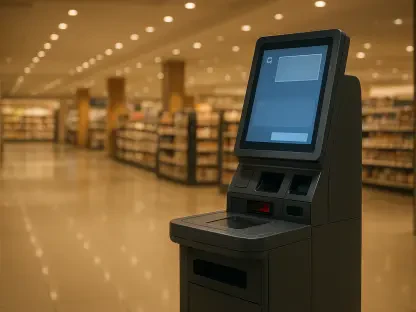
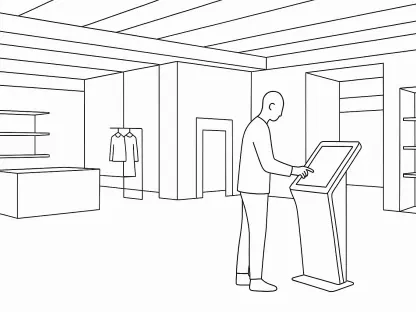
Beyond the screen, the technology is also making inroads into the physical store environment. High-impact digital billboards and “cinematic” brand storytelling screens are being integrated into flagship locations, controlled by the same central infrastructure that manages the website. These in-store assets allow global brands to create immersive experiences that capture attention in high-traffic areas. By unifying the management of digital and physical assets, retailers can offer advertisers a truly holistic platform for brand building.
Technical and Market Hurdles in Infrastructure Deployment
Despite the rapid progress, the technology faces significant hurdles, particularly regarding the technical complexity of unifying disparate data streams. Many retailers still struggle with legacy systems that house customer data in silos, making it difficult to achieve the “single view of the customer” required for true omnichannel measurement. Consolidating these streams into a real-time, actionable engine requires substantial engineering effort and a shift in organizational culture toward a data-centric mindset.
Furthermore, regulatory hurdles continue to evolve, requiring constant vigilance to maintain consumer trust. As advertising becomes more personalized and data-driven, the industry must navigate a complex landscape of privacy laws and ethical considerations. The challenge lies in delivering relevance without crossing the line into intrusiveness. Ongoing development efforts are currently focused on enhancing encryption and anonymization techniques to ensure that the pursuit of precision does not compromise individual privacy.
The Future of Retail-as-a-Media-Owner
The trajectory of this technology points toward a future where traditional retailers operate as full-scale media owners. We are moving toward a state where AI-automated sponsored products will optimize themselves in real-time, adjusting bids and creative elements based on inventory levels and consumer demand. This level of automation will further lower the barrier to entry for smaller brands while providing massive efficiency gains for larger ones. Retailers will no longer just be places where goods are bought; they will be the primary data hubs for consumer insight.
This transition will also have a profound impact on global retail competition. Those who successfully deploy robust media infrastructure will create a “flywheel” effect, where advertising revenue is reinvested into lowering product prices or improving the customer experience, further driving traffic and ad value. In contrast, those who fail to adapt risk becoming mere distribution points for products, missing out on the high-margin revenue that media services provide.
Final Assessment of Retail Media Technology
The evolution of retail media infrastructure represented a fundamental shift in how the industry valued its digital and physical assets. It successfully synthesized data-driven precision with the nuances of traditional retail excellence, creating a system where advertising added value to the shopping experience rather than detracting from it. By prioritizing API-first customization and first-party data, the technology provided a sustainable path forward in a post-cookie world.
The integration of omnichannel measurement effectively eliminated long-standing attribution gaps, offering a level of transparency that was previously unattainable. While technical and regulatory hurdles remained, the overall impact on the industry was transformative. Retailers who embraced this infrastructure future-proofed their businesses, establishing themselves as sophisticated media owners capable of competing in a data-saturated market. Ultimately, the synergy between technology and retail strategy redefined the consumer journey, making it more personalized, efficient, and measurable than ever before.