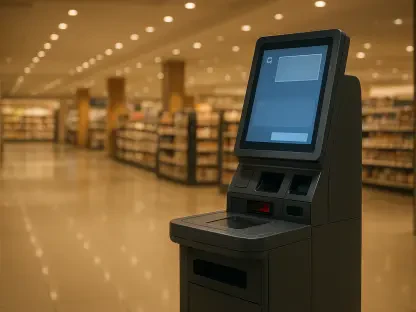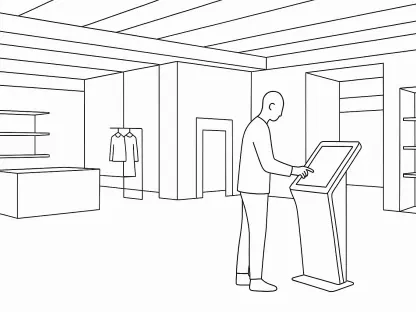

The rapid proliferation of self-service banking kiosks and sophisticated automated retail units throughout urban centers, transit hubs, and healthcare facilities has fundamentally transformed how consumers interact with essential services in 2026. These machines are no longer merely auxiliary conveniences but have evolved into critical infrastructure that maintains the flow of daily commerce and financial management for millions of citizens across the country. As these technologies become deeply embedded in the social fabric, the regulatory landscape has shifted from a light-touch approach to a rigorous framework of strict legal requirements and compliance standards. This new era of oversight ensures that every automated touchpoint meets high bars for security, transparency, and consumer protection. Businesses operating these units must now navigate a complex web of municipal and federal mandates to avoid costly litigation and retain their operational permits. This evolution reflects a broader societal recognition that as human interaction decreases in the transactional space, the technical reliability and legal integrity of the machines themselves must become the primary focus for industry stakeholders.
Financial Inclusion: Navigating the Legislative Push for Cash Access
One of the most significant tensions currently reshaping the automated retail sector is the ongoing friction between digital-only efficiency and the critical need for broad financial inclusion. While many operators initially favored cashless models to reduce overhead costs and simplify logistics, several states have intervened to protect those who rely exclusively on physical currency. In regions like New York and California, new legislation mandates that any automated system providing essential goods or banking services must maintain the capacity to accept cash. This legal shift recognizes that a substantial segment of the population remains unbanked or underbanked, and excluding them from automated retail creates systemic inequality. Consequently, companies are forced to reconsider their hardware investments, moving away from streamlined card-readers toward more robust machines equipped with bill validators and coin dispensers. This transition represents a significant capital expenditure, yet it remains unavoidable for any organization seeking to maintain a widespread national presence in these lucrative markets.
To address the operational burden of handling physical currency, some innovative vendors have introduced reverse ATMs that allow users to convert cash into digital balances or prepaid cards. However, the legal status of these devices varies considerably across different jurisdictions, creating a fragmented regulatory environment that challenges long-term hardware planning. Some local authorities view these machines as a perfect middle ground, while others scrutinize them for high transaction fees that disproportionately affect low-income users. Furthermore, the maintenance requirements for cash-accepting hardware are significantly higher than for their digital-only counterparts, requiring regular armored car service and mechanical upkeep. As businesses weigh their options, the lack of a single national standard forces them to perform deep regional analyses before deploying new units. Navigating these requirements demands a proactive approach to compliance, ensuring that hardware choices today do not become obsolete due to shifting legislative winds in major metropolitan areas next year.
Universal Design: The Evolution of Physical and Digital Accessibility
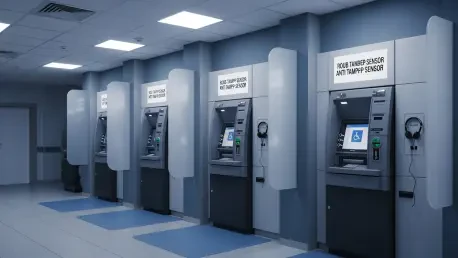
Accessibility has emerged as a central pillar of the modern regulatory environment, with the Americans with Disabilities Act providing the foundation for strict new kiosk design requirements. Kiosks and banking terminals located in public spaces must now adhere to exacting standards for physical placement, ensuring they are reachable for individuals using wheelchairs or other mobility aids. This involves specific height mandates for touchscreens and card slots, as well as clear floor space requirements that prevent obstructions in high-traffic environments like airports or hospital lobbies. Beyond physical reach, the interface itself must be designed to accommodate users with varying levels of dexterity, incorporating features such as tactile buttons or simplified navigational paths. These regulations are not merely suggestions but are backed by a robust enforcement mechanism that includes significant fines for non-compliant operators. For manufacturers, this has necessitated a complete overhaul of industrial design processes to prioritize inclusivity at every stage of product development.
In tandem with physical accessibility, software-based inclusivity has become a non-negotiable standard for all automated retail and banking interfaces. Modern regulations require these machines to offer comprehensive audio guidance systems that allow visually impaired individuals to navigate complex menus independently and securely. This involves high-quality text-to-speech engines, standard headphone jacks for privacy, and tactile identifiers such as braille labels on key input areas. Furthermore, the software must be optimized for high-contrast viewing modes and scalable text to assist users with low vision or other cognitive impairments. Implementing these features requires a sophisticated understanding of user experience design that goes far beyond the traditional transactional interface. Developers are now tasked with creating multi-modal systems that can adapt to the specific needs of each user in real-time. By fostering an environment where independent access is the default rather than the exception, these regulations have pushed the industry toward a universal approach.
Transactional Integrity: Security Protocols for Distributed Environments
As self-service terminals handle an increasing volume of sensitive financial and personal data, the security protocols governing these machines have undergone a massive transformation. Current standards mandate end-to-end encryption for every transaction, ensuring that data is protected from the moment a card is swiped or a biometric scan is performed until it reaches the central server. Beyond software protection, physical security has become equally vital, with new laws requiring terminals to be equipped with advanced anti-tampering sensors and hardware-based security modules. These devices are designed to detect any unauthorized attempts to access the internal components of the kiosk, automatically disabling the system and alerting law enforcement if a breach is suspected. In an era where cyber threats are becoming increasingly sophisticated, these physical safeguards provide a necessary layer of defense for unattended retail units. Organizations that fail to implement these high-level security measures face not only legal penalties but also the loss of consumer trust.
The integration of biometric authentication methods, such as facial recognition and palm vein scanning, has introduced a new frontier of data privacy regulations. While these technologies offer unparalleled convenience and security, they also raise significant concerns regarding the storage and usage of highly personal biological data. In response, legislative bodies have established strict guidelines for how this information must be collected, stored, and eventually deleted to prevent the creation of permanent surveillance databases. Operators must now provide clear disclosures to users about biometric data practices and obtain explicit consent before any such information is processed. Furthermore, the shift toward localized data processing—where biometric templates are stored on the user’s personal device or a secure local token rather than a centralized cloud—has become a preferred compliance strategy. This approach balances the need for high-speed authentication with the imperative of protecting individual privacy.
Strategic Adaptation: Reflecting on Operational Excellence and Compliance
The transition to a more regulated self-service landscape proved to be a defining moment for the banking and retail industries, ultimately leading to a more resilient and inclusive marketplace. Organizations that embraced these changes early on were able to distinguish themselves through superior service reliability and a commitment to consumer equity. By modernizing hardware to accept various payment forms and investing in universal design, these companies successfully mitigated legal risks while expanding their reach to previously underserved populations. The implementation of rigorous cybersecurity and privacy standards also fostered a higher level of public confidence, allowing automated retail to flourish even in sensitive environments like healthcare and government facilities. Looking back, the challenges of compliance acted as a catalyst for genuine innovation rather than a hindrance to growth. Businesses found that prioritizing accessibility and security was not just a legal necessity but a sound strategic investment.
The operational shifts observed during this period demonstrated that the most successful firms were those that viewed regulatory alignment as an opportunity to refine their business models. By focusing on hardware modularity and software flexibility, these organizations were able to adapt to diverse municipal laws without needing to redesign their entire fleets from scratch. The integration of advanced diagnostics and remote monitoring also became a standard practice, significantly reducing the downtime associated with physical maintenance and cash replenishment. As a result, the automated retail and banking sectors became more reliable, fostering a sense of trust that encouraged deeper consumer engagement across all demographics. Ultimately, the industry moved beyond the simple goal of automation and toward a holistic vision of service that combined technological speed with human-centric design. This shift ensured that the automated world remained accessible and secure for all participants, setting a high standard for future technological deployments.