
As the retail landscape shifts toward rapid fulfillment, industry leaders are rethinking how goods move from the production line to the consumer. Zainab Hussain, an e-commerce strategist with deep roots in operations management, joins us to discuss the strategic implications of the massive $330 million investment in Arvin, California. We explore how 700,000-square-foot hubs are being redefined by cutting-edge automation, sustainable energy commitments, and a focus on high-skilled labor to meet the modern consumer’s demand for speed and precision.
What does a $330 million investment into a massive facility like the Arvin hub signify for the future of large-scale retail distribution?
This $330 million commitment represents a fundamental shift toward precision and reliability in the modern supply chain. By building a 700,000-square-foot facility, the focus isn’t just on sheer volume, but on the ability to handle complex fulfillment for household staples like Coffee Mate and Gerber with unmatched accuracy. You can almost feel the hum of the targeted automation designed to handle those intense peak seasons when consumer demand hits a fever pitch. This isn’t just a warehouse; it is a strategic asset that allows a brand to deliver on its promise of speed while modernizing the entire flow of goods from the production line to the kitchen table.
How is the implementation of the largest automated storage and retrieval system in the network expected to transform the daily experience for the workforce?
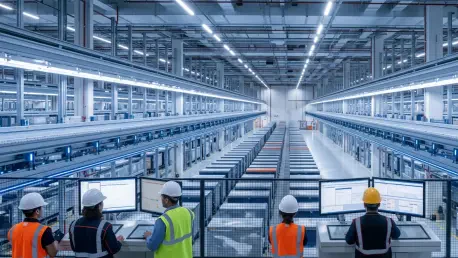
Integrating the largest automated storage and retrieval system in the entire global network creates a work environment that prioritizes the human element over physical drudgery. Instead of workers performing back-breaking, repetitive tasks, they are transitioned into high-skilled roles that manage the sophisticated digital interface of the facility. We are seeing a dedicated effort to onboard over 110 high-skilled workers who will operate in a space where safety is the top priority and physical strain is significantly minimized. It changes the atmosphere of the workplace from one of manual labor to one of technical oversight, where employees feel empowered by the technology rather than exhausted by it.
With the facility aiming for zero-waste status and renewable energy sourcing, how do these sustainability goals influence the broader operational strategy?
Sustainability is no longer an afterthought; it is being baked into the architectural and operational DNA of the Arvin facility. By sourcing electricity from wind and solar power, the facility aligns its massive energy needs with modern environmental standards, ensuring that a 700,000-square-foot footprint remains responsible. The commitment to a zero-waste operation means every material is either recycled, composted, or used for energy recovery rather than filling up local landfills. This holistic approach ensures that as production cycles for brands like Toll House ramp up, the environmental impact remains strictly controlled and responsibly managed through the entire production cycle.
Considering this is the second major facility in two years, what does this aggressive expansion suggest about the pace of digital transformation in the industry?
This rapid expansion, following the beverage factory and distribution center in Glendale, Arizona, is part of a strategy to invest $25 million in U.S. operations over 10 years. The pace suggests that digital-first marketing and AI integration are becoming the backbone of retail, requiring infrastructure that can keep up with real-time data and ERP upgrades. We are witnessing a physical manifestation of a digital strategy where manufacturing and distribution are strengthened through significant digital investments across the entire supply chain. It signals a “build for the future” mentality where companies are not just reacting to market trends but are proactively creating the capacity to lead them.
What is your forecast for the evolution of high-tech distribution centers over the next decade?
Over the next decade, I expect distribution centers to evolve into fully integrated ecosystems that are nearly invisible to the consumer but vital to their daily lives. We will likely see more digitally enabled facilities that use predictive analytics to manage shelf-stable products before a surge in demand even happens. The blend of renewable energy, zero-waste initiatives, and high-skilled labor will become the mandatory gold standard for every major industrial development. Ultimately, the successful facilities will be those that can marry massive scale with the agility of digital systems, ensuring that the supply chain is both a powerhouse of efficiency and a pillar of sustainability.