
Walking through a crowded Tokyo train station without ever breaking stride to tap a card or phone has long been the dream of urban planners and exhausted commuters alike. This vision is finally becoming a reality as Japan transitions from traditional tap-and-go payment models toward a truly touchless society powered by Ultra Wide Band technology. Unlike previous wireless systems, UWB allows for seamless interactions without users needing to remove devices from their pockets or bags. This change is not happening in isolation; it is the result of a massive cross-industry alliance between rail operators, financial institutions, and global tech firms. By moving beyond the physical limitations of near-field communication, the nation is setting the stage for a new era of frictionless commerce and public transit. This shift represents more than just a convenience; it is a fundamental redesign of how individuals interact with the physical world through their digital assets automatically. The ongoing integration of these sensors into urban environments suggests that the very concept of a transaction is being rewritten into a passive background process.
The Technical Evolution: Precision in Motion
Achieving Accuracy: The Role of Time of Flight
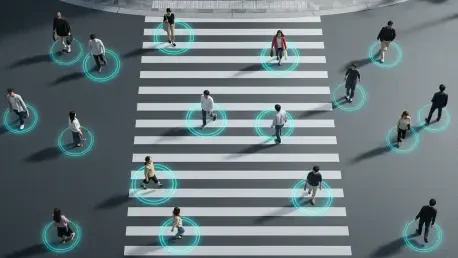
At the heart of this technological leap lies the unique ability of Ultra Wide Band protocols to perform high-frequency spatial mapping with unprecedented accuracy. While existing standards often struggle with distance estimation, UWB utilizes Time of Flight measurements to calculate the exact duration it takes for a radio pulse to travel between a mobile device and a stationary sensor. By measuring this interval, the system can pinpoint a user’s location with centimeter-level precision, which is a significant upgrade from the broad proximity sensing of traditional Bluetooth or Wi-Fi. This technical foundation allows infrastructure to recognize not just that a person is present, but exactly where they are standing and in which direction they are moving. Such precision is essential for environments where multiple people are moving in close proximity, ensuring that each signal is isolated and attributed to the correct individual without any overlap or interference. This level of granular detail prevents the system from confusing two nearby passengers.
The spatial awareness provided by these protocols effectively solves the problem of accidental charges, which has historically hindered the adoption of long-range payment systems. In a typical rail station or busy storefront, multiple terminals are often located close to each other, creating a high risk of cross-talk or unintended activation. However, because UWB can verify the precise distance and angle of a device, a gate can distinguish between a person who is intentionally walking through and someone who is merely standing nearby waiting for a friend. This allows for a walk-through experience where the gate opens automatically as the correct user approaches, creating a fluid movement pattern that was previously impossible. Furthermore, the secure nature of these short-pulse signals makes them highly resistant to relay attacks or interception, providing a layer of security that matches the speed of the interaction. By establishing this high-trust environment, engineers have successfully bridged the gap between passive convenience and robust financial safety for millions of daily users.
Hardware Integration: Powering Mobile Ecosystems
Building a comprehensive touchless infrastructure requires deep integration between physical sensors and the hardware carried by consumers. Modern smartphones from manufacturers like Apple and Google have already begun incorporating the necessary semiconductor chips to support these advanced protocols. This hardware readiness ensures that the software layer, including mobile wallets and banking applications, can interact directly with the environment without requiring specialized third-party attachments. For Japan, this means that the transition does not require a total replacement of consumer devices but rather a strategic update to the infrastructure that communicates with them. Global tech firms are playing a critical role by providing the standardized APIs that allow developers to build secure, localized applications for the Japanese market. This synergy between global hardware standards and local service providers ensures that the technology is both accessible and reliable for a wide demographic of users across the entire country.
In the retail and dining sectors, this hardware integration is being leveraged to eliminate the phenomenon of checkout fatigue for both customers and employees. Major convenience stores and fast-food chains are now deploying UWB-enabled terminals that can detect a customer’s preferred payment method and loyalty information as they approach the counter. Instead of fumbling for a physical card or unlocking a phone to display a QR code, the transaction occurs silently in the background, requiring only a simple confirmation from the user. This shift minimizes the manual burden on staff, allowing them to focus on service rather than processing payments, which is particularly valuable during peak hours in densely populated urban centers. Moreover, these systems can automate the application of discounts and the selection of reward points, ensuring that the customer always receives the best possible value without needing to manage multiple digital coupons or physical stamp cards manually.
Infrastructure and Growth: Shaping the Global Market
Modernizing Transit: From Railways to Automated Buses
Public transportation remains the primary testing ground for these innovations, with JR East leading the charge through extensive trials at Takanawa Gateway Station in Tokyo. This project marks a significant evolution in the partnership between rail operators and Sony, the original developer of the FeliCa technology that has defined Japanese transit for decades. The current objective is to integrate secure payment protocols directly into UWB sensors mounted at ticket gates, allowing commuters to pass through without slowing down to tap a reader. This walk-through gate technology is designed to handle the massive throughput requirements of the world’s busiest stations, where even a half-second delay per passenger can lead to significant congestion. By automating the validation process, rail companies can reduce the physical footprint of gates and create more open, accessible station designs. This transformation is not just about speed; it is about creating a more natural flow of human movement within complex transit hubs.
The bus industry is also finding significant value in these automated systems as it seeks to address a critical shortage of drivers and simplify complex fare structures. By automating boarding and alighting detection, drivers no longer need to monitor fare boxes or troubleshoot payment errors, allowing them to devote their full attention to road safety and navigation. Research is currently focused on ensuring that distance-based fares, which are common in many Japanese prefectures, are calculated accurately even when the bus is crowded with passengers. The UWB sensors can maintain a stable connection with multiple devices simultaneously, ensuring that each passenger is billed correctly for the distance they traveled. This automation reduces the time spent at each stop, improving the overall reliability and efficiency of the bus network. As these systems become more prevalent, the data generated by these interactions will also help operators optimize routes and schedules based on precise, real-time passenger demand and travel patterns.
Strategic Implementation: Timelines and Future Standards
To ensure that these systems are compatible with international travel and banking, Japanese companies are working closely with global organizations like the FiRa Consortium and EMVCo. This international coordination is essential for creating a standardized ecosystem where a device purchased in one country can interact seamlessly with the infrastructure of another. The strategic roadmap for this rollout began with rigorous technical verification throughout 2026, focusing on signal stability and interference mitigation in diverse environments. Moving into 2027, the industry will transition into pilot testing with actual consumer devices to gather data on real-world usability and system performance. The final goal is to achieve full commercialization by 2028, at which point the touchless payment environment will be available to the general public across all major metropolitan areas. This phased approach allows stakeholders to iron out any potential issues and confirm the long-term business viability of the technology before committing to a nationwide deployment.
The transition to a touchless landscape offered secondary benefits for urban management through the generation of precise positioning data that enhanced city life. Stakeholders recognized that the journey required more than just new hardware; it demanded a unified approach to security and interoperability that bridged the gap between transit and retail sectors. By prioritizing the development of secure payment protocols and refining signal accuracy in high-density environments, the industry established a framework for a more inclusive urban landscape. This effort focused on removing the physical barriers to movement, allowing technology to fade into the background while providing essential services to every citizen. The implementation of these systems ultimately offered a blueprint for how modern cities managed population density and labor challenges through automation. As the roadmap moved toward full commercialization, the emphasis shifted to ensuring that every person could navigate their environment with total ease and confidence.