
The hospitality landscape is currently undergoing a radical transformation as traditional bar operations yield to high-tech, automated pouring stations that prioritize speed and accuracy while addressing the persistent labor shortages facing the service industry. This shift is not merely a technological curiosity but a strategic pivot aimed at meeting the evolving expectations of modern consumers who demand immediate gratification without sacrificing the quality of their beverages. By merging the capabilities of automated dispensing hardware with sophisticated payment infrastructure, the industry is moving toward a decentralized model of service that can be deployed almost anywhere. The recent expansion of these systems from massive stadiums into corporate offices and smaller retail spaces signals a broader acceptance of unattended retail as a viable long-term solution. As these technologies continue to mature, the focus is shifting to a more nuanced integration of data and user experience.
Strategic Foundations and Hardware Versatility
Integrating Advanced Payment Infrastructure
The successful deployment of automated beverage systems depends heavily on a robust payment framework that can handle diverse transaction types while maintaining the highest levels of security and user convenience. By integrating the advanced payment architecture provided by WeVend, TendedBar has effectively turned its dispensing units into fully autonomous profit centers that require zero human intervention for financial processing. This infrastructure supports a wide array of payment methods, including digital wallets, contactless cards, and QR codes, which are essential for catering to the preferences of a tech-savvy demographic. Such a comprehensive payment suite allows operators to capture sales in varied environments where traditional cash-handling or manual credit processing would be impractical. Furthermore, the real-time reporting capabilities inherent in these digital systems provide owners with immediate insights into sales volume and inventory levels, enabling more informed decision-making.
Implementing these sophisticated payment systems provides a turnkey solution for hospitality managers who are looking to streamline their operations without the overhead costs of hiring and training a dedicated cashier. This technology acts as a silent partner, managing the entire lifecycle of a transaction from the moment a guest approaches the unit to the successful completion of the pour. For venues like mid-market hotels or corporate campuses, this means the ability to offer a premium beverage experience 24 hours a day without the need to staff a lobby bar or a cafeteria during off-peak hours. The efficiency of the payment processing ensures that there are no bottlenecks at the point of sale, even during periods of high demand when multiple customers are looking to be served simultaneously. By removing the friction associated with traditional payment methods, these automated stations enhance the overall guest experience, fostering a sense of autonomy and modern convenience for today’s busy travelers.
Deploying Compact and Autonomous Dispensing Solutions
To address the spatial constraints often found in urban retail environments and boutique hospitality settings, the development of compact dispensing hardware has become a primary focus for industry leaders. The Countertop Beverage Unit is a prime example of how professional-grade mixology can be condensed into a footprint small enough to sit on a standard bar or reception desk. This hardware is specifically designed for semi-attended environments where existing staff can quickly fulfill complex drink orders without having to undergo extensive professional bartender training. It effectively bridges the technical gap by automating the precision pouring and mixing process, allowing a server or a receptionist to deliver a perfectly balanced cocktail or specialty coffee with the touch of a button. This approach not only ensures consistency across every drink served but also allows the establishment to expand its menu offerings without increasing the complexity of its kitchen or bar operations.
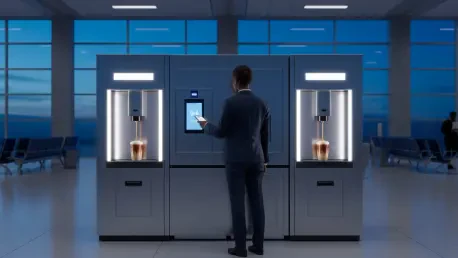
In contrast to the semi-attended countertop models, the Dual-Station Vending Unit is engineered for high-traffic areas where total autonomy is the primary objective for the facility management team. These robust machines are capable of operating independently around the clock, featuring integrated ice dispensers and high-capacity liquid storage to minimize the need for frequent maintenance or refills. Such units are particularly well-suited for transportation hubs like airports and train stations, as well as micro-markets located within large residential or commercial complexes. An important feature of this hardware is its open supply philosophy, which grants operators the flexibility to use their own preferred ingredients rather than being locked into a specific brand’s ecosystem. This freedom allows local businesses to feature regional craft spirits or popular local soda brands, ensuring that the automated experience still feels curated and relevant to the specific community it serves at any hour.
Performance Metrics and Market Expansion
Optimizing Throughput and Ensuring Compliance
The core value proposition of automated beverage service lies in its remarkable ability to outperform manual labor in terms of speed and consistency during peak periods of high consumer demand. Modern automated stations are now capable of preparing and pouring a complex drink in as little as six to nine seconds, a pace that is simply impossible for even the most skilled human bartenders to maintain. In high-volume settings such as stadiums or large-scale festivals, these units have demonstrated the capacity to serve nearly three times as many patrons as a traditional bar setup within the same operational window. This significant increase in throughput directly translates to higher revenue for the operator and a much more satisfying experience for the consumer, who no longer has to endure long wait times in crowded queues. By optimizing the mechanical process of pouring and mixing, these systems ensure that every customer receives their order quickly, allowing them to spend more time enjoying the event.
While speed is a critical metric for success, the implementation of automated alcohol service also requires a rigorous approach to age verification and regulatory compliance to meet local and federal laws. To solve this challenge, the latest iterations of automated dispensing technology incorporate multi-tiered identity verification systems that include high-resolution ID scanning and biometric facial recognition. These features ensure that every transaction is linked to a verified identity, preventing underage sales and allowing for the tracking of individual consumption limits to promote responsible drinking habits. In regions where legal regulations require a human touchpoint, the system can be configured to work in tandem with a staff member who performs the initial visual check while the machine handles the precision pouring. This hybrid model provides the best of both worlds, ensuring full legal compliance and safety while still benefiting from the accuracy and efficiency of automation.
Adapting to Modern Consumer Preferences and Trends
The scope of automated beverage service is rapidly expanding beyond alcoholic spirits to include a wide variety of non-alcoholic specialty drinks that are currently driving consumer trends in the retail market. Many operators are now using these versatile systems to automate the production of complex beverages such as flavored energy drinks, iced coffees, and the increasingly popular category known as “dirty sodas.” These types of drinks often require multiple syrups, creams, and precise ratios that are labor-intensive for staff to prepare manually, especially during busy morning or lunch rushes. By automating these recipes, retailers can offer a high degree of customization and variety without adding to the workload of their employees or slowing down the service line. This adaptability allows businesses to stay competitive by quickly pivoting their menu offerings to match shifting consumer preferences, ensuring that they remain a relevant destination for shoppers looking for quality drinks.
The successful implementation of these automated systems allowed operators to redirect their human resources toward more complex guest interactions, effectively solving the hospitality labor crisis. Businesses that prioritized the adoption of modular dispensing hardware found they could pivot to new beverage trends with minimal downtime, ensuring long-term operational resilience. The industry move toward standardized payment protocols and biometric verification simplified the regulatory landscape, making it easier for new venues to comply with strict alcohol laws. Furthermore, the integration of real-time inventory tracking enabled managers to reduce waste and optimize their supply chains based on actual consumption data. These strategic steps proved that automation was not a threat to the service industry but rather a vital tool for sustainable growth. By embracing these technological solutions, the market achieved a level of consistency and speed that satisfied the expectations of a digital-native clientele.