
Zainab Hussain is a distinguished e-commerce strategist who has spent years at the intersection of customer engagement and operational efficiency. Her expertise lies in helping retailers dismantle the silos that prevent a truly unified brand experience. In this conversation, we explore how the transition from isolated marketing campaigns to holistic customer journeys is redefining leadership within the retail sector. We discuss the double-edged sword of AI-driven content, the high stakes of international localization, and why the next frontier for marketing leaders lies in the complexities of the supply chain and data governance.
The traditional retail marketing model has long been defined by a “launch and repeat” campaign cycle, but you argue this is no longer sufficient. How are you seeing the role of the marketing leader evolve as customer behaviors become less linear?
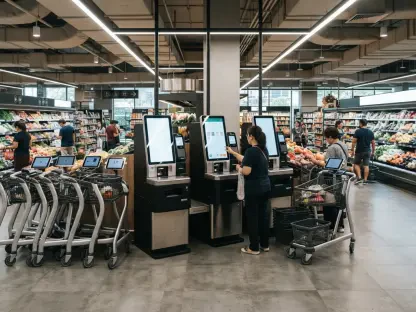
For decades, the retail CMO’s mandate was straightforward: conceptualize a campaign, push it through the channels, measure the conversion, and move to the next project. However, we have reached a point where customers no longer move in these neat, straight lines; they are browsing on mobile devices while walking through physical aisles, buying online to return in-store, and expecting every single touchpoint to recognize their history. This shift means the CMO can no longer just be the “storyteller” who attracts the crowd; they must become the “architect” of the entire journey. We see a defining challenge where marketing teams can personalize an individual email, but because of disconnected technology, they fail the customer at the next step. If a shopper receives a beautiful, personalized promotion for a product that is actually out of stock, or if their hard-earned loyalty status isn’t recognized at the point of sale, the brand promise shatters instantly. Marketing leaders now have to influence how the entire journey is connected, moving from just running campaigns to ensuring that the digital experience layer integrates existing business systems with content and commerce seamlessly.
With the rapid adoption of AI, retailers can now generate content and translate communications almost instantly, yet there seems to be a risk of prioritizing speed over substance. How should marketing teams balance the surge in AI-generated content with the need for deep customer intelligence?
AI is an incredible accelerant, but its effectiveness is entirely dependent on the quality of the information fueling it. We are seeing a “content explosion” where retailers produce more materials faster than ever, but if that content isn’t rooted in actual customer intelligence, it often leads to a hollow experience. Imagine the frustration of a customer who is bombarded with AI-generated emails that look personalized but fail to reflect their actual circumstances, such as a recent return or a specific service complaint. Retailers hold goldmines of data across loyalty programs, CRMs, and service applications, but when these systems remain siloed, AI risks producing noise rather than value. The strategy must be “intelligence before content,” using digital experience platforms to combine content management with behavioral insights. By connecting what a retailer knows about its customers with what it actually delivers, marketing becomes relevant rather than just loud, turning those automated interactions into genuine, value-driven moments.
Localization is often viewed through the lens of simple translation, but recent data suggests that even “good” translations aren’t enough to secure a sale. What are the deeper layers of localization that international retailers are currently struggling with?
Localization is a high-stakes game where the words might be correct, but the wider experience feels fundamentally “off.” Our recent findings highlight a significant gap: 56% of shoppers have abandoned a purchase because a digital experience didn’t feel properly adapted to their language, but even more telling is that 54% of those who rated a brand’s translations as “good” still walked away. This happens because localization isn’t just about the text; it’s about the context of pricing, delivery options, and local market services. When 48% of customers are willing to switch to a competitor who offers a better-adapted experience, the emotional weight of feeling “understood” becomes a competitive advantage. International retailers must use technology that ensures market-specific information is accurate and consistent across all sites, or they risk losing nearly half their potential market to someone who took the time to make the experience feel native.
We often think of the customer journey as starting at the storefront, but you’ve noted that it actually begins much further back in the supply chain. Could you share how a focus on back-end systems, like the one we saw with Douglas, impacts the front-end customer experience?
A seamless shopping experience is actually won or lost long before a customer clicks the “buy” button; it starts with the suppliers and the product information systems working behind the scenes. Look at Douglas, Europe’s leading premium beauty retailer, which manages around 2,000 stores and a massive online marketplace with over 160,000 products. When they recognized that fragmented communication with their 800-plus suppliers was a bottleneck, they didn’t just fix an operational problem—they improved their customer-facing brand. By creating a centralized portal, they were able to speed up supplier onboarding by 50% and deliver the entire solution in just six months. For a CMO, the lesson here is that when you connect the wider retail ecosystem, you create a stronger foundation for the digital journey. If your back-end is unified, your front-end content is more accurate, your inventory is more reliable, and your marketing doesn’t over-promise what your operations can’t deliver.
As marketing teams take more control over digital experiences through reusable templates and workflows, the relationship with IT is changing. How do you see these two departments collaborating effectively without creating new silos or security risks?
The historical bottleneck where a marketing team had to wait weeks for IT to launch a landing page or update a journey is finally being dismantled. By using platforms that offer reusable templates and content workflows, marketers are gaining the autonomy they need to be agile and responsive to market trends. However, this isn’t about marketing taking over IT’s domain; it’s about a partnership where IT retains oversight of the architecture, security, and complex integrations while marketing handles the “last mile” of the experience. This flexibility allows for a faster pace of innovation without sacrificing the underlying stability of the enterprise systems. When these two departments work toward a shared understanding of the customer, the business moves from being a collection of departments to being a single, cohesive brand in the eyes of the consumer.
With the move toward greater autonomy and AI integration, governance is becoming a major responsibility for marketing leaders. What are the specific risks they need to manage to maintain trust with their audience?
Greater autonomy for marketing teams is a powerful tool, but it carries a heavy burden of accountability. As AI becomes more embedded in content creation and customer engagement, the risk of “automated errors” increases exponentially. An inaccurate product description generated by an AI or a personalized offer sent out based on outdated, disconnected information can do more than just frustrate—it can permanently damage brand trust. Marketing leaders must now take ownership of how information is accessed and used, implementing role-based permissions and strict approval workflows. The goal is to create a “governed flexibility” where teams can move quickly, but there are safeguards in place to ensure that an AI assistant, for example, doesn’t have inappropriate access to sensitive data. In 2026, governance is no longer just a technical checkbox; it is a core marketing function that protects the brand’s integrity in an automated world.
What is your forecast for the evolution of the retail CMO role over the next two years?
By 2028, we will see the retail CMO transform into a “Chief Experience Officer” in everything but name, where their success is measured not by campaign clicks but by the total connectivity of the customer lifecycle. We are moving toward a reality where the distinction between a marketing campaign, an e-commerce transaction, and a service interaction will vanish entirely from the customer’s perspective. AI will no longer be a novelty used for generating “more” content; it will be the invisible engine that orchestrates real-time, context-aware journeys across every device and storefront. Retailers who fail to integrate their back-end operations with their front-end brand promise will find themselves unable to compete with those who have mastered a unified digital experience layer. Ultimately, the future belongs to those who can make a global, multi-channel operation feel like a single, personalized conversation with every individual customer.