
The current shift in global commerce reflects a move away from superficial digital overlays toward an integrated, AI-native foundation that fundamentally addresses long-standing operational bottlenecks. In 2026, the retail industry has largely moved beyond the pursuit of incremental software updates, opting instead for architectures that can digest vast amounts of unstructured data from every corner of the global supply chain. This transition is driven by a critical need to solve deep-seated inefficiencies that have plagued the sector for decades, ranging from massive inventory distortions to the persistent fragility of last-mile logistics. By moving beyond the digital transformation buzzwords of the early 2020s, retail enterprises are now constructing sophisticated operating systems that act as a central nervous system for their business, enabling real-time decision-making that is both granular and scalable. This shift toward a native AI foundation allows companies to move from reactive crisis management to a proactive stance where volatility is anticipated and mitigated before it impacts the bottom line or the customer experience.
Optimizing the Physical Supply Chain
Tackling Perishability and Waste: The Grocery Dilemma
Managing fresh food remains a significant hurdle in grocery retail, with billions of dollars worth of produce wasted annually due to outdated systems that cannot handle the inherent volatility of organic inventory. Legacy software designed for canned goods or non-perishable hardware lacks the sophisticated logic required to account for the rapid spoilage rates and variable demand cycles of fresh items. This failure leads to massive financial losses and creates immense environmental strain across the North American and European markets, where consumers expect high-quality fresh produce year-round. The lack of precision in inventory management often results in a feast-or-famine scenario where shelves are either empty or overflowing with products that are days away from expiration. This structural inefficiency has forced retailers to rethink their approach to supply chain visibility, moving toward systems that can provide a more nuanced understanding of product lifecycles in real-time.
New AI-native platforms are solving this by using high-fidelity data to bridge the gap between regional producers and local store shelves. By providing precision forecasting that incorporates weather patterns, local events, and historical sales data, these tools help retailers cut waste by nearly a third while simultaneously boosting revenue through improved inventory availability. This demonstrates that the solution to the perishability crisis lies in deep data integration rather than just better refrigeration or faster trucking. This approach moves beyond simple inventory tracking to create a unified flow of information from the source to the storefront, allowing for dynamic pricing and intelligent routing of goods. As these systems move further upstream into the agricultural sector, they provide a clearer picture of the entire supply chain, reducing the guesswork that currently plagues the grocery industry and ensuring that fresh food reaches the consumer in optimal condition.
Streamlining Global Logistics: Predictive Modeling in Action
Modern supply chains have become increasingly complex, requiring a level of coordination that traditional manual processes and siloed data structures can no longer sustain. The integration of predictive modeling allows retail giants and mid-market players to anticipate disruptions in global shipping lanes and adjust their procurement strategies weeks in advance. This is particularly vital in an era where geopolitical shifts and climate-related events can suddenly close key ports or reroute major trade arteries. By leveraging AI to simulate thousands of different logistics scenarios, companies can identify the most resilient paths for their goods, balancing cost-efficiency with the need for speed and reliability. This predictive capability transforms logistics from a cost center into a strategic advantage, enabling brands to maintain consistent stock levels even when their competitors are struggling with unforeseen delays and rising transportation costs.
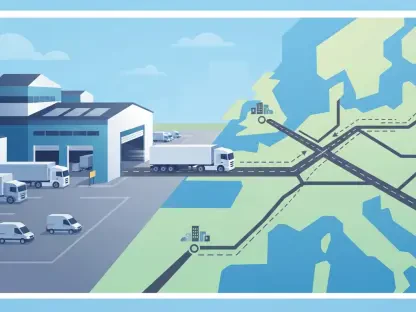
Beyond mere route optimization, high-fidelity data integration is fostering a new era of transparency and trust in cross-border trade. Automated customs documentation and real-time tracking of individual shipping containers allow for a seamless flow of goods through international borders, reducing the administrative burden on logistics managers. This level of visibility is essential for companies looking to diversify their manufacturing bases and reduce reliance on single-source suppliers. By creating a digital twin of the entire global supply chain, retailers can identify bottlenecks in the first, middle, and last miles of delivery, allowing for targeted interventions that improve overall efficiency. This data-driven approach not only lowers the carbon footprint of the retail industry by optimizing transport loads but also ensures that the global movement of goods remains agile and responsive to the rapidly changing demands of the modern consumer.
Security and Vertical Specificity
Establishing the Biometrics of Things: Security at the Source
As commerce becomes increasingly digital and decentralized, the link between a physical item and its digital record has emerged as a major point of vulnerability for retailers. Traditional markers like barcodes or RFID tags are inherently flawed because they can be detached, forged, or easily damaged, creating a trust gap in high-value logistics and the rapidly growing recommerce market. This gap makes it difficult for businesses to guarantee the provenance of the goods they sell, leading to concerns over counterfeit products and lost revenue. In the high-stakes world of luxury goods and electronics, the inability to verify the authenticity of an item can be catastrophic for a brand’s reputation. To address this, the industry is moving toward more permanent and sophisticated methods of identification that do not rely on physical labels but instead leverage the unique characteristics of the products themselves.
Innovative technologies are now solving this by using standard high-resolution cameras to identify the unique microscopic surface details of an object, effectively creating what is known as the biometrics for things. This Zero Trust framework creates an unbreakable digital fingerprint that ensures authenticity throughout the entire lifecycle of a product without the need for physical additives or expensive specialized tags. This level of data integrity is becoming essential for automated manufacturing and high-stakes global trade, where the ability to verify a product at any point in the supply chain is a prerequisite for security. By turning every object into its own unique identifier, retailers can eliminate the risks associated with tampering and fraud, providing consumers with absolute certainty regarding the origin and quality of their purchases while also streamlining the returns and resale processes.
Replacing Legacy Systems: The End of Generic Software
Certain retail sectors, such as the multi-billion-dollar independent liquor and specialty beverage market, have historically been trapped using software built before the era of the modern mobile ecosystem. These legacy systems are often manual, slow, and disconnected, eating up hours of a store manager’s time with administrative paperwork, manual inventory counts, and complex invoice reconciliation. This technical debt acts as a significant barrier to growth, preventing small and medium-sized businesses from scaling effectively or competing with larger, more technologically advanced players. The reliance on fragmented tools also makes it nearly impossible for these owners to gain a clear view of their margins or identify trends in consumer behavior. Consequently, the industry has seen a massive push toward specialized platforms that replace these relics with modern, all-in-one operating systems tailored to specific vertical needs.
By automating the hidden labor of retail, these new platforms allow business owners to pivot away from mundane administrative tasks and focus on high-level margin analysis and customer engagement. These tools are designed with an intimate understanding of the specific regulatory and logistical nuances of their niche, such as the complex three-tier distribution system in the alcohol industry. This trend highlights the decline of generic, one-size-fits-all software in favor of vertical-specific solutions that integrate everything from point-of-sale systems to automated procurement and tax compliance. As a result, even the smallest independent retailers can now access the same level of sophisticated analytics and operational efficiency as national chains. This democratization of technology is empowering a new generation of entrepreneurs to modernize their operations, optimize their product mix, and build more resilient businesses in an increasingly competitive retail landscape.
The Next Generation of Fulfillment and Production
High-Fidelity Logistics: The Rise of AI-Native Robotics
Profitability in grocery delivery and last-mile fulfillment is notoriously difficult to achieve due to thin margins, high labor costs, and the complexity of same-day service. However, fulfillment platforms built by actual grocery operators are proving that high on-time delivery rates and strong unit economics are possible through integrated AI learning. These systems use real-time data to optimize the picking and packing process, ensuring that orders are fulfilled with maximum efficiency and minimal error. By offering these platforms as a service, smaller industry players are now able to compete with global giants like Amazon, leveraging advanced technology to provide local, personalized service. This shift is turning fulfillment from a logistical nightmare into a scalable business model that can support the growing consumer demand for rapid, reliable delivery without sacrificing the financial health of the retailer.
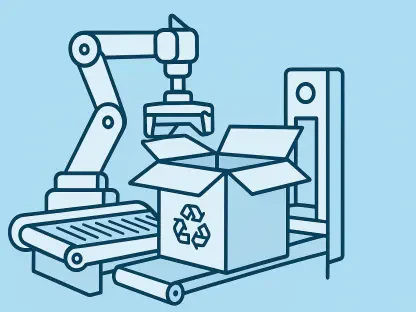
At the same time, the manufacturing base is seeing a resurgence through the deployment of AI-native industrial robots that are remarkably easy for the average worker to use. Unlike traditional industrial robots that require complex coding and specialized engineers, these new machines are designed to learn through physical demonstration and intuitive interfaces. They act as power tools for modern workers, augmenting human capability rather than replacing it, and allowing for greater flexibility on the factory floor. This ease of adoption is critical for revitalizing domestic production and reducing the industry’s reliance on fragile, long-distance manufacturing networks. By making automation accessible to a wider range of businesses, these robotic systems are enabling a shift toward localized manufacturing where products can be made closer to the end consumer, reducing shipping times and carbon emissions while improving overall supply chain agility.
Localizing Production: Building a Circular Economy
The vertical integration of production and fulfillment into a single, cohesive ecosystem is driving a major push toward high-speed, local manufacturing that can respond instantly to market trends. By utilizing AI to coordinate the flow of materials and the output of robotic assembly lines, companies can produce small batches of goods with the same efficiency once reserved for mass production. This capability allows retailers to reduce their exposure to inventory risk, as they no longer need to commit to massive orders months in advance from overseas suppliers. Instead, they can test new products in limited quantities and scale up production locally as demand dictates. This model not only improves cash flow but also supports the development of a more sustainable and circular economy where production is closely aligned with actual consumption, reducing the volume of unsold goods that end up in landfills.
Furthermore, the integration of intelligent automation into the factory floor is creating autonomous, high-precision environments that require minimal oversight from specialized consultants. The focus has shifted toward creating user-friendly interfaces that allow existing staff to manage complex robotic tasks, thereby upskilling the workforce and increasing productivity across the board. This capital injection into localized manufacturing infrastructure signals a strategic move to insulate the retail sector from global shocks and shipping disruptions. By bringing production closer to the storefront, retailers can offer a wider variety of customized products while maintaining a lean inventory. This evolution in manufacturing is not just about cost savings; it is about creating a more responsive and resilient foundation for the entire retail industry, ensuring that the right products are always available to the consumer at the right time and place.
Autonomy and Adoption in the Digital Age
Moving Toward Agentic Commerce: The Role of Autonomous Agents
The industry is currently shifting from Generative AI, which primarily focuses on creating content and answering queries, to Agentic AI, which is designed to execute complex tasks autonomously. This movement sees specialized AI agents taking full ownership of functions like automated catalog management, fulfillment orchestration, and dynamic pricing updates across multiple global marketplaces. This transition is significant because it removes the human bottleneck from repetitive, high-volume decision-making processes that occur at a speed beyond human capability. These agents can monitor market conditions, competitor pricing, and inventory levels in real-time, making thousands of micro-adjustments every day to ensure that a brand remains competitive and profitable. This level of autonomy allows human teams to step back from the minutiae of daily operations and focus on long-term strategy and creative brand development.
For brands operating across diverse and fragmented global marketplaces, these autonomous agents are becoming an indispensable tool for maintaining consistency and scale without massive overhead. They handle the complex logistics of cross-border commerce, ensuring that product listings are optimized for local languages, currencies, and search behaviors. This technology levels the playing field for smaller merchants, allowing them to project a global presence and manage complex operations that were previously only possible for large corporations. The front door of e-commerce is increasingly managed by these intelligent assistants, which handle both product discovery and the execution of complex transactions, providing a seamless experience for the consumer. As agentic commerce becomes more prevalent, the very nature of online shopping will change, moving from a search-based model to one where proactive agents curate and fulfill orders based on individual consumer needs and preferences.
Enterprise Resilience: Digitizing Institutional Knowledge
For artificial intelligence to be truly effective at scale, the focus within the retail sector must shift toward enterprise-wide adoption and the management of technical incidents. Modern platforms are now helping organizations to upskill their employees and digitize institutional knowledge that was previously trapped in the minds of veteran staff or buried in fragmented documents. By capturing these insights and making them accessible through AI-powered interfaces, companies can ensure that their operational expertise is preserved and utilized across the entire organization. This process is vital for maintaining consistency during periods of rapid growth or staff turnover, as it allows new employees to quickly get up to speed and make informed decisions based on the collective experience of the company. The goal is to create a more resilient organization where technology and human expertise work in tandem to drive innovation and growth.
In addition to knowledge preservation, these modern AI platforms are playing a critical role in incident management and crisis resilience by providing real-time monitoring and automated response protocols. By identifying potential issues before they escalate into major disruptions, these tools ensure that the retail infrastructure remains stable even during unexpected market shifts or technical failures. This focus on the human element and operational stability ensures that technology implementation translates into actual value for the business rather than just adding another layer of complexity. As retailers continue to navigate an increasingly volatile global economy, the ability to maintain operational continuity and adapt quickly to change will be the primary factor that separates the leaders from the laggards. By investing in tools that enhance both human productivity and system reliability, the industry is building a foundation for long-term success that is both sustainable and technologically advanced.
The evolution of retail technology demonstrated that a fundamental shift toward AI-native systems was necessary to overcome the structural limitations of the previous decade. Stakeholders recognized that simply layering new software onto old processes was insufficient, leading to the widespread adoption of platforms that integrated data, security, and automation at the core of the business. The industry looked forward to a future where supply chains were self-healing, logistics were transparent, and manufacturing was localized, significantly reducing waste and improving profit margins across the board. Practical steps were taken to move from content generation to autonomous action, empowering merchants of all sizes to scale efficiently in a global market. By prioritizing enterprise resilience and the digitization of human expertise, the retail sector successfully transitioned into a more agile and responsive era. These advancements ensured that organizations remained stable during disruptions, ultimately creating a more sustainable and consumer-centric economy that leveraged technology to solve its most persistent and costly challenges.