
Zainab Hussain has established herself as a leading voice in the evolution of modern commerce, specializing in the delicate balance between high-tech digital strategy and the visceral, human experience of physical retail. As an e-commerce strategist with deep roots in operations management, she has witnessed firsthand how the boundaries between online discovery and in-store fulfillment have blurred into a single, continuous journey. In an era where shoppers are increasingly turning to sophisticated AI assistants to navigate their purchasing decisions, Zainab emphasizes that the future of the industry lies not in choosing one channel over another, but in the seamless integration of every touchpoint. This conversation explores the rapid growth of agentic search, the hidden profitability of dropshipping models, and the enduring power of the physical showroom.
With agentic search usage surging by 200% year over year, why do you think only 28% of commerce organizations have actually integrated these AI assistants into their strategy?
The disconnect between consumer behavior and business adoption usually boils down to the complexity of back-end integration. While shoppers are moving quickly toward using AI assistants as their primary starting point—resulting in that massive 200% surge—many retailers are still struggling with siloed data that makes agentic AI difficult to deploy effectively. Only 28% of organizations are currently using these tools because it requires a level of real-time inventory and product data accuracy that many legacy systems just aren’t built for. I see a lot of hesitation because brands are afraid of providing an inconsistent experience where an AI assistant makes a promise that the supply chain can’t keep. However, as we look at the landscape today in 2026, those who haven’t bridged this gap are finding themselves invisible to the most tech-savvy segment of the market.
Retailers often treat their websites, physical stores, and AI chatbots as distinct silos, but you suggest they are part of one continuous decision. How does this fragmented approach impact the modern customer?
When a retailer treats these channels as separate businesses, the customer is the one who feels the friction, often leading to a total loss of trust in the brand. A shopper doesn’t think in terms of “channels”; they think about solving a problem, which might involve a chatbot for narrowing options, a website for technical specs, and a store for the final tactile confirmation. If a customer uses an AI tool to find a product but the store associate has no record of that interaction or can’t see the same inventory, the journey breaks down instantly. We need to move toward a model where every touchpoint is informed by the others, creating a fluid conversation that follows the buyer. Success now depends on recognizing that a sale might start on a phone screen but find its emotional heart on the shop floor.
You’ve mentioned that physical shops offer something algorithms simply cannot replicate. Could you elaborate on why the human element and the physical “showroom” remain so critical in a high-tech era?
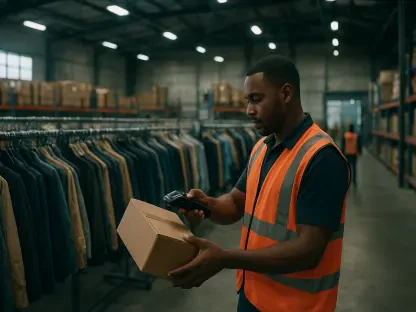
There is a level of confidence and sensory satisfaction in a physical store that an algorithm, no matter how advanced, just can’t simulate. I recently experienced this when looking for a jacket; the store didn’t have my size, but the human connection made all the difference when the assistant found the item in the system and promised it would be ready for collection by Friday. That moment of looking someone in the eye and getting expert advice creates a much stronger bond than scrolling through a list of specs alone. Stores are evolving into showrooms where the goal isn’t just to move boxes off shelves, but to provide the “high-consideration” environment where a customer feels safe making a purchase. By treating the shop floor as a place for discovery and expert consultation, brands can ensure that even if the transaction happens later online, the loyalty was won in person.
When expanding a product range, many retailers fear the “paradox of choice.” How can strategies like dropshipping or curated marketplaces help balance a wide selection with the need for deliberate curation?
The goal of expanding a range should never be about infinite choice, but about better choice, which is where a curated marketplace or dropship model becomes invaluable. If you overwhelm a customer with 10,000 random options, they’ll likely walk away, but a carefully selected extended range allows you to meet specific needs without the burden of physical stock. While traditionally stocked inventory offers a higher headline margin of 50-60%, the 20-25% margin seen in dropshipping is actually much more attractive when you factor in the avoided costs of warehousing and logistics. In fact, once those overheads are accounted for, the real profitability gap often shrinks to a single-digit difference. We’ve seen retailers like Robert Dyas thrive by leaning into this, with 70% of their total Gross Merchandise Value now coming from dropshipping, proving that range expansion can be both deliberate and highly profitable.
What is your forecast for the evolution of the retail store over the next few years?
I believe the physical store will transform into a hyper-connected service hub where the distinction between “in stock” and “available” completely disappears. We are going to see storefronts that act as sophisticated fulfillment centers where a customer can try on a sample, scan a code, and have the exact size and color delivered to their home before they even get back to their car. The role of the store associate will shift from a clerk to a high-level consultant who uses agentic AI tools to provide deep product insights and instant supply chain visibility. Ultimately, the winners will be the retailers who stop viewing their physical and digital assets as competitors and instead use their stores to provide the sensory “win” that justifies the digital transaction. Efficiency will be handled by the bots, but the soul of retail will remain firmly in the hands of the people on the showroom floor.